
Benjamin Hochman, Piano
02/26/2014 12:15, Preston Bradley Hall
Jesu, Joy of Man’s Desiring -- Johann Sebastian Bach (Arr. Dame Myra Hess)
Cinque Variazioni -- Luciano Berio (1925 – 2003)
Piano Sonata in A-flat Major, Op. 110 -- Ludwig van Beethoven
Ensemble Rook
02/19/2014 12:15, Preston Bradley Hall
Rook
Jakob Hansen, Violin
Paul Von Hoff, Trombone and Slide Trombone
Jeremy David Ward, Bass Violin
Mark Shuldiner, Harpsichord
Sonata No. 4 from Book No. 1 -- Dario Castello (1590 – 1658)
Ingiustissimo amor -- Costanzo Festa (1485 – 1545)
Divisions on Lachrimae Pavan -- Johann Schop (1590 – 1667)
Canzon for Bass and Soprano, No. 11 -- Bartolomé de Selma y Salaverde (1595 – 1638)
Baisés Moy -- Adrian Willaert (1490 – 1562)
Sonata No. 8 -- Matthias Weckmann (1616 – 1674)
Dances -- Paul Peuerl (1570 – 1625)
I. Pavan
II. Dance
III. Courant
Qui verult aymer -- Adrian Willaert
Sonata No. 11 from Book 1 -- Dario Castello
Kinga Augustyn, Violin, Matthieu Cognet, Piano
02/05/2014 12:15, Preston Bradley Hall
Mazurka in G Major, Op.26 -- Aleksander Zarzycki (1834 – 1895)
Introduction et Cracovienne, Op. 35 -- Aleksander Zarzycki
Nocturne in C-Sharp minor -- Frédéric Chopin (Arr. Antoni Cofalik)
La Fontaine d’Aréthuse -- Karol Szymanowski
Variazioni, Op. 4 -- Henryk Mikołaj Górecki (1933 – 2010)
Anna Leonova - Piece for violin solo
Rachel Arcega (Violin)
Mendelssohn and Palestrina 2014
February 3, 2014. Mendelssohn and Palestrina. Two great composers were born today, Felix Mendelssohn and Giovanni Pierluigi Palestrina: Mendelssohn in 1809, Palestrina – in 1525. Felix Mendelssohn was born in Hamburg into a family of a wealthy 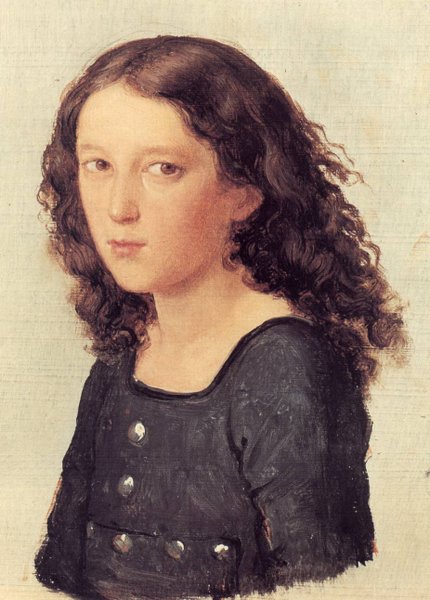
banker, Abraham Mendelssohn. Felix’s grandfather was Moses Mendelssohn, the famous German Jewish philosopher and the founder of the Jewish enlightenment movement. His mother Lea came from the prominent Itzig family; her grandfather Daniel Itzig was the “court Jew” of King Frederick the Great of Prussia – a banker who lent money to the King and to a large extent managed his finances. Felix had three siblings, the musically gifted older sister Fanny, and two younger brothers. The Mendelssohns were not religious (Felix wasn’t even circumcised, which was highly unusual for a Jewish family) and when he was seven, all children were baptized: while proud of their ancestry, the prevailing notion in the Mendelssohn family was that Jews should assimilate with the German people. In 1811 the family moved to Berlin.
Felix was the greatest child prodigy since Mozart. His first piano lessons were with his mother; later he studied piano with several teachers in Berlin, and later in Paris. In 1819, when he was 10, he and Fanny started taking composition and counterpoint lessons from a noted composer, Carl Friedrich Zelter, a friend of Goethe. When he was 12, Felix was taken to Weimar and played for Goethe the music of Bach and Mozart. He even dedicated his Quartet in B minor Op. 3, written in 1824, to Goethe. At the age of 11, in 1820, Felix wrote his first opera, Die Soldatenliebschaft (The soldier’s love affair). Three more operas followed in the next two years. His first published works were piano quartets – Op. 1, in C minor, written in 1822, Op. 2, in F minor, written one year later, and the already mentioned Op. 3, in B minor. Here is the thirteen-year-old Mendelssohn’s Piano Quartet op. 1, no. 1, performed by The Schubert Ensemble of London. It’s a youthful but charming piece. The symphonies, the famous violin concerto, oratorios, the exquisite piano pieces – all that was still to come. The picture above, by the German painter Carl Joseph Begas, was made the year before Op. 1 had been written.
Giovanni Pierluigi da Palestrina’s birthday is tentative, as is so often the case with the 16th century composers. As Grove’s says, he was born “between 3 February 1525 and 2 February 1526.” Palestrina, a Roman, is considered one of, if not the greatest Renaissance polyphonist. He followed in the steps of the Franco-Flemish composers, such as Guillaume Dufay, Josquin des Prez, and Adrian Willaert. The genius of Palestrina deserves much more space than we have here, so we’ll just present two pieces, a brief Nunc dimittis (“now you dismiss…” also called Song of Simeon, a canticle which is usually sung at the end of a religious service), performed by the Tallis Scholars, and the great motet Stabat Mater, very much admired by Richard Wagner. The Choir of King's College is directed by Sir David Willcocks (here).
Read more...Giovanni Pierluigi da Palestrina - Stabat Mater
The Choir Of King's College (Chorale)
David Willcocks (Conductor)
Giovanni Pierluigi da Palestrina - Nunc dimittis
The Tallis Scholars (Ensemble)
Felix Mendelssohn - Piano Quartet No. 1 in C minor, Op. 1
The Schubert Ensemble of London (Ensemble)
Mehdi Hosseini - Abkenari
Mikhail Krutik (Violin)
Tatyana Rezetdenova (Flute)
Alexander Oskolkov (Clarinet)
Kirill Kyrshakov (Cello)
Robert Schumann - Nicht schnell (I), from Three Romances, Op. 94
Dami Kim (Violin)
Renana Gutman (Piano)