
Sima Piano Trio
06/26/2013 12:15, Preston Bradley Hall
Sarah Crocker Vonsattel, Violin -- Ani Kalayjian, Cello -- Sofya Melikyan, Piano
Adagio Adagio for Violin, Cello, and Piano Hans Werner Henze (1926 – 2012)
Piano Trio No. 2 in C Major, Op. 87 for Violin, Cello, and Piano Johannes Brahms
Jie Yuan, Piano
06/19/2013 12:15, Preston Bradley Hall
Musica Ricercata György Ligeti (1923 – 2006)
III. Allegro con spirito
VI. Allegro molto capriccioso
X. Vivace. Capriccioso
Impromptu in F Minor, Op.142 No.1 Franz Schubert
Impromptu in F Minor, Op.142 No.4
Rhapsodie Espagnole Franz Liszt
Rebecca Benjamin, Violin, Tatyana Stepanova, Piano
06/12/2013 12:15, Preston Bradley Hall
Souvenir d’un lieu cher, Op. 42 Pyotr Ilyich Tchaikovsky
II. Scherzo
III. Mélodie
Sonata in A minor for Violin and Piano César Franck
Scherzo Tarantelle, Op. 16 Henryk Wieniawski
Thomas Tallis 2013
June 10, 2013. Thomas Tallis. Even though the ever-popular Edvard Grieg, who wrote many wonderful tunes and became the first national composer of the newly independent Norway, was born this week on June 15, 1843, we’ll write about him some other time. 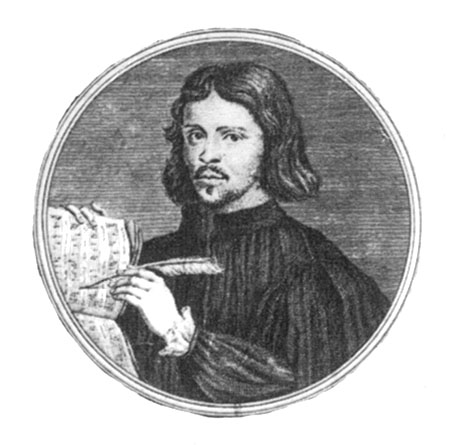 Today we’ll remember a composer whose date of birth, together with much of the details of his life, were lost in centuries past: Thomas Tallis. What we do know is that he was born early in the 16th century (1505 is the commonly assumed year). We also know that he worked as on organist in the Dover priory around 1530, and later at the Canterbury Cathedral. Around 1543 he became a Gentleman of the Chapel Royal, a group of clerics and musicians who traveled with the British monarchs in order to serve their spiritual needs. In this capacity he played and composed for four kings and queens from Henry VIII to Elizabeth I. In 1575 Tallis, who was then 70, and the composer William Byrd, half his age at the time, were given a monopoly to publish music and music paper. Their first publication, Cantiones Sacrae, was a set of 34 motets, 16 by Tallis and 18 by Byrd, and it was the only music published during Tallis’s lifetime.
Tallis lived till the age of 80, and during his life England was transformed from a Catholic country with a Latin liturgy to an Anglican one, with a liturgy in English. He wrote both, and his output is divided between Latin and English pieces. Among his Latin works, the setting of The lamentations of Jeremiah were widely praised then and still remain one of his most celebrated compositions. You can listen to it here, in the performance of the ensemble Magnificat directed by Philip Cave. Another hauntingly beautiful example is his setting of Miserere Nostri. It’s performed (here) by the eponymous ensemble, The Tallis Scholars. And here is an example of his "English" music, a set of nine simple but beautiful psalms called "Tunes for Archbishop Parker's Psalter," performed by the British ensemble Stile Antico. The Tunes were written in 1567 for Matthew Parker, the first Anglican Archbishop of Canterbury. The English composer Ralph Vaughan Williams used the third Tune, Why Fum'th In Fight (it’s the first one to be performed in this recording), for his Fantasia on a Theme by Thomas Tallis. The Tunes are still included in many Anglican hymnals.
Two notes: the portrait above was made by Gerard Vandergucht, a British engraver of Flemish descent, about 150 year after Tallis’s death, so there’s no certainty that he actually looked anything like it. There were no portraits of Tallis made during his life, so we have to contend with this one. Another note: apparently, Tallis’s music, a motet called Spem in Alium (here) is mentioned in the enormously popular soft-core novel Fifty Shades of Grey. As a result, since the publication of the novel the sales of Tallis’s album with this motet exploded, reaching number one on the UK classical music charts. Whatever it is that brings the listeners to his music, Tallis would’ve been pleased.
Read more...Thomas Tallis - Spem in alium
Hueglas Ensemble (Ensemble)
Thomas Tallis - Tunes for Archbishop Parker's Psalter
Stile Antico (Ensemble)
Thomas Tallis - Miserere Nostri
The Tallis Scholars (Ensemble)
Peter Phillips (Conductor)
Thomas Tallis - The lamentations of Jeremiah (I)
Magnificat (Ensemble)
Philip Cave (Conductor)
Camille Saint-Saëns - The Swan
Brian Dempsey (Cello)
Maurice Ravel - Le paon, from Histoires naturelles
Michael Kelly (Baritone)
Jonathan Ware (Piano)