
P. Kellach Waddle - Prelude in G Minor for solo Bass : Visions of Seville & Catalonia
P. Kellach Waddle (Double Bass)
P. Kellach Waddle - Depression and Glaucoma:Lyric Bagatelle for Solo Bass
P. Kellach Waddle (Double Bass)
Richard Wagner 200
May 20, 2013. Richard Wagner 200. Richard Wagner, this most exasperating of musical geniuses, was born on May 22, 1813 in Leipzig. He was one of the most influential composers of the 19th century; the list of musicians indebted to Wagner is enormous, from Anton Bruckner, Gustav Mahler, Hugo Wolf and early Arnold 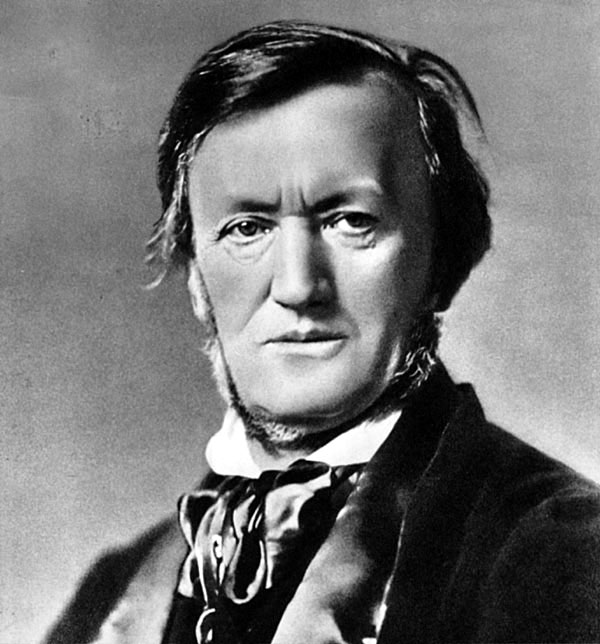 Schoenberg in Germany to César Franck, Ernest Chausson, Jules Massenet and Claude Debussy in the francophone world (Debussy struggled with Wagner’s influence for years). And it went well beyond opera: philosophers, starting with Friedrich Nietzsche, poets, such as Baudelaire, Mallarmé and Verlaine, also writers, too many to mention, even painters fell under his spell. Wagner had his detractors too: the German music world at the time was divided into “Wagnerites” on one side and followers of Brahms on the other. Eduard Hanslick, an influential music critic, was an enemy. Wagner was probably the only composer for whom an opera house was built: King Ludwig II of Bavaria, his major patron, helped to finance its construction in Bayreuth. It was completed in 1876, just in time for the permier of Der Ring des Nibelungen cycle. Wagner was also a notorious anti-semite and racist, but of course we cannot hold him responcible for the Nazi’s appropriation of his music half a century later.
Wagner wrote some symphonic music, none of it very successul. His genius was fully realized in his operas, from the early Rienzi (1842) and The Flying Dutchman (1843), to Tannhäuser (1845) and Lohengrin (1850). He started writing the story of Siegfried's Death in 1848. He eventually expanded and rewrote the original libretto and turned it into the cycle of four operas called Der Ring des Nibelungen. He started composing the first opera of the cycle, Das Rheingold, in 1853 and completed the Cycle in 1874 with Götterdämmerung. In 1857 he temporarily stopped working on the Cycle and wrote one of his greatest creations, the mesmerizing Tristan und Isolde. Die Meistersinger von Nürnberg followed in 1868. His last opera, Parsifal, was written in 1882, less than a year before his death in Venice in February of 1883. His body was taken by gondola and then by train to Germany. He was buried in Bayreuth.
The singing roles in Wagner operas are extremely demanding, and require exceptional physical stamina. Most of the operas are very (some might say excruciatingly) long: Die Meistersinger has about four and a half hours of music, Parsifal is not much shorter, both Tristan und Isolde and Sigfried are about four hours long without an intermission. Wagner’s operas also require a very special clarity of tone, with practically no vibrato. Wagnerian tenors, possessing power, richness of voice and drama, became known as Heldentenor, “heroic tenor” in German. Probably the most famous Heldentenor of the 20th century was Lauritz Melchior. Siegfried Jerusalem, who recently finished his operatic career, and Ben Heppner, still quite active, are among the noted Heldentenors. Wagner also created great (and very challenging) soprano roles; for example Brünnhilde in the four operas of the Ring, Isolde in Tristan, and Kundry in Parsifal. Kirsten Flagstad and Birgit Nilsson were incomparable Wagnerian sopranos. Jane Eaglen and Deborah Voight are active today and perform admirably in major opera theaters.
Here’s the Prelude to Act I of Tristan und Isolde, recorded in 1952 by Wilhelm Furtwangler and Philharmonia Orchestra (it was very effectively used by Lars von Trier in his film Melancholia). From the same opera, the German soprano Waltraud Meier sings the famous Isolde Liebestod (here). And here is an excerpt from the legendary 1935 recording of Die Walküre with Lauritz Melchior and Lotte Lehmann. Bruno Walter conducts the Vienna Philarmonic.
Read more...Richard Wagner - Liebestod, from Act III, Tristan und Isolde
Waltraud Meier (Soprano)
Teatro alla Scala (Orchestra)
Daniel Barenboim (Conductor)
Richard Wagner - Prelude to Act I, Tristan und Isolde
Philharmonia Orchestra (Orchestra)
Wilhelm Furtwangler (Conductor)
Andrew Chubb - Motion One
Nicolas Horvath (Piano)
Monteverdi 2013
May 13, 2013. Claudio Monteverdi was born on May 15, 1567 in Cremona, a town famous as a musical center and even more so for its luthiers: by the time Monteverdi was born, the Amati family was already producing fine violins for two generations, the Guarneris were to come shortly thereafter, then followed by Antonio Stradivari. Young Claudio took musical 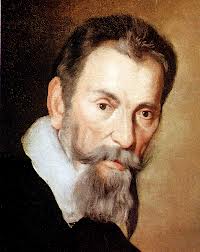 lessons from the maestro di capella of the Cremona Cathedral. He wrote his first motets and madrigals at the age of 15. Shortly after he moved to Mantua to serve at the court of Vincenzo Gonzaga. The duke was a major patron of arts, befriending the poet Torquato Tasso and employing the painter Peter Paul Rubens (two and a half centuries later Giuseppe Verdi would stage one of his most famous operas, Rigoletto, at the ducal palace). Monteverdi stayed in Mantua for more than 20 years; he married there and had children. His official position was that of the court conductor. In 1613 he moved to Venice to assume the same position in the basilica of San Marco, were Andrea and then Giovanni Gabrieli served as organists before him. In 1632 he became a priest. He lived in Venice for the rest of his life, and died there in 1643. He’s buried in the great basilica of dei Frari.
Monteverdi’s music spans two styles, that of the late Renaissance and the nascent Baroque. He wrote nine books of madrigals, church music and operas. You can listen to Parlo, miser'o taccio?, a madrigal from Book VII, here (Cettina Cadelo and Cristina Miatello, sopranos, Giovanni Faverio, bass) and to Dolcissimo uscignolo, from Book VIII, here (Anthony Rooley conducts his Consort of Musicke). Monteverdi’s truly revolutionary achievements were in opera. He wrote eighteen of them, but only L'Orfeo, which he wrote while in Mantua in 1607, Il ritorno d'Ulisse in patria(The Return of Ulysses to his Homeland), written in Venice around 1639, and L'incoronazione di Poppea (The Coronation of Poppaea), 1643, survive in complete form. L'incoronazione was revived at the end of the 20th century, and there are several recording of the opera. Here is the aria Disprezzata Regina from L'incoronazione. It’s sung by Frederica von Stade with Raymond Leppard conducting the Scottish Chamber Orchestra.
Maria Theresia von Paradis was born on May 15, 1759. She lost her sight at anearly age, but continued to study music (one of her teachers was Antonio Salieri) and became a concretizing pianist and singer. She also wrote several cantatas and some instrumental pieces. She’s famous for three things: for being treated by Franz Anton Mesmer, the inventor of mesmerism, with no lasting effects; for being a probable dedicatee of Mozart’s Piano Concerto no. 18; and for writing a beautiful piece called Sicilienne, even though these days many musicologists doubt the attribution. Here it is, played by Jacqueline du Pré, with Gerald Moore on the piano.
Read more...Maria Theresia von Paradis - Sicilienne
Jacqueline du Pré (Cello)
Gerald Moore (Piano)
Claudio Monteverdi - Disprezzata Regina, from L'incoronazione di Poppea
Frederica Von Stade (Mezzo-soprano)
Scottish Chamber Orchestra (Orchestra)
Raymond Leppard (Conductor)
Phillip Martin - Sarabandoid
Peter Seidenberg (Cello)
Hui-Mei Lin (Piano)