
Zodiac Trio
10/31/2012 12:15, Preston Bradley Hall
Kliment Krylovskiy, Clarinet
Vanessa Mollard, Violin
Riko Higuma, Piano
Fraylach Paul Schoenfield (b. 1947)
Trio for Clarinet, Violin and Piano Aram Khachaturian
Contrasts, Sz. 111, BB 116 Béla Bartók
I. Verbunkos (Recruiting Dance)
II. Pihenő (Relaxation)
III. Sebes (Fast Dance)
Tesla Quartet
10/24/2012 12:15, Preston Bradley Hall
Ross Snyder, Violin
Michelle YeunHae Lie, Violin
Megan Mason, Viola
Kimberly Patterson, Cello
I Crisantemi Giacomo Puccini
String Quartet in D Major Ottorino Respighi
Elias Goldstein, Viola and Thomas Kasdorf, Piano
10/17/2012 12:15, Preston Bradley Hall
Divertimento Franz Joseph Haydn (transcr. by Gregor Piatigorsky)
Sonata No. 6 in A Major Luigi Boccherini
Pièce de concert for Viola and Piano Georges Enescu
Caprice No. 24 Nicolo Paganini
Andy Feldbau, Piano
10/10/2012 12:15, Preston Bradley Hall
Six moments musicaux, Op. 16 Sergei Rachmaninoff
I. Musical Moment No. 1 in B-flat minor, Andantino
II. Musical Moment No. 2 in E-flat minor, Allegretto
III. Musical Moment No. 3 in B minor, Andante cantabile
IV. Musical Moment No. 4 in E minor, Presto
Mephisto Waltz No. 1 Franz Liszt
From Virtuoso Etudes after Gershwin Earl Wild
The Man I Love
I Got Rhythm
Seeli Toivio, Cello and Kalle Toivio, Piano
10/03/2012 12:15, Preston Bradley Hall
Sonata in G minor for Cello and Piano, Op. 19 Sergei Rachmaninoff
Scherzo-Tarantella for Violin and Piano, Op. 16 Henryk Wieniawski (Arr. Seeli Toivio)
Istituto Europeo di Musica - A New Approach to Chopin's Piano Music
Davide Polovineo (Piano)
György Kurtág - To the Exhibition by Sári Gerlóczy, In memoriam Aczél György and In memoriam Tamás Blum, from Signs, Games, and Messages
Steven Laraia (Viola)
Kurtág at the Steans
October 1, 2012. Kurtág at the Steans. On several previous occasions we’ve written about the Steans Music Institute, Ravinia Festival’s summer conservatory. The Steans brings together talented young musicians from many countries; they study with great teachers, 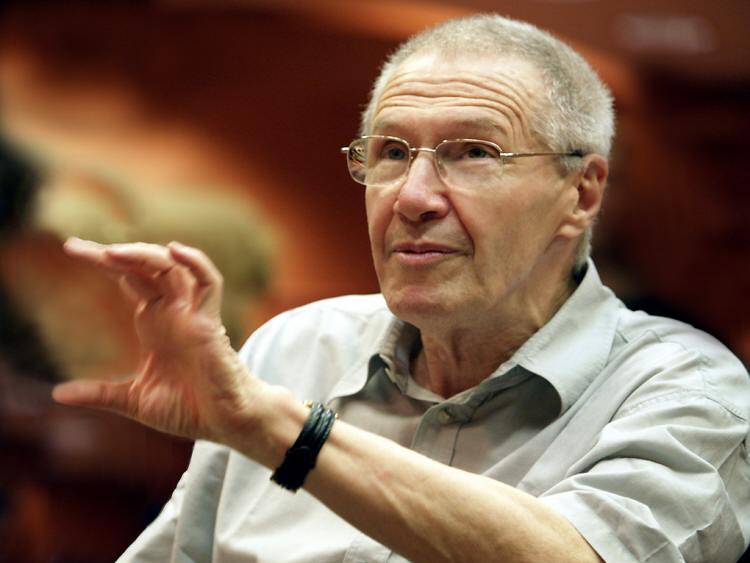 play music together and perform. Public performances are an important part of the Steans, and their programming very often is creative and adventuresome. This year it prominently featured the works of György Kurtág, one of the most interesting composers of the 20th century. Kurtág was born in 1926 in the city of Lugoj, in the Banat region, which after the WWI became part of Romania but had previously belonged to the Kingdom of Hungary. Kurtág was born into a Jewish-Hungarian family. He moved to Budapest in 1946 and enrolled in the Ferenc Liszt Academy of Music. There he met György Ligeti, also a Hungarian Jew from Romania, and also an aspiring composer. They became good friends. Following the Hungarian Uprising of 1956, Kurtág moved to Paris, where he studied with Darius Milhaud and Olivier Messiaen. During that time he also discovered the music of Anton Webern, which greatly influenced his own work. He later returned to Hungary but retained some freedom of movement: in 1971 he was allowed to go to West Berlin for a year. He left Hungary for good in 1986, and since then has lived in Germany, Austria, and France.
Kurtág wrote a relatively small number of works, many of them rather late in his career; the 1980s were probably his most productive years, although he continues to write even these days: his “Short Messages” Op.47 were published in 2011. One of the works that were programmed by the Steans, Signs, Games and Messages for solo viola, is a series of short episodes, each in a distinct style and mood. The work was formally started in 1989, even though some of the pieces were sketched earlier, and remains a work in progress, as some pieces are revised and other are being added to the growing collection. Most of the movements are two-three minutes long; the shortest, Beating, is a Webernian 24 seconds long (To the exhibition of Sári Gerlóczy is all of four seconds longer), while the longest, In Nomine – all’ ongherese, is the whopping four minutes and 40 seconds.
At the Steans, different violists performed selections from the work. Molly Carr played Signs I, Signs II, and Hommage á John Cage (here). Shuangshuang Liu continued with In Nomine—all’ ongherese and Virág – Zsigmondy Dénesnek (A Flower for Dénes Zsigmondy, one of the more unusual pieces), here. Then Wenting Kang played Perpetuum mobile, Klagendes Lied (Plaintive Song) and Kromatikus feleselős (here). Steven Laraia followed with Gerlóczy Sári Kiállitására (To the exhibition of Sári Gerlóczy), In memoriam Aczél György, and In memoriam Tamás Blum (here). Finally, the French vioist Adrien La Marca plays Beating, J. H. Song,and The Carenza Jig (here).
Read more...György Kurtág - Beating, J. H. Song, and The Carenza Jig, from Signs, Games, and Messages
Adrien La Marca (Viola)
Stephan Baier - Piano improvisation 62
Stephan Baier (Piano)