This Week in Classical Music: July 14, 2025. Bastille Day. Today is the French national holiday, and we’ll play some music from that great country, without any pretense of a comprehensive survey.France has an incredibly long record of what we call “classical” music, dating back to medieval times: Leonin and Perotin lived in Paris in the second half of the 12th to early 13th centuries and worked at the recently built Notre-Dame Cathedral.They left a written record of their music, which can still be heard today performed by the old-music ensembles.
The Renaissance that followed brought us several important composers who were either French or Franco-Flemish, from what is now Belgium.Among them were Guillaume Dufay, considered by many the “founding father” of Renaissance music, and Gilles Binchois; both worked in the mid-15th century.A couple of generations later came Josquin des Prez, the most important composer of the last quarter of the 15th – first quarter of the 16th century.This vibrant milieu produced a plethora of composers, many on the French side of the border with Flanders.
The Baroque period was also rich in talent: we could mention just three stars: Jean-Baptiste Lully, François Couperin and Jean-Philippe Rameau.Here’s a section of a suite from Les Boréades, Rameau’s last opera. Les Musiciens du Louvre are conducted by Marc Minkowski.
Somewhat surprisingly, the French composers weren’t very productive during the Classical era (that was the domain of the Germans and Austrians), but they flourished in the following years during what we call the Romantic period. Hector Berlioz, Charles Gounod, César Franck (a Belgian by birth, he lived most of his productive life in Paris), Camille Saint-Saëns, Georges Bizet, and Jules Massenet are just the best-known names; there were many others.Berlioz stands somewhat alone, considering both the size of his talent and the audacity of some of his compositions.Here’s a symphonic interlude from his opera Les Troyens, which usually runs close to five hours.It’s called Chasse royale et orage (Royal hunt and thunderstorm); it is performed by the Orchestra of the Royal Opera House under the direction of Colin Davis.
Since the end of the 19th century, French composers have been at the forefront, while Paris has turned into a veritable Mecca for musicians from all over the world. The great Debussy was followed by the quirky Eric Satie and then the ever-popular Ravel (we have large samples of their works in our library).Les Six (Georges Auric, Louis Durey, Arthur Honegger, Darius Milhaud,Francis Poulenc, and Germaine Tailleferre) followed.Then came Olivier Messiaen, a great talent and the inspiration for a group of young composers who completely abandoned tonality and even went beyond the 12-tone system of Schoenberg and his pupils.Pierre Boulez was one of their leaders.
At the end of WWII, in 1944, Messiaen composed a set of twenty pieces for solo piano titled Vingt Regards sur l'Enfant-Jésus (Twenty Contemplations on the Infant Jesus).It was dedicated to his student, the pianist Yvonne Loriod, who later became Messiaen’s second wife.Here's one of the Regards, Regard de la Vierge (Contemplation of the Virgin).It’s performed by Pierre-Laurent Aimard.

The Bastille Day, 2025
This Week in Classical Music: July 14, 2025. Bastille Day. Today is the French national holiday, and we’ll play some music from that great country, without any pretense of a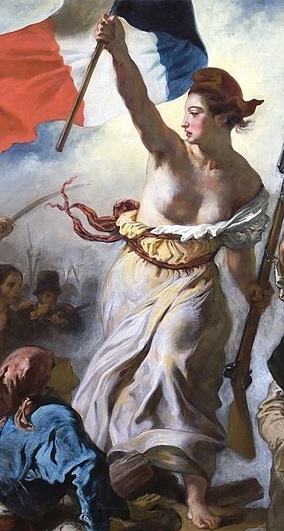 comprehensive survey. France has an incredibly long record of what we call “classical” music, dating back to medieval times: Leonin and Perotin lived in Paris in the second half of the 12th to early 13th centuries and worked at the recently built Notre-Dame Cathedral. They left a written record of their music, which can still be heard today performed by the old-music ensembles.
The Renaissance that followed brought us several important composers who were either French or Franco-Flemish, from what is now Belgium. Among them were Guillaume Dufay, considered by many the “founding father” of Renaissance music, and Gilles Binchois; both worked in the mid-15th century. A couple of generations later came Josquin des Prez, the most important composer of the last quarter of the 15th – first quarter of the 16th century. This vibrant milieu produced a plethora of composers, many on the French side of the border with Flanders.
The Baroque period was also rich in talent: we could mention just three stars: Jean-Baptiste Lully, François Couperin and Jean-Philippe Rameau. Here’s a section of a suite from Les Boréades, Rameau’s last opera. Les Musiciens du Louvre are conducted by Marc Minkowski.
Somewhat surprisingly, the French composers weren’t very productive during the Classical era (that was the domain of the Germans and Austrians), but they flourished in the following years during what we call the Romantic period. Hector Berlioz, Charles Gounod, César Franck (a Belgian by birth, he lived most of his productive life in Paris), Camille Saint-Saëns, Georges Bizet, and Jules Massenet are just the best-known names; there were many others. Berlioz stands somewhat alone, considering both the size of his talent and the audacity of some of his compositions. Here’s a symphonic interlude from his opera Les Troyens, which usually runs close to five hours. It’s called Chasse royale et orage (Royal hunt and thunderstorm); it is performed by the Orchestra of the Royal Opera House under the direction of Colin Davis.
Since the end of the 19th century, French composers have been at the forefront, while Paris has turned into a veritable Mecca for musicians from all over the world. The great Debussy was followed by the quirky Eric Satie and then the ever-popular Ravel (we have large samples of their works in our library). Les Six (Georges Auric, Louis Durey, Arthur Honegger, Darius Milhaud, Francis Poulenc, and Germaine Tailleferre) followed. Then came Olivier Messiaen, a great talent and the inspiration for a group of young composers who completely abandoned tonality and even went beyond the 12-tone system of Schoenberg and his pupils. Pierre Boulez was one of their leaders.
At the end of WWII, in 1944, Messiaen composed a set of twenty pieces for solo piano titled Vingt Regards sur l'Enfant-Jésus (Twenty Contemplations on the Infant Jesus). It was dedicated to his student, the pianist Yvonne Loriod, who later became Messiaen’s second wife. Here's one of the Regards, Regard de la Vierge (Contemplation of the Virgin). It’s performed by Pierre-Laurent Aimard.