This Week in Classical Music: September 8, 2025. Eduard Hanslick. We dedicate this week’s entry to one who was neither a composer nor a performer, but was more influential than most of both.Eduard Hanslick’s 200th anniversary is on September 11th (an unfortunate coincidence).He was the most important music critic in Vienna; what we find astonishing, writing this in 2025, is not the (expected) centrality of classical music in the cultural life of Vienna in the mid-19th century, but the importance of musical criticism, a derivative of music itself.This seems unimaginable today, when classical music has become peripheral and music criticism has practically disappeared.
Hanslick was born in Prague, then part of the Austro-Hungarian Empire, into a German-speaking family.His father was a small and rather poor landowner; his mother was Jewish, the daughter of a well-to-do merchant; she converted to Catholicism upon marrying Hanslick senior.Richard Wagner, who would become Hanslick’s nemesis, never forgot that by blood, Hanslick was half-Jewish.In Prague, Hanslick studied music for a while but then went to the University of Vienna, graduating with a degree in law.But music remained his love, and even while at the university, he continued writing an occasional review.Upon graduation, while working in different ministries, Hanslick continued writing musical criticism, first for Wiener Zeiting, the oldest newspaper in the world still in publication today, and then for another major newspaper, Die Presse, which is also still in print.When, in 1864, two former editors of Die Presse started a new newspaper, Neue freie Presse, Hanslick joined them as a music critic and remained there for the rest of his career.In 1854, Hanslick wrote a book, On the Beautiful in Music, one of the arguments of which was that “Music means itself,” that it has no “subject” and is not an expression of feelings.Unfortunately, this rather conventional notion contradicted Wagner’s ideas.Just three years earlier, Wagner had published an essay, Opera and Drama, in which he, while describing “music drama” as the synthesis of music, poetry and spectacle, also maintained that his music expresses the feelings intrinsic to poetry and drama.This made the programmatic “esthetic of feelings” quite popular in the German-speaking world, and Hanslick’s refutation created a torrent of responses, both positive and negative.The book earned Hanslick a position of professor of “History and esthetics of music” at the University of Vienna, the first such position at any European university.On the other hand, Wagner took umbrage and, in DieMeistersinger von Nürnberg, created a character of Beckmesser, a town clerk and singer, who maliciously judges Walther’s performance, as a caricature of Hanslick.And in his essay, “Judaism in Music,” Wagner declared that Hanslick’s “Jewish style” of criticism is anti-German.
While writing for Neue freie Presse, Hanslick became the leading music critic of Vienna, which itself was the foremost music center of Europe.He had rather conservative taste and wasn’t interested in music before Mozart.He felt that Beethoven had reached the pinnacle and that Schumann and Brahms were the main talents to follow him.Brahms became a close friend and Hanslick his major supporter and promoter.Hanslick tried to be objective toward Wagner’s music.He openly admired his virtuoso orchestration; he liked Tannhäuser and, surprisingly, Meistersinger, despite the “Beckmesser affair.”At the same time, he felt that the whole concept of “music drama” is detrimental to music development.Hanslick could be very cutting: “The Prelude to Tristan and Isolde reminds me of the old Italian painting of a martyr whose intestines are slowly unwound from his body on a reel.”Hanslick was also very negative toward Liszt and Bruckner, one composer who needed a lot of encouragement.These days, Hanslick is remembered as a conservative who completely misunderstood the “new music” of Wagner and his followers.This is true to an extent, but we also should remember that he disliked some nativist, irrational aspects of Wagner’s (and Bruckner’s) music, which the Nazis some decades later found so attractive.

Hanslick 200, 2025
This Week in Classical Music: September 8, 2025. Eduard Hanslick. We dedicate this week’s entry to one who was neither a composer nor a performer, but was more influential than most of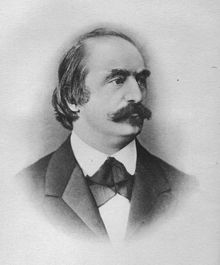 both. Eduard Hanslick’s 200th anniversary is on September 11th (an unfortunate coincidence). He was the most important music critic in Vienna; what we find astonishing, writing this in 2025, is not the (expected) centrality of classical music in the cultural life of Vienna in the mid-19th century, but the importance of musical criticism, a derivative of music itself. This seems unimaginable today, when classical music has become peripheral and music criticism has practically disappeared.
Hanslick was born in Prague, then part of the Austro-Hungarian Empire, into a German-speaking family. His father was a small and rather poor landowner; his mother was Jewish, the daughter of a well-to-do merchant; she converted to Catholicism upon marrying Hanslick senior. Richard Wagner, who would become Hanslick’s nemesis, never forgot that by blood, Hanslick was half-Jewish. In Prague, Hanslick studied music for a while but then went to the University of Vienna, graduating with a degree in law. But music remained his love, and even while at the university, he continued writing an occasional review. Upon graduation, while working in different ministries, Hanslick continued writing musical criticism, first for Wiener Zeiting, the oldest newspaper in the world still in publication today, and then for another major newspaper, Die Presse, which is also still in print. When, in 1864, two former editors of Die Presse started a new newspaper, Neue freie Presse, Hanslick joined them as a music critic and remained there for the rest of his career. In 1854, Hanslick wrote a book, On the Beautiful in Music, one of the arguments of which was that “Music means itself,” that it has no “subject” and is not an expression of feelings. Unfortunately, this rather conventional notion contradicted Wagner’s ideas. Just three years earlier, Wagner had published an essay, Opera and Drama, in which he, while describing “music drama” as the synthesis of music, poetry and spectacle, also maintained that his music expresses the feelings intrinsic to poetry and drama. This made the programmatic “esthetic of feelings” quite popular in the German-speaking world, and Hanslick’s refutation created a torrent of responses, both positive and negative. The book earned Hanslick a position of professor of “History and esthetics of music” at the University of Vienna, the first such position at any European university. On the other hand, Wagner took umbrage and, in Die Meistersinger von Nürnberg, created a character of Beckmesser, a town clerk and singer, who maliciously judges Walther’s performance, as a caricature of Hanslick. And in his essay, “Judaism in Music,” Wagner declared that Hanslick’s “Jewish style” of criticism is anti-German.
While writing for Neue freie Presse, Hanslick became the leading music critic of Vienna, which itself was the foremost music center of Europe. He had rather conservative taste and wasn’t interested in music before Mozart. He felt that Beethoven had reached the pinnacle and that Schumann and Brahms were the main talents to follow him. Brahms became a close friend and Hanslick his major supporter and promoter. Hanslick tried to be objective toward Wagner’s music. He openly admired his virtuoso orchestration; he liked Tannhäuser and, surprisingly, Meistersinger, despite the “Beckmesser affair.” At the same time, he felt that the whole concept of “music drama” is detrimental to music development. Hanslick could be very cutting: “The Prelude to Tristan and Isolde reminds me of the old Italian painting of a martyr whose intestines are slowly unwound from his body on a reel.” Hanslick was also very negative toward Liszt and Bruckner, one composer who needed a lot of encouragement. These days, Hanslick is remembered as a conservative who completely misunderstood the “new music” of Wagner and his followers. This is true to an extent, but we also should remember that he disliked some nativist, irrational aspects of Wagner’s (and Bruckner’s) music, which the Nazis some decades later found so attractive.