This Week in Classical Music: September 22, 2025. Rameau, Shostakovich and more. Several anniversaries of very important composers happen this week, and also those of composers who may not be as famous internationally but are important in their respective countries.The big names are Jeanand Dmitri Shostakovich, the former, one of the most significant French Baroque composers of the 18th century, the latter, together with Prokofiev, the most celebrated Soviet one.We’ve written about both of them many times, for example, here about Rameau, or here about Shostakovich, so today, we will present some of their music and move on to the lesser stars.We’ll hear excerpts from Rameau’s opera Les fêtes d'Hébé, an opera-ballet that premiered in 1739 in the theater of the Palais-Royal.His second opera-ballet, after Les Indes galantes, Les fêtes was very successful.The best singers and dancers were engaged, and it became Rameau’s most successful opera, with 80 stagings in the first year.Here are the first three numbers from the ballet music for Les fêtes.The English Chamber Orchestra conducted by Raymond Leppard.
As for Shostakovich, here’s one of his quartets, no 6, from 1956.Shostakovich’s quartets are less “political” than his symphonies, and this one is mostly lighthearted, a rarity for the composer.It’s performed by the Fitzwilliam Quartet.
One of our “lesser stars” is the Lithuanian composer and painter, Mikalojus Čiurlionis, and September 22 marks his 150th anniversary.Čiurlionis is a Lithuanian national composer, a central figure in Lithuanian culture; he occupies a place that Sibelius holds in Finland or Grieg in Norway.His paintings are as important as his music (and probably better known).For centuries, Lithuania was in a union with Poland, till the Russian Empire captured it in the 1790s, and Čiurlionis wrote in Polish.We have his detailed biography here.Čiurlionis died at the age of 35, so most of his music is “early.”Here, from 1901, is Nocturne Op.6, no.2.Nikolaus Lahusen is at the piano.
As much as Čiurlionis was Lithuania’s national composer, Komitas was Armenia’s.Komitas was born Sogomon Sogomonian on September 26th of 1869 in the city of Kütahya, the Ottoman Empire (now Turkey).Orphaned at the age of 12, he was sent to Etchmiadzin, Armenia's religious center, educated in a seminary there, and became an ordained priest.He started collecting Armenian folk music soon after (the first collection was published in 1895) and then continued his musical studies in Berlin.He stayed there for three years and then returned to Etchmiadzin, where he continued collecting folk music and publishing songs and organized a quired, with which he gave concerts in Yerevan and Tbilisi.He later traveled to Europe and, in 1910, moved to Constantinople, Etchmiadzin being too conservative for him.Constantinople, with the then large Armenian population, was a center of Armenian culture.Komitas thrived there, organizing choirs, lecturing, teaching and writing music.It all ended in 1915 with the Ottoman government-sponsored Armenian massacres.Millions were killed.Komitas was arrested and deported to the interior of the country.He survived but had a mental breakdown, from which he never recovered.He was moved to a French hospital in Constantinople and then to a mental clinic in the suburbs of Paris.He died on October 22nd of 1935.Here are excerpts from Patarag, the Divine Armenian Liturgy by Komitas.The Russian Chamber Chorus of New York (sic!) is conducted by Nikolai Kachanov.

Rameau, Shostakovich, minor stars 2025
This Week in Classical Music: September 22, 2025. Rameau, Shostakovich and more. Several anniversaries of very important composers happen this week, and also those of composers who may not be as famous internationally but are important in their respective countries. The big names are Jean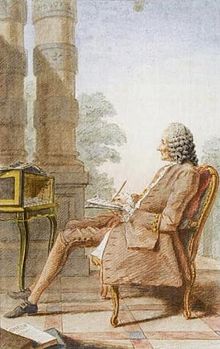 and Dmitri Shostakovich, the former, one of the most significant French Baroque composers of the 18th century, the latter, together with Prokofiev, the most celebrated Soviet one. We’ve written about both of them many times, for example, here about Rameau, or here about Shostakovich, so today, we will present some of their music and move on to the lesser stars. We’ll hear excerpts from Rameau’s opera Les fêtes d'Hébé, an opera-ballet that premiered in 1739 in the theater of the Palais-Royal. His second opera-ballet, after Les Indes galantes, Les fêtes was very successful. The best singers and dancers were engaged, and it became Rameau’s most successful opera, with 80 stagings in the first year. Here are the first three numbers from the ballet music for Les fêtes. The English Chamber Orchestra conducted by Raymond Leppard.
As for Shostakovich, here’s one of his quartets, no 6, from 1956. Shostakovich’s quartets are less “political” than his symphonies, and this one is mostly lighthearted, a rarity for the composer. It’s performed by the Fitzwilliam Quartet.
One of our “lesser stars” is the Lithuanian composer and painter, Mikalojus Čiurlionis, and September 22 marks his 150th anniversary. Čiurlionis is a Lithuanian national composer, a central figure in Lithuanian culture; he occupies a place that Sibelius holds in Finland or Grieg in Norway. His paintings are as important as his music (and probably better known). For centuries, Lithuania was in a union with Poland, till the Russian Empire captured it in the 1790s, and Čiurlionis wrote in Polish. We have his detailed biography here. Čiurlionis died at the age of 35, so most of his music is “early.” Here, from 1901, is Nocturne Op.6, no.2. Nikolaus Lahusen is at the piano.
As much as Čiurlionis was Lithuania’s national composer, Komitas was Armenia’s. Komitas was born Sogomon Sogomonian on September 26th of 1869 in the city of Kütahya, the Ottoman Empire (now Turkey). Orphaned at the age of 12, he was sent to Etchmiadzin, Armenia's religious center, educated in a seminary there, and became an ordained priest. He started collecting Armenian folk music soon after (the first collection was published in 1895) and then continued his musical studies in Berlin. He stayed there for three years and then returned to Etchmiadzin, where he continued collecting folk music and publishing songs and organized a quired, with which he gave concerts in Yerevan and Tbilisi. He later traveled to Europe and, in 1910, moved to Constantinople, Etchmiadzin being too conservative for him. Constantinople, with the then large Armenian population, was a center of Armenian culture. Komitas thrived there, organizing choirs, lecturing, teaching and writing music. It all ended in 1915 with the Ottoman government-sponsored Armenian massacres. Millions were killed. Komitas was arrested and deported to the interior of the country. He survived but had a mental breakdown, from which he never recovered. He was moved to a French hospital in Constantinople and then to a mental clinic in the suburbs of Paris. He died on October 22nd of 1935. Here are excerpts from Patarag, the Divine Armenian Liturgy by Komitas. The Russian Chamber Chorus of New York (sic!) is conducted by Nikolai Kachanov.