This Week in Classical Music: November 24, 2025. Lully and Music Criticism. The holidays are approaching, so we’ll try be brief. One of the composers born this week is Virgil Thomson.He had a very colorful life, especially during his Paris years (you can read more here, in our earlier post), and, while a relatively minor composer, he was very important as a music writer. For 15 years, from 1940 to 1954, his criticism had been published in the New York Herald Tribune; he also wrote several books. Thomson’s writings were influential and widely read; he supported American composers, and his criticism influenced musical programming in New York, resulting in more frequent performances of works by American and contemporary composers. This anniversary (Thomson was born in Kansas City, Missouri, on November 25th of 1896) reminded us of a recent article by Matthew Aucoin in the New York Review of Books. Aucoin is also a composer, young (thirty-five) and talented, and he has a wonderful way with words. What prompted him to write was the recent changes at the NY Times, which, for the time being, doesn’t have a music critic. It’s an interesting reversal of roles when a composer writes about music critics. Aucoin is not as pessimistic about the status of classical music as we are, but maybe it’s the optimism of the age. The article is worth reading, here (unfortunately, it’s behind a paywall).
Several important composers were born this week. Tarquinio Merula, an Italian composer of the early Baroque, was born in Busseto, near Cremona, on November 24th of 1595. Merula spent much of his life in Cremona, by then already a center of violin-making (surprisingly, he didn’t write much music for the violin). In many ways, Merula followed the lead of two great composers: Claudio Monteverdi and Giovanni Gabrieli. He wrote an opera, numerous madrigals and motets, and keyboard pieces. Here’s Merula’s “Madrigaletto” Mentre In Sogno, performed by the ensemble Suonare E Cantare. (And here you can read more about Merula).
Probably the most important composer born this week is Jean-Baptiste Lully, an Italian who became a founder of the French Baroque. Lully was born on November 28th (or 29th) of 1632 in Florence and brought to France as a boy by a French noble, mostly so that his niece could practice her Italian. We’ve written about Lully many times; here’s a detailed entry.
Two Russians were born this week, two Sergeis: Taneyev and Lyapunov, the former in Vladimir, on November 25th of 1856, the latter – four years later, in Yaroslavl, on November 30th of 1859. Taneyev was part of Russia’s cultural elite of the late 19th – early 20th centuries, an intellectual and cosmopolitan; he was also very close to Tchaikovsky. Tchaikovsky trusted Taneyev’s taste in and understanding of music more than any other critic’s but also often feared Taneyev’s pronouncement, as Taneyev was blunt and unsparing. Still, their friendship survived those moments; they were close till Tchaikovsky’s death. Taneyev wrote several symphonies, ten quartets, and an opera. His music is often performed in Russia.
Lyapunov studied with Taneyev in the Moscow Conservatory but turned to more “national” material. An excellent pianist, Lyapunov wrote many pieces for the piano, some of them exceptionally difficult. After the 1917 Revolution, Lyapunov emigrated to France and died in Paris in 1924. One suspects that had Taneyev lived long enough, he would have done the same (he died in 1915).

Lully and Music Criticism, 2025
This Week in Classical Music: November 24, 2025. Lully and Music Criticism. The holidays are approaching, so we’ll try be brief. One of the composers born this week is Virgil Thomson.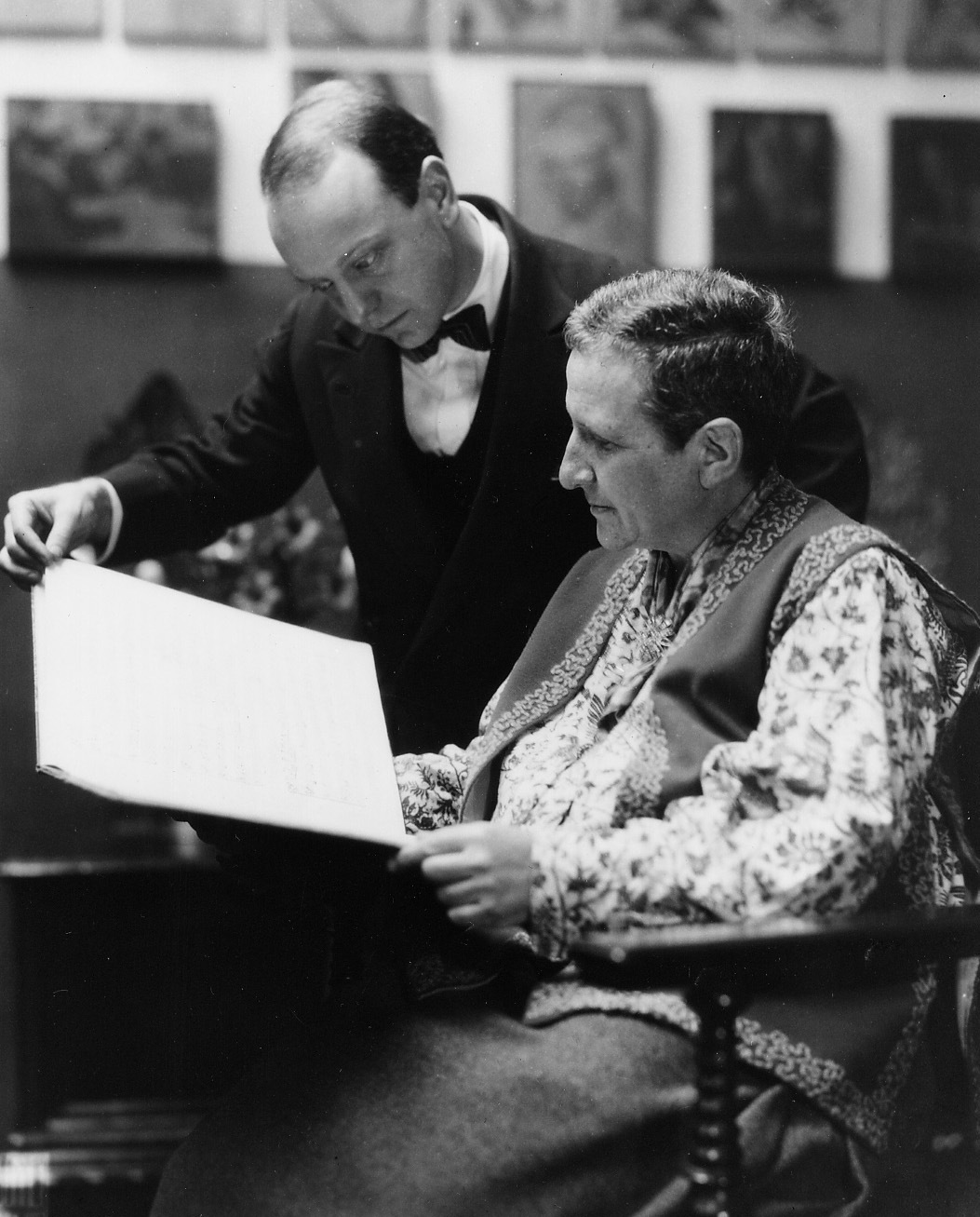 He had a very colorful life, especially during his Paris years (you can read more here, in our earlier post), and, while a relatively minor composer, he was very important as a music writer. For 15 years, from 1940 to 1954, his criticism had been published in the New York Herald Tribune; he also wrote several books. Thomson’s writings were influential and widely read; he supported American composers, and his criticism influenced musical programming in New York, resulting in more frequent performances of works by American and contemporary composers. This anniversary (Thomson was born in Kansas City, Missouri, on November 25th of 1896) reminded us of a recent article by Matthew Aucoin in the New York Review of Books. Aucoin is also a composer, young (thirty-five) and talented, and he has a wonderful way with words. What prompted him to write was the recent changes at the NY Times, which, for the time being, doesn’t have a music critic. It’s an interesting reversal of roles when a composer writes about music critics. Aucoin is not as pessimistic about the status of classical music as we are, but maybe it’s the optimism of the age. The article is worth reading, here (unfortunately, it’s behind a paywall).
Several important composers were born this week. Tarquinio Merula, an Italian composer of the early Baroque, was born in Busseto, near Cremona, on November 24th of 1595. Merula spent much of his life in Cremona, by then already a center of violin-making (surprisingly, he didn’t write much music for the violin). In many ways, Merula followed the lead of two great composers: Claudio Monteverdi and Giovanni Gabrieli. He wrote an opera, numerous madrigals and motets, and keyboard pieces. Here’s Merula’s “Madrigaletto” Mentre In Sogno, performed by the ensemble Suonare E Cantare. (And here you can read more about Merula).
Probably the most important composer born this week is Jean-Baptiste Lully, an Italian who became a founder of the French Baroque. Lully was born on November 28th (or 29th) of 1632 in Florence and brought to France as a boy by a French noble, mostly so that his niece could practice her Italian. We’ve written about Lully many times; here’s a detailed entry.
Two Russians were born this week, two Sergeis: Taneyev and Lyapunov, the former in Vladimir, on November 25th of 1856, the latter – four years later, in Yaroslavl, on November 30th of 1859. Taneyev was part of Russia’s cultural elite of the late 19th – early 20th centuries, an intellectual and cosmopolitan; he was also very close to Tchaikovsky. Tchaikovsky trusted Taneyev’s taste in and understanding of music more than any other critic’s but also often feared Taneyev’s pronouncement, as Taneyev was blunt and unsparing. Still, their friendship survived those moments; they were close till Tchaikovsky’s death. Taneyev wrote several symphonies, ten quartets, and an opera. His music is often performed in Russia.
Lyapunov studied with Taneyev in the Moscow Conservatory but turned to more “national” material. An excellent pianist, Lyapunov wrote many pieces for the piano, some of them exceptionally difficult. After the 1917 Revolution, Lyapunov emigrated to France and died in Paris in 1924. One suspects that had Taneyev lived long enough, he would have done the same (he died in 1915).
Happy Thanksgiving!