This Week in Classical Music: December 1, 2025. Post-Thanksgiving blues. This is the holiday season (we hope you had a wonderful Thanksgiving), and classical music is not the first thing on people’s minds (but is it ever, now?). Thankfully, this week is rather scarce of major talent, which allows us to be brief. Padre Antionio Soler was born on December 3rd of 1729, in Olot, Catalonia, Spain. As a boy, he studied music at the Escolanía school of the Monastery of Montserrat. He was so successful at school that at the age of 17, he was appointed music director at Lleida. At the age of 23, he moved to the Royal monastery of El Escorial. Domenico Scarlatti was, by then, the music master to the Queen of Spain (he had lived in Spain for 25 years) and traveled to El Escorial with the royal family. Soler later called himself Scarlatti’s pupil. Some years later, Soler became the tutor to Prince Gabriel, a son of King Carlos III of Spain.
Like Scarlatti, Soler is known mostly for his keyboard sonatas, though we don’t think they’re on par with those of the Italian master. Nonetheless, some of them are nice. Here, for example, is one, the keyboard Sonata No. 47 in C Minor. It’s played on the piano by Mateusz Borowiak.
Francesco Geminiani, an Italian composer of the late Baroque, was born on December 5th of 1687, in Lucca. He was very famous in his lifetime, but was forgotten for centuries, till resurrected, with the rest of the Italian Baroque, in the middle of the 20th. Like so many Italians (and Handel), he spent many years in London. Here’s Geminiani’s Concerto Grosso in E Minor op. 3, no. 3 (it doesn’t sound in E, we think). Europa Galante is conducted by Fabio Biondi.
Bernardo Pasquini, another Italian of the Baroque era, lived exactly half a century earlier: he was born on December 7th of 1637. If Geminiani was a virtuoso violinist and wrote much of his music for the strings, Pasquini was a harpsichordist and organist, and one of the most important keyboard composers of the era between Frescobaldi and Domenico Scarlatti. Pasquini moved to Rome in 1650 and was employed as an organist in some of the most important churches of the city, such as San Luigi dei Francesi and Santa Maria in Aracoeli, where he had the title of “organist of the Senate and Roman people.” He played for Queen Christina, performed with Corelli, and joined the Arcadian Academy together with Alessandro Scarlatti. Here’s Paquini’s charming Toccata Con Lo Scherzo Del Cucco Per Lo Scozzese. Roberto Loreggian is playing the organ.
Also this week: one of the most popular composers of classical music, the Poland’s Henryk Gorecki (born December 6th of 1933), and Pietro Mascagni of the Cavalleria rusticana fame (born December 7th of 1863).

Post-Thanksgiving blues, 2025
This Week in Classical Music: December 1, 2025. Post-Thanksgiving blues. This is the holiday season (we hope you had a wonderful Thanksgiving), and classical music is not the first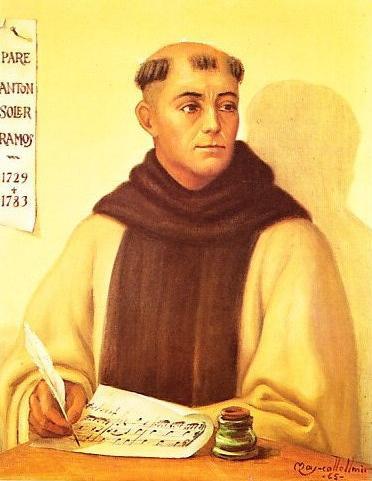 thing on people’s minds (but is it ever, now?). Thankfully, this week is rather scarce of major talent, which allows us to be brief. Padre Antionio Soler was born on December 3rd of 1729, in Olot, Catalonia, Spain. As a boy, he studied music at the Escolanía school of the Monastery of Montserrat. He was so successful at school that at the age of 17, he was appointed music director at Lleida. At the age of 23, he moved to the Royal monastery of El Escorial. Domenico Scarlatti was, by then, the music master to the Queen of Spain (he had lived in Spain for 25 years) and traveled to El Escorial with the royal family. Soler later called himself Scarlatti’s pupil. Some years later, Soler became the tutor to Prince Gabriel, a son of King Carlos III of Spain.
Like Scarlatti, Soler is known mostly for his keyboard sonatas, though we don’t think they’re on par with those of the Italian master. Nonetheless, some of them are nice. Here, for example, is one, the keyboard Sonata No. 47 in C Minor. It’s played on the piano by Mateusz Borowiak.
Francesco Geminiani, an Italian composer of the late Baroque, was born on December 5th of 1687, in Lucca. He was very famous in his lifetime, but was forgotten for centuries, till resurrected, with the rest of the Italian Baroque, in the middle of the 20th. Like so many Italians (and Handel), he spent many years in London. Here’s Geminiani’s Concerto Grosso in E Minor op. 3, no. 3 (it doesn’t sound in E, we think). Europa Galante is conducted by Fabio Biondi.
Bernardo Pasquini, another Italian of the Baroque era, lived exactly half a century earlier: he was born on December 7th of 1637. If Geminiani was a virtuoso violinist and wrote much of his music for the strings, Pasquini was a harpsichordist and organist, and one of the most important keyboard composers of the era between Frescobaldi and Domenico Scarlatti. Pasquini moved to Rome in 1650 and was employed as an organist in some of the most important churches of the city, such as San Luigi dei Francesi and Santa Maria in Aracoeli, where he had the title of “organist of the Senate and Roman people.” He played for Queen Christina, performed with Corelli, and joined the Arcadian Academy together with Alessandro Scarlatti. Here’s Paquini’s charming Toccata Con Lo Scherzo Del Cucco Per Lo Scozzese. Roberto Loreggian is playing the organ.
Also this week: one of the most popular composers of classical music, the Poland’s Henryk Gorecki (born December 6th of 1933), and Pietro Mascagni of the Cavalleria rusticana fame (born December 7th of 1863).