This Week in Classical Music: December 22, 2025. Christmas is coming (and Varèse). This time of the year may be rather challenging for a music lover: “Christmas music” is being played everywhere, and much of it is kitsch. Of course, there are tremendous pieces of music written for this wonderful holiday, Bach’s Christmas Oratorio first and foremost (we presented all of it, in several installments, some years earlier). The late Baroque Italians wrote numerous concertos for Christmas, but most of them are not particularly interesting. Last year, we presented Telemann’s Christmas Oratorio, which isn’t played often (it was new to us). So, this year, we’ll skip all that and go for something very different, in a way something opposite of traditional Christmas carols: the music of Edgard Varèse, a French-American composer. Varèse’s output is small, but his influence was significant, both on American and European composers (here’s a partial list). Varèse was born in Paris on this day, December 22nd, in 1883. He spent his childhood in Burgundy, was brought by his parents to Turin when he was 10 (his father was of Italian descent), studied math and some music there, and returned to Paris at the age of 20. In Paris, he took classes at the Schola Cantorum and the Conservatory (his teachers were Albert Roussel, Charles-Marie Widor, and Vincent d’Indy), befriended Apollinaire and Satie, met Romain Rolland and Debussy, composed some, and conducted. At the onset of WWI, he moved to New York. He settled in the Village, met artists, local and French, and got involved with the promotion of contemporary music, his long-standing interest. To that end, he founded the International Composers’ Guild, which organized performances of the Viennese (Schoenberg, Berg, and Webern – Varèse was much taken by atonal music), Stravinsky, and French contemporary composers. Later, Varèse established the Pan American Association of Composers, again to promote experimental music.
In the late 1920s and 1930s, Varèse spent some time in Europe, mostly in France, and then fell into depression, not composing for 10 years. For a long time, he was interested in music as “organized sound,” and felt that electronically-produced sounds have great potential. In 1954, he received an anonymous gift: a tape recorder. Varèse experimented with the tape first in New York, and then in Europe, first in France, and then in the Philips laboratories in Eindhoven, where in 1958, he completed a piece for tape alone called Poème électronique. It was composed for the Filips pavilion at the 1958 Brussels World Fair (the pavilion was built by the famous architect Le Corbusier). 325 loudspeakers, spread around the pavilion, were encased in the walls and played Poème électronique. Iannis Xenakis, who assisted Le Corbusier in designing the pavilion – he was not just a composer but an architect as well – created a separate piece of music that could be heard at the pavilion’s entrance and exit. We can only imagine the totality of the impression, visual, aural, and spatial.
So, in the spirit of diversity, instead of some orchestrated Christmas carols, we’ll hear two of Varèse’s compositions, an early one, Intégrales, composed in 1923-25, sort of a Dada-Industrial piece, and Poème électronique. The former is performed by the Ensemble InterContemporain under the direction of Pierre Boulez (here). The latter is a digital transfer of the tape created by Varèse for the World Fair (here).

Christams and Edgard Varèse, 2025
This Week in Classical Music: December 22, 2025. Christmas is coming (and Varèse). This time of the year may be rather challenging for a music lover: “Christmas music” is being played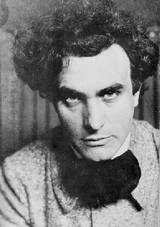 everywhere, and much of it is kitsch. Of course, there are tremendous pieces of music written for this wonderful holiday, Bach’s Christmas Oratorio first and foremost (we presented all of it, in several installments, some years earlier). The late Baroque Italians wrote numerous concertos for Christmas, but most of them are not particularly interesting. Last year, we presented Telemann’s Christmas Oratorio, which isn’t played often (it was new to us). So, this year, we’ll skip all that and go for something very different, in a way something opposite of traditional Christmas carols: the music of Edgard Varèse, a French-American composer. Varèse’s output is small, but his influence was significant, both on American and European composers (here’s a partial list). Varèse was born in Paris on this day, December 22nd, in 1883. He spent his childhood in Burgundy, was brought by his parents to Turin when he was 10 (his father was of Italian descent), studied math and some music there, and returned to Paris at the age of 20. In Paris, he took classes at the Schola Cantorum and the Conservatory (his teachers were Albert Roussel, Charles-Marie Widor, and Vincent d’Indy), befriended Apollinaire and Satie, met Romain Rolland and Debussy, composed some, and conducted. At the onset of WWI, he moved to New York. He settled in the Village, met artists, local and French, and got involved with the promotion of contemporary music, his long-standing interest. To that end, he founded the International Composers’ Guild, which organized performances of the Viennese (Schoenberg, Berg, and Webern – Varèse was much taken by atonal music), Stravinsky, and French contemporary composers. Later, Varèse established the Pan American Association of Composers, again to promote experimental music.
In the late 1920s and 1930s, Varèse spent some time in Europe, mostly in France, and then fell into depression, not composing for 10 years. For a long time, he was interested in music a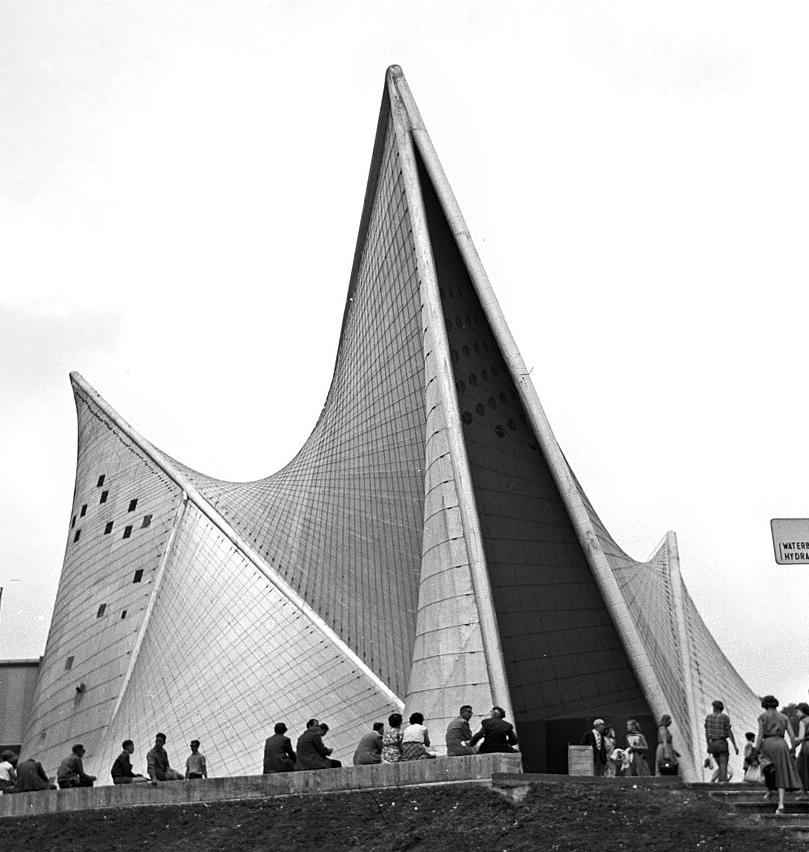 s “organized sound,” and felt that electronically-produced sounds have great potential. In 1954, he received an anonymous gift: a tape recorder. Varèse experimented with the tape first in New York, and then in Europe, first in France, and then in the Philips laboratories in Eindhoven, where in 1958, he completed a piece for tape alone called Poème électronique. It was composed for the Filips pavilion at the 1958 Brussels World Fair (the pavilion was built by the famous architect Le Corbusier). 325 loudspeakers, spread around the pavilion, were encased in the walls and played Poème électronique. Iannis Xenakis, who assisted Le Corbusier in designing the pavilion – he was not just a composer but an architect as well – created a separate piece of music that could be heard at the pavilion’s entrance and exit. We can only imagine the totality of the impression, visual, aural, and spatial.
So, in the spirit of diversity, instead of some orchestrated Christmas carols, we’ll hear two of Varèse’s compositions, an early one, Intégrales, composed in 1923-25, sort of a Dada-Industrial piece, and Poème électronique. The former is performed by the Ensemble InterContemporain under the direction of Pierre Boulez (here). The latter is a digital transfer of the tape created by Varèse for the World Fair (here).