This Week in Classical Music: January 5, 2026. The Piano Day.We think January 5th should be officially proclaimed Piano Day, as three great pianists of the second half of the 20th century were born on this day: Arturo Benedetti Michelangeli, in 1920, Alfred Brendel, in 1931, and Maurizio Pollini, in 1942.As pianists and as musicians, they were all very different, and it’s impossible to characterize them in a sentence.We could probably say that Michelangeli’s playing was aristocratic and perfectionist, that Brendel was one of the deepest thinkers of the keyboard, while Pollini’s playing escapes definition: his repertoire was enormous, and he was brilliant in Chopin as much as in Beethoven or composers of the 20th century.Pollini’s technique was spectacular for much of his career (not surprisingly, it faltered as Pollini approached his seventies).Brendel was never a virtuoso, and he acknowledged it himself, but his technique was more than adequate, and many of his recordings are profound.And listening to Michelangeli’s live recordings, one gets a feeling that he never made any mistakes.
We wanted to illustrate the difference in their styles by presenting a piece that all three had recorded, but it turned out to be a difficult task.First of all, Michelangeli’s repertoire was relatively limited, and he recorded less than his contemporaries.Brendel’s recording output was broader, but he concentrated on the German classics, especially Beethoven, Schubert, Mozart, and Liszt.As far as we can tell, Brendel recorded very little of Chopin: only four Polonaises and Andante Spianato and Grande Polonaise Brillante.Pollini’s recording output, on the other hand, was very large: his Deutsche Grammophon set consists of 62 CDs.Interestingly, one of the few Chopin pieces that Pollini had not recorded was Andante Spianato and Grande Polonaise Brillante. Michelangeli did, so that was a close call.
In our search, we probably missed some recordings, but the only composition that we could find that all three of them recorded is rather unexpected: it is Beethoven’s Piano Sonata no. 4, op. 7, nicknamed the Grand Sonata.It is an early piece, written in 1796, and one of Beethoven’s longest sonatas, running almost half an hour.Michelangeli recorded it in 1971, Brendel in 1977, and Pollini’s is from the 2012 recording (there’s another recording, made in 1977, but we couldn’t find it).Pollini's performance is fastest, running about 25 minutes; Brendel’s is almost 31 minutes.Michelangeli takes the slowest tempo: his sonata is one minute longer than Brendel’s.We thought it would be easier to compare, say, the first movement, rather than the interpretations of the whole sonata.So, here is Michelangeli, who plays the Allegro in a very measured 9 minutes and 46 seconds, here is Brendel, who takes eight and a half minutes, and here – Pollini, whose first movement flies in 7 minutes and 33 seconds.And of course, we have the complete sonatas as well: here, here, and here.Enjoy!

The Piano Day, 2026
This Week in Classical Music: January 5, 2026. The Piano Day. We think January 5th should be officially proclaimed Piano Day, as three great pianists of the second half of the 20th century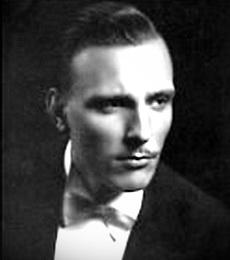 were born on this day: Arturo Benedetti Michelangeli, in 1920, Alfred Brendel, in 1931, and Maurizio Pollini, in 1942. As pianists and as musicians, they were all very different, and it’s impossible to characterize them in a sentence. We could probably say that Michelangeli’s playing was aristocratic and perfectionist, that Brendel was one of the deepest thinkers of the keyboard, while Pollini’s playing escapes definition: his repertoire was enormous, and he was brilliant in Chopin as much as in Beethoven or composers of the 20th century. Pollini’s technique was spectacular for much of his career (not surprisingly, it faltered as Pollini approached his seventies). Brendel was never a virtuoso, and he acknowledged it himself, but his technique was more than adequate, and many of his recordings are profound. And listening to Michelangeli’s live recordings, one gets a feeling that he never made any mistakes.
We wanted to illustrate the difference in their styles by presenting a piece that all three had recorded, but it turned out to be a difficult task. First of all, Michelangeli’s repertoire was relatively limited, and he recorded less than his contemporaries. Brendel’s recording output was broader, but he concentrated on the German classics, especially Beethoven, Schubert, Mozart, and Liszt. As far as we can tell, Brendel recorded very little of Chopin: only four Polonaises and Andante Spianato and Grande Polonaise Brillante. Pollini’s recording output, on the other hand, was very large: his Deutsche Grammophon set consists of 62 CDs. Interestingly, one of the few Chopin pieces that Pollini had not recorded was Andante Spianato and Grande Polonaise Brillante. Michelangeli did, so that was a close call.