This Week in Classical Music: January 19, 2026. Furtwängler, Part I. January 25th marks the 140th anniversary of Wilhelm Furtwängler, one of the most important conductors of the 20thcentury. Furtwängler, who died more than half a century ago, is still highly admired by musicians and the public alike. Many of his younger peers considered him the greatest conductor ever: Carlos Kleiber called him that and declined to perform some of Beethoven’s and Bruckner’s symphonies, because Furtwängler “said it all” already. Claudio Abbado called him “the greatest of all,” and so did numerous other major conductors. The German musical scene during the Weimar Republic, and to some extent, during the Nazi era, the time when Furtwängler was active, was incredibly rich. Think of the conductors of that era, all working at the same time: Otto Klemperer (born in 1885), Hans Knappertsbusch (b. in 1888), Erich Kleiber, Carlos’s father (b. in 1890), Karl Böhm (b. in 1894), George Szell (b. in 1897), Eugen Jochum (b. in 1902), and the young Herbert von Karajan (b. in 1908). They led major orchestras in Germany and Austria, as musically (if not politically) the two countries were united for centuries, with musicians moving from one country to another with ease, conducting the Berlin Philharmonic one day and the Vienna Philharmonic the next, and teaching in the conservatories of both countries. After the war (and some earlier), they became leaders of major international orchestras. But within this group, Furtwängler was considered primus inter pares by the public, critics, and, importantly, political leaders. The latter became Furtwängler’s biggest problem.
Wilhelm Furtwängler was born in Schöneberg (now part of Berlin) into a highly cultured and well-to-do family. He was immersed in the arts from childhood, and music was his major love. He studied the piano and composition (he composed his first pieces at the age of seven). Furtwängler began conducting partly to perform his own music, as other conductors were not very keen on it. For a long time, he felt that he was a composer first, conductor second. His first formal conducting position was in Breslau (now Wrocław, Poland); from there, he went to Zurich and the opera theater in Strasbourg, then, as Breslau, part of Germany. At the age of 25, he was appointed the music director of the Lübeck Opera, after which he assumed the same position at the more important Mannheim Opera. By the late 1910s, he was considered Germany’s leading young conductor. When Arthur Nikisch, who led the Berlin Philharmonic and the Leipzig Gewandhaus orchestras, died in 1922, Furtwängler assumed his positions in both cities. Being the music director of the Berlin Philharmonic was (and is) the most prestigious position in Germany, and Furtwängler was associated with the orchestra, except for an interruption after the war, for the rest of his life.
In the 1920s – early 30s, Furtwängler’s fame grew, both in Germany and in Britain, other European countries, and the US, where he had very successful tours. Even though his interpretations were superb in their overarching form, the flexible tempos, and the sound his orchestras created, he cut a rather unusual figure on the podium. Tall, gangly, his gestures were imprecise (some musicians, not the Berliners, of course, complained that they didn’t quite understand them), he never beat the tempo (unlike Toscanini), his communications during rehearsals were practically non-verbal – he would mutter something, rarely saying anything beyond “good.” His connection to the orchestra musicians happened on some other level, and in his awkward way, he could conjure the music like nobody else. We can hear it in his recording, even if the quality is poor.
And then, in 1933, the Nazis came to power.
Bruckner’s Symphony no. 8 is one of the compositions Carlos Kleiber refused to perform because he couldn’t express anything beyond what Furtwängler had already done. There are several recordings of Furtwängler conducting this symphony. We selected the one made in Vienna’s Musikverein, on October 17, 1944, at the end of WWII, when the impending catastrophic defeat of Germany was clear, if unacknowledged. The Vienna Philharmonic is conducted by Wilhelm Furtwängler. First movement here, the whole symphony here.

Wilhelm Furtwängler, Part I, 2026
This Week in Classical Music: January 19, 2026. Furtwängler, Part I. January 25th marks the 140th anniversary of Wilhelm Furtwängler, one of the most important conductors of the 20th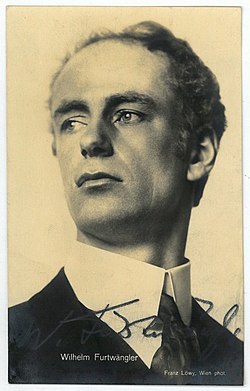 century. Furtwängler, who died more than half a century ago, is still highly admired by musicians and the public alike. Many of his younger peers considered him the greatest conductor ever: Carlos Kleiber called him that and declined to perform some of Beethoven’s and Bruckner’s symphonies, because Furtwängler “said it all” already. Claudio Abbado called him “the greatest of all,” and so did numerous other major conductors. The German musical scene during the Weimar Republic, and to some extent, during the Nazi era, the time when Furtwängler was active, was incredibly rich. Think of the conductors of that era, all working at the same time: Otto Klemperer (born in 1885), Hans Knappertsbusch (b. in 1888), Erich Kleiber, Carlos’s father (b. in 1890), Karl Böhm (b. in 1894), George Szell (b. in 1897), Eugen Jochum (b. in 1902), and the young Herbert von Karajan (b. in 1908). They led major orchestras in Germany and Austria, as musically (if not politically) the two countries were united for centuries, with musicians moving from one country to another with ease, conducting the Berlin Philharmonic one day and the Vienna Philharmonic the next, and teaching in the conservatories of both countries. After the war (and some earlier), they became leaders of major international orchestras. But within this group, Furtwängler was considered primus inter pares by the public, critics, and, importantly, political leaders. The latter became Furtwängler’s biggest problem.
Wilhelm Furtwängler was born in Schöneberg (now part of Berlin) into a highly cultured and well-to-do family. He was immersed in the arts from childhood, and music was his major love. He studied the piano and composition (he composed his first pieces at the age of seven). Furtwängler began conducting partly to perform his own music, as other conductors were not very keen on it. For a long time, he felt that he was a composer first, conductor second. His first formal conducting position was in Breslau (now Wrocław, Poland); from there, he went to Zurich and the opera theater in Strasbourg, then, as Breslau, part of Germany. At the age of 25, he was appointed the music director of the Lübeck Opera, after which he assumed the same position at the more important Mannheim Opera. By the late 1910s, he was considered Germany’s leading young conductor. When Arthur Nikisch, who led the Berlin Philharmonic and the Leipzig Gewandhaus orchestras, died in 1922, Furtwängler assumed his positions in both cities. Being the music director of the Berlin Philharmonic was (and is) the most prestigious position in Germany, and Furtwängler was associated with the orchestra, except for an interruption after the war, for the rest of his life.
In the 1920s – early 30s, Furtwängler’s fame grew, both in Germany and in Britain, other European countries, and the US, where he had very successful tours. Even though his interpretations were superb in their overarching form, the flexible tempos, and the sound his orchestras created, he cut a rather unusual figure on the podium. Tall, gangly, his gestures were imprecise (some musicians, not the Berliners, of course, complained that they didn’t quite understand them), he never beat the tempo (unlike Toscanini), his communications during rehearsals were practically non-verbal – he would mutter something, rarely saying anything beyond “good.” His connection to the orchestra musicians happened on some other level, and in his awkward way, he could conjure the music like nobody else. We can hear it in his recording, even if the quality is poor.
And then, in 1933, the Nazis came to power.
Bruckner’s Symphony no. 8 is one of the compositions Carlos Kleiber refused to perform because he couldn’t express anything beyond what Furtwängler had already done. There are several recordings of Furtwängler conducting this symphony. We selected the one made in Vienna’s Musikverein, on October 17, 1944, at the end of WWII, when the impending catastrophic defeat of Germany was clear, if unacknowledged. The Vienna Philharmonic is conducted by Wilhelm Furtwängler. First movement here, the whole symphony here.