This Week in Classical Music: March 2, 2026. Chopin, the Calendar, Vivaldi. Were we to follow the American tradition, our week would start on a Sunday, which this week was March 1st, Frederic Chopin’s birthday. But we follow the “scientific” practice (yes, there’s even an international standard for it!), and start our weeks on Mondays, and because of that, we just missed Chopin’s birthday by a day. But he’s too great a composer to be missed, isn’t he? We wanted to find a performance by a pianist (as Chopin was first and foremost a piano composer), also born this week, but, alas, came up empty-handed: not a single significant pianist has an anniversary this week. So we went back a month to Arthur Rubinstein, in our opinion, the greatest Chopinist of all time, who was born on February 28th of 1887. We missed his birthday as well, being preoccupied with Furtwängler (we also skipped several other wonderful pianists, from Leopold Godowsky (b. 2/13/1870) and Josef Hoffman (b. 1/20/1876) to Yuja Want (b. 2/10/1987). Hoffman was an unfortunate omission, as it was his 150th anniversary.
But back to Chopin and Rubinstein. Rubinstein loved his countryman’s music so much that one could assume that he recorded all of it, as did, for example, Nikita Magaloff, who not only recorded all of Chopin’s piano works but also played them all in public, in a series of six concerts. (We missed Magaloff’s birthday too: this wonderful Russian-Georgian-Swiss pianist was born on February 21st of 1912). Rubinstein was more selective. There were pieces that he recorded several times, for example, the Polonaise in F-sharp minor, Op. 44, which he did three times, in 1935, 1951, and 1964. On the other hand, he recorded only three Etudes from op. 10 (nos. 4, 5, and 12), and four from the Etudes op. 25 (nos. 1, 2, 3, and 5). It’s a mystery to us why Rubinstein didn’t record the rest of them: he obviously had the technique (his recordings of the challenging Scherzos are brilliant), and musically Chopin’s etudes are marvelous short pieces, not just exercises for beginners, like Carl Czerny’s. We love practically all of Rubinstein’s Chopin, including the Ballades. Here’s no 3, recorded in 1959.
This week is unusually rich in talent. Antonio Vivaldi, Carlo Gesualdo, Carl Philipp Emanuel Bach, Bedřich Smetana, Maurice Ravel, Heitor Villa-Lobos, and Kurt Weill were all born this week: two Italians, two Germans, one Czech, one Frenchman, and one Brazilian, a wonderful constellation. To celebrate these composers, we’ll play some of their music. Moro, lasso, al mio duolo (I die, alas, in my suffering) is a fantastical chromatic madrigal by Gesualdo, published in 1611 (here). It sounds original and fresh today; it shocked listeners when it was first performed, and even a century later, Charles Burney, the British musicologist and historian, called it “shocking and disgusting.”
Sometimes one gets the impression that all Vivaldi wrote was the Four Seasons. Nothing could be further from the truth. Tremendously prolific, Vivaldi wrote hundreds of concertos for different instruments, operas, sacred music, and much more. Here’s an example of Vivaldi’s church music, Introduzione al Miserere “Filiæ Mæstæ Jerusalem” (The mournful daughters of Jerusalem) for the alto, strings, and basso continuo. The Miserere itself, to which this was an introduction, has been lost.
And finally, C.P.E. Bach’s late Fantasia in F-Sharp Minor, Wq. 67 (here). It’s performed by Ana-Marija Markovina, a Croatian pianist who recorded all C.P.E.’s piano works.

Chopin, the Calendar, Vivaldi 2026
This Week in Classical Music: March 2, 2026. Chopin, the Calendar, Vivaldi. Were we to follow the American tradition, our week would start on a Sunday, which this week was March 1st,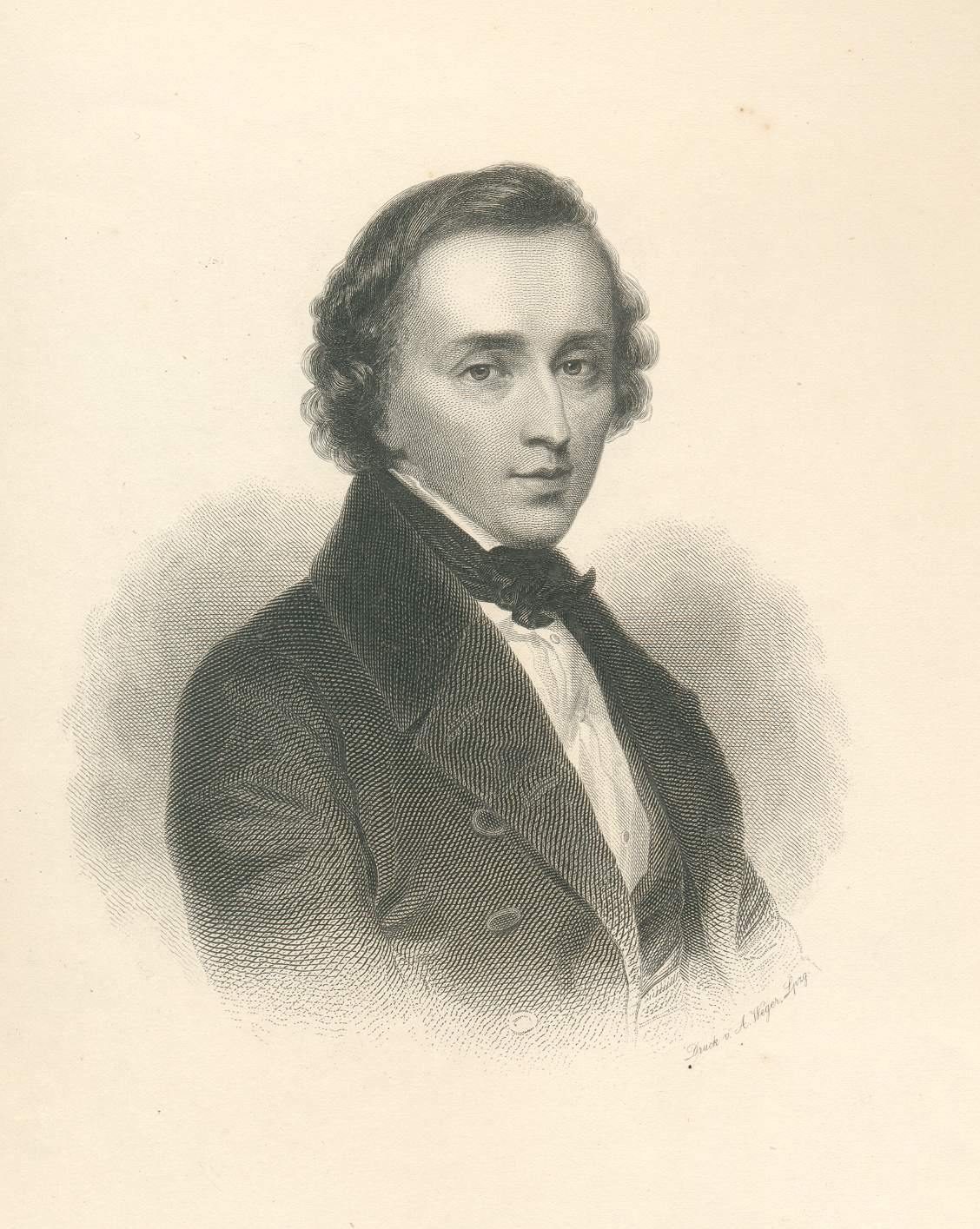 Frederic Chopin’s birthday. But we follow the “scientific” practice (yes, there’s even an international standard for it!), and start our weeks on Mondays, and because of that, we just missed Chopin’s birthday by a day. But he’s too great a composer to be missed, isn’t he? We wanted to find a performance by a pianist (as Chopin was first and foremost a piano composer), also born this week, but, alas, came up empty-handed: not a single significant pianist has an anniversary this week. So we went back a month to Arthur Rubinstein, in our opinion, the greatest Chopinist of all time, who was born on February 28th of 1887. We missed his birthday as well, being preoccupied with Furtwängler (we also skipped several other wonderful pianists, from Leopold Godowsky (b. 2/13/1870) and Josef Hoffman (b. 1/20/1876) to Yuja Want (b. 2/10/1987). Hoffman was an unfortunate omission, as it was his 150th anniversary.
But back to Chopin and Rubinstein. Rubinstein loved his countryman’s music so much that one could assume that he recorded all of it, as did, for example, Nikita Magaloff, who not only recorded all of Chopin’s piano works but also played them all in public, in a series of six concerts. (We missed Magaloff’s birthday too: this wonderful Russian-Georgian-Swiss pianist was born on February 21st of 1912). Rubinstein was more selective. There were pieces that he recorded several times, for example, the Polonaise in F-sharp minor, Op. 44, which he did three times, in 1935, 1951, and 1964. On the other hand, he recorded only three Etudes from op. 10 (nos. 4, 5, and 12), and four from the Etudes op. 25 (nos. 1, 2, 3, and 5). It’s a mystery to us why Rubinstein didn’t record the rest of them: he obviously had the technique (his recordings of the challenging Scherzos are brilliant), and musically Chopin’s etudes are marvelous short pieces, not just exercises for beginners, like Carl Czerny’s. We love practically all of Rubinstein’s Chopin, including the Ballades. Here’s no 3, recorded in 1959.
This week is unusually rich in talent. Antonio Vivaldi, Carlo Gesualdo, Carl Philipp Emanuel Bach, Bedřich Smetana, Maurice Ravel, Heitor Villa-Lobos, and Kurt Weill were all born this week: two Italians, two Germans, one Czech, one Frenchman, and one Brazilian, a wonderful constellation. To celebrate these composers, we’ll play some of their music. Moro, lasso, al mio duolo (I die, alas, in my suffering) is a fantastical chromatic madrigal by Gesualdo, published in 1611 (here). It sounds original and fresh today; it shocked listeners when it was first performed, and even a century later, Charles Burney, the British musicologist and historian, called it “shocking and disgusting.”
Sometimes one gets the impression that all Vivaldi wrote was the Four Seasons. Nothing could be further from the truth. Tremendously prolific, Vivaldi wrote hundreds of concertos for different instruments, operas, sacred music, and much more. Here’s an example of Vivaldi’s church music, Introduzione al Miserere “Filiæ Mæstæ Jerusalem” (The mournful daughters of Jerusalem) for the alto, strings, and basso continuo. The Miserere itself, to which this was an introduction, has been lost.
And finally, C.P.E. Bach’s late Fantasia in F-Sharp Minor, Wq. 67 (here). It’s performed by Ana-Marija Markovina, a Croatian pianist who recorded all C.P.E.’s piano works.