This Week in Classical Music: March 9, 2026. Telemann and more. Georg Philipp Telemann was born in Magdeburg on March 14, 1681. Four years older than his friend Johann Sebastian Bach and George Frideric Handel, whom Telemann also knew well, he was also the godfather of Johann Sebastian’s son Carl Philipp Emanuel Bach: Philipp in the younger Bach’s name comes from Telemann. The most prolific composer of his time, he wrote more than 3,000 compositions, including 1,700 cantatas, of which 1,400 are extant, and that’s just part of his output. He also composed 125 orchestral suites and 125 concertos, several dozen operas, and much more. We’ve complained (if that’s a proper word) about this prodigious output in our previous posts: it’s impossible to play all his works or even read all the sheet music. So there are no “Telemann’s greatest hits,” because even if somebody were to put such a list together, we know that it wouldn’t be in any way real. And we know that Telemann’s compositions were quite uneven: some pieces are rather mediocre, on the other hand, some were good enough to be mistaken for works of Johann Sebastian Bach, an acknowledged genius, only to turn out to be written by Telemann. (It’s worth noting that during his lifetime, Telemann, a worldly figure, was much more famous than Bach, a cantor of Thomaskirche, Leipzig.)
Some years ago, we posted an entry detailing events in Telemann’s life; you can read it here. Today, we’ll present one of his numerous cantatas, and rather than listening to hundreds of them and selecting one, we’re taking an easy way out: it’s yet another cantata, formerly attributed to Bach, which belongs to Telemann’s pen. It’s called Ich weiß, daß mein Erlöser lebt (I know that my Redeemer lives), and you can listen to it here. Peter Schreier conducts the Festival Strings Lucerne and sings the tenor part.
Several other composers have their anniversaries this week. Josef Mysliveček, a Czech who spent half of his life in Italy, was born in Prague on March 9th of 1737. Mysliveček was 20 years older than Mozart: when they met in Bologna in 1770, Mozart was just a 14-year-old boy, but they became friends (Papa Leopold brought his son to Italy on one of their “Grand Tours” to demonstrate his phenomenal abilities as pianist, violinist and composer, and earn some money in the process). It seems that Mysliveček influenced the style of Mozart’s earlier compositions, not that we’re comparing the magnitude of their talent. Here’s Mysliveček’s Octet for an unusual combination of wind instruments: 2 oboes, 2 clarinets, 2 bassoons, 2 horns. It was composed around the time he met Mozart (and when Mozart composed Mitridate, re di Ponto, his fifth opera).
Two prominent composers of the 20th century were also born this week: Arthur Honegger, a member of the French group “Les Six,” in Le Havre on March 10th of 1892, and one of the most important American composers of the last century, Samuel Barber, in West Chester, PA, on March 9th of 1910. Barber wrote in a more traditional idiom than many of his contemporaries (a good example is his famous Adagio for Strings). Much of his output was for the voice: songs accompanied by the piano or orchestra, and choral compositions. here’s Barber’s Piano Concerto, composed in 1962 and premiered that year at the festivities surrounding the opening of the Philharmonic Hall of the Lincoln Center (later the Avery Fisher Hall and now Geffen Hall). John Browning performed at the premiere and is featured in this recording, made two years later, with George Szell conducting the Cleveland Orchestra.
Telemann, 2026
This Week in Classical Music: March 9, 2026. Telemann and more. Georg Philipp Telemann was born in Magdeburg on March 14, 1681. Four years older than his friend Johann Sebastian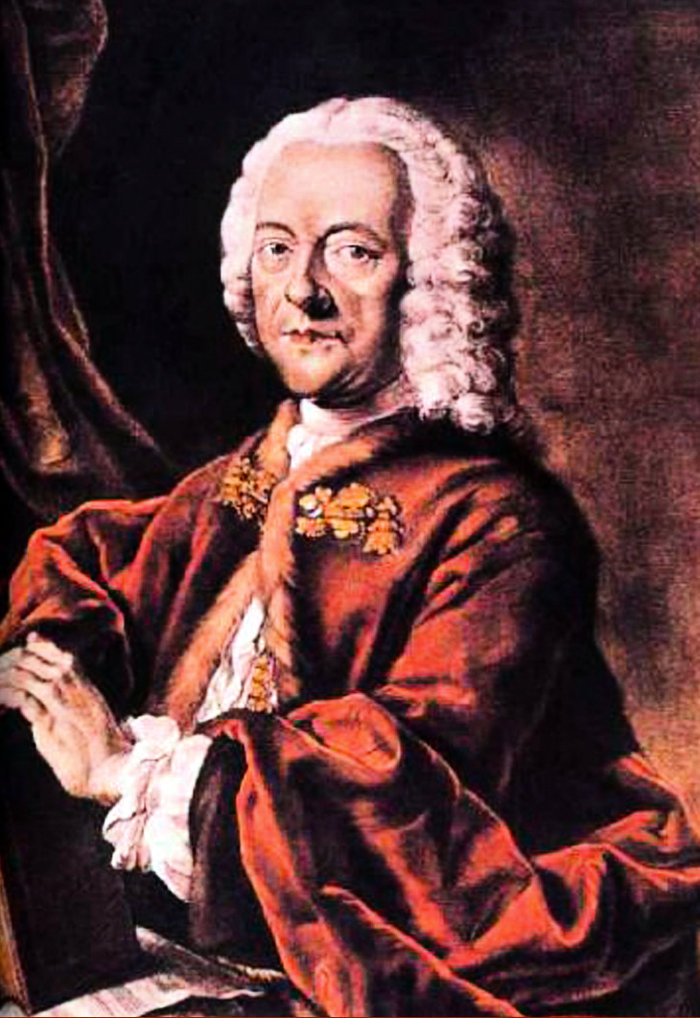 Bach and George Frideric Handel, whom Telemann also knew well, he was also the godfather of Johann Sebastian’s son Carl Philipp Emanuel Bach: Philipp in the younger Bach’s name comes from Telemann. The most prolific composer of his time, he wrote more than 3,000 compositions, including 1,700 cantatas, of which 1,400 are extant, and that’s just part of his output. He also composed 125 orchestral suites and 125 concertos, several dozen operas, and much more. We’ve complained (if that’s a proper word) about this prodigious output in our previous posts: it’s impossible to play all his works or even read all the sheet music. So there are no “Telemann’s greatest hits,” because even if somebody were to put such a list together, we know that it wouldn’t be in any way real. And we know that Telemann’s compositions were quite uneven: some pieces are rather mediocre, on the other hand, some were good enough to be mistaken for works of Johann Sebastian Bach, an acknowledged genius, only to turn out to be written by Telemann. (It’s worth noting that during his lifetime, Telemann, a worldly figure, was much more famous than Bach, a cantor of Thomaskirche, Leipzig.)
Some years ago, we posted an entry detailing events in Telemann’s life; you can read it here. Today, we’ll present one of his numerous cantatas, and rather than listening to hundreds of them and selecting one, we’re taking an easy way out: it’s yet another cantata, formerly attributed to Bach, which belongs to Telemann’s pen. It’s called Ich weiß, daß mein Erlöser lebt (I know that my Redeemer lives), and you can listen to it here. Peter Schreier conducts the Festival Strings Lucerne and sings the tenor part.
Several other composers have their anniversaries this week. Josef Mysliveček, a Czech who spent half of his life in Italy, was born in Prague on March 9th of 1737. Mysliveček was 20 years older than Mozart: when they met in Bologna in 1770, Mozart was just a 14-year-old boy, but they became friends (Papa Leopold brought his son to Italy on one of their “Grand Tours” to demonstrate his phenomenal abilities as pianist, violinist and composer, and earn some money in the process). It seems that Mysliveček influenced the style of Mozart’s earlier compositions, not that we’re comparing the magnitude of their talent. Here’s Mysliveček’s Octet for an unusual combination of wind instruments: 2 oboes, 2 clarinets, 2 bassoons, 2 horns. It was composed around the time he met Mozart (and when Mozart composed Mitridate, re di Ponto, his fifth opera).
Two prominent composers of the 20th century were also born this week: Arthur Honegger, a member of the French group “Les Six,” in Le Havre on March 10th of 1892, and one of the most important American composers of the last century, Samuel Barber, in West Chester, PA, on March 9th of 1910. Barber wrote in a more traditional idiom than many of his contemporaries (a good example is his famous Adagio for Strings). Much of his output was for the voice: songs accompanied by the piano or orchestra, and choral compositions. here’s Barber’s Piano Concerto, composed in 1962 and premiered that year at the festivities surrounding the opening of the Philharmonic Hall of the Lincoln Center (later the Avery Fisher Hall and now Geffen Hall). John Browning performed at the premiere and is featured in this recording, made two years later, with George Szell conducting the Cleveland Orchestra.