This Week in Classical Music: April 13, 2026. Pianists, and a bit of Italy. Before we turn to the main topic of our post, here’s a harp. It’s not just any harp; it’s displayed in the Galleria Estense, Modena’s Art Museum. This harp was brought to Modena in 1598, when the Estense court, under pressure from the Pope, moved there from their original family seat of Ferrara. While in Ferrara, this harp was used by one of the members of the Concerto delle Donne. We don’t know who played this instrument: all members of the Concerto were virtuoso singers, and several used the harp, lute, and viol for accompaniment. The Concerto didn’t survive the move to Modena, but the precious harp did; it really is very beautiful, worthy of a ducal court.
Four pianists were born this week: Artur Schnabel, on April 17th of 1882, Murray Perahia, on April 19th of 1947, Grigory Sokolov, on April 18th of 1950, and Mikhail Pletnev, on April 14th of 1957. Schnabel, of course, was one of the most important pianists of the 20th century. He was born in Lipnik, then Austria-Hungary, now Poland, and moved to Vienna when he was seven. There, he studied with the famous Leschetizky, who valued the musicianship of the boy and told him to play Schubert’s sonatas rather than Liszt’s Hungarian Rhapsodies. In 1900, Schnabel moved to Berlin, where he lived till 1933, when the Nazis came to power (Schnabel was Jewish). In Germany, he was considered the greatest pianist, and his recitals of Schubert and Beethoven sonatas were legendary. He also played chamber music with the best musicians of his generation: the cellists Pablo Casals, Emanuel Feuermann, and Pierre Fournier, with the violist William Primrose and Paul Hindemith, the composer who was also an excellent violist, and the violinists Huberman and Szigeti. He also performed with the best conductors: Furtwängler, Walter, Klemperer, and Szell. Schnabel was the first pianist to record all of Beethoven’s sonatas; he did so in 1932-34. There are some technical issues, some were Schnabel’s, an excellent pianist but not a virtuoso on the level with Horowitz or Josef Hofmann, and some were issues of the recordings themselves; still, they are very interesting to listen to. Here, from this set, is Beethoven’s Piano Sonata no. 21, the Waldstein.
Grigory Sokolov was born in Leningrad (in 1991, the city reverted to its original name, St. Petersburg) and won, unexpectedly, a Tchaikovsky Piano Competition at the age of 16, still a 9th-grader at a special music school (Misha Dichter was the public’s favorite). Mikhail Pletnev was born in Arkhangelsk, then moved to Moscow, and won a Tchaikovsky Piano Competition at the age of 21. After his initial success, Sokolov’s career developed slowly; he reached the peak of his career in the 1990s and is now considered one of the greatest pianists of the generation. For the last 20-plus years, he has been playing only in recitals and never with orchestras; he doesn’t record in studios (though permits recordings of his live concerts), and refuses to play in the US and the UK because of visa requirements. Pletnev has two parallel careers: one, as a very successful concert pianist; another, as a conductor: in 1990, he founded the Russian National Orchestra, the first Russian orchestra not sponsored by the state, and led it till 2022, when, after making a statement critical of Russia’s war against Ukraine, he was forced out.
As for Murray Perahia, he’s one of our favorite pianists of the last 50 years.

Pianists, harp, 2026
This Week in Classical Music: April 13, 2026. Pianists, and a bit of Italy. Before we turn to the main topic of our post, here’s a harp. It’s not just any harp; it’s displayed in the Galleria Estense, Modena’s Art Museum. This harp was brought to Modena in 1598, when the Estense court, under pressure from the Pope, moved there from their original family seat of Ferrara. While in Ferrara, this harp was used by one of the members of the Concerto delle Donne. We don’t know who played this instrument: all members of the Concerto were virtuoso singers, and several used the harp, lute, and viol for accompaniment. The Concerto didn’t survive the move to Modena, but the precious harp did; it really is very beautiful, worthy of a ducal court.
Four pianists were born this week: Artur Schnabel, on April 17th of 1882, Murray Perahia, on April 19th of 1947, Grigory Sokolov, on April 18th of 1950, and Mikhail Pletnev, on April 14th of 1957. Schnabel, of course, was one of the most important pianists of the 20th century. He was born in Lipnik, then Austria-Hungary, now Poland, and moved to Vienna when he was seven. There, he studied with the famous Leschetizky, who valued the musicianship of the boy and told him to play Schubert’s sonatas rather than Liszt’s Hungarian Rhapsodies. In 1900, Schnabel moved to Berlin, where he lived till 1933, when the Nazis came to power (Schnabel was Jewish).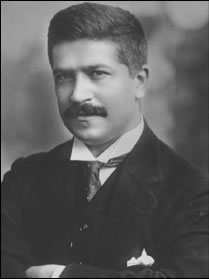 In Germany, he was considered the greatest pianist, and his recitals of Schubert and Beethoven sonatas were legendary. He also played chamber music with the best musicians of his generation: the cellists Pablo Casals, Emanuel Feuermann, and Pierre Fournier, with the violist William Primrose and Paul Hindemith, the composer who was also an excellent violist, and the violinists Huberman and Szigeti. He also performed with the best conductors: Furtwängler, Walter, Klemperer, and Szell. Schnabel was the first pianist to record all of Beethoven’s sonatas; he did so in 1932-34. There are some technical issues, some were Schnabel’s, an excellent pianist but not a virtuoso on the level with Horowitz or Josef Hofmann, and some were issues of the recordings themselves; still, they are very interesting to listen to. Here, from this set, is Beethoven’s Piano Sonata no. 21, the Waldstein.
Grigory Sokolov was born in Leningrad (in 1991, the city reverted to its original name, St. Petersburg) and won, unexpectedly, a Tchaikovsky Piano Competition at the age of 16, still a 9th-grader at a special music school (Misha Dichter was the public’s favorite). Mikhail Pletnev was born in Arkhangelsk, then moved to Moscow, and won a Tchaikovsky Piano Competition at the age of 21. After his initial success, Sokolov’s career developed slowly; he reached the peak of his career in the 1990s and is now considered one of the greatest pianists of the generation. For the last 20-plus years, he has been playing only in recitals and never with orchestras; he doesn’t record in studios (though permits recordings of his live concerts), and refuses to play in the US and the UK because of visa requirements. Pletnev has two parallel careers: one, as a very successful concert pianist; another, as a conductor: in 1990, he founded the Russian National Orchestra, the first Russian orchestra not sponsored by the state, and led it till 2022, when, after making a statement critical of Russia’s war against Ukraine, he was forced out.
As for Murray Perahia, he’s one of our favorite pianists of the last 50 years.