This Week in Classical Music: May 3, 2026. Prokofiev, Part III. As we mentioned in our previous post (here), even while living in Paris, Prokofiev continued to maintain relationships with Soviet musicians and music officials.He visited Soviet Russia for the first time in 1927, where he gave concerts in Moscow and Leningrad and oversaw the staging of The Love for Three Oranges in the Mariinsky theater.He also acquainted himself with the works of the young Shostakovich and Gavriil Popov, another talented composer.Several more trips followed, including the one to Moscow in 1929.But there were other ways in which Prokofiev maintained his relationship with Russia.For example, in 1926, he wrote a ballet Le pas d'acier (The Steel Step, an awkward name in English and no less so in Russian, Стальной скок).Commissioned by Diaghilev, who was impressed by the Russian futurist artists he saw at a Paris exhibition, the music, even if it borrowed from Stravinsky (and probably also from Arthur Honegger’s Pacific 231), already had all the attributes of a Soviet piece.The ballet was supposed to celebrate the Soviet industrial modernization; according to Richard Taruskin, its music made Stravinsky ill (we’re not that surprised).In 1929, Le pas d'acier was about to be staged at the Bolshoi, but the protests from the anti-Western Russian Association of Proletarian Musicians led to its withdrawal.Outside of musical affairs, there were other signs of Prokofiev's equivocations: for example, when France established diplomatic relations with the Soviet Union, Prokofiev elected to take Soviet citizenship.
Now a family man, he continued his existence in Paris; in 1930, he toured the US, this time quite successfully.All the while, Prokofiev contemplated the pros and cons of returning to the Soviet Union.His visits to Russia left him with no illusions about the political pressures on the arts in the country; what he was considering was whether he could use the politics to not just survive but flourish there, and how he would have to change his music to accommodate the art politics of the Socialist Realism, introduced by Stalin in 1932.He was ready to “simplify” his musical language, and, in the early 1930s, wrote several articles published in the Soviet newspapers, discussing such developments.He even composed several songs and choral pieces in a “folk” style, which were published and praised in Russia.The Soviets demonstrated their interest in Prokofiev by commissioning music for a film, Lieutenant Kijé.In 1935, he received a commission from the Kirov (formerly, Mariinsky Theater), which became the ballet Romeo and Juliet (the staging at the Kirov fell through; the ballet was premiered in Brno in 1938;the Soviet premiere had to wait till 1940, Galina Ulanova danced the Juliet).
It’s still a mystery why Prokofiev wanted to return to Russia.He was shrewd and by no means a political idealist.He knew the Soviet Union better than many of his fellow emigres. What made him think he would be impervious to Stalin’s terror?He knew that since the early 1930s, Stalin had brought all the arts under the control of the Communist Party.He knew what happened to Shostakovich when, in January of 1936, an article titled Muddle Instead of Music, was published in Pravda.It disparaged his opera Lady Macbeth of Mtszensk and called Shostakovich a “formalist” and “bourgeois.” A month later, another article severely criticized his ballet, The Limpid Stream.All this scared Shostakovich so much that for a while he stopped composing altogether.Prokofiev also knew about the treatment of the famous theater director Vsevolod Meyerhold or the poet Osip Mandelstam (both still alive in 1936, both to perish in the Gulag).So he knew that fame doesn’t protect anybody in Stalin’s Russia.
None of this stopped Prokofiev, and in the summer of 1936, he, his Spanish wife, and their two sons arrived in Moscow.
Here, from Prokofiev’s Paris period, is his Piano Concerto no. 4 for the left hand.It was composed in 1931 for the pianist Paul Wittgenstein, who lost his right hand in WWI.The soloist is Vladimir Ashkenazy; André Previn conducts the London Symphony Orchestra.

Prokofiev, Part III. 2026
This Week in Classical Music: May 3, 2026. Prokofiev, Part III. As we mentioned in our previous post (here), even while living in Paris, Prokofiev continued to maintain relationships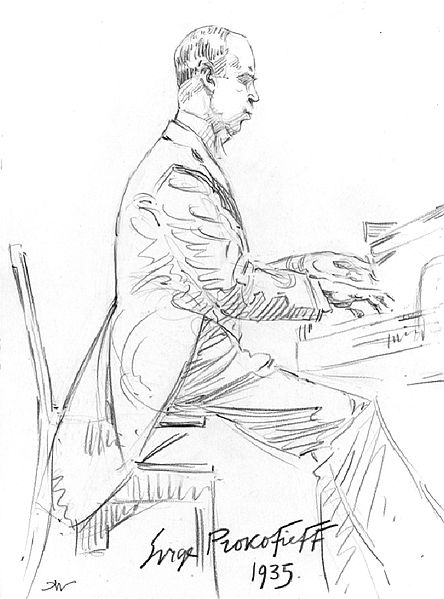 with Soviet musicians and music officials. He visited Soviet Russia for the first time in 1927, where he gave concerts in Moscow and Leningrad and oversaw the staging of The Love for Three Oranges in the Mariinsky theater. He also acquainted himself with the works of the young Shostakovich and Gavriil Popov, another talented composer. Several more trips followed, including the one to Moscow in 1929. But there were other ways in which Prokofiev maintained his relationship with Russia. For example, in 1926, he wrote a ballet Le pas d'acier (The Steel Step, an awkward name in English and no less so in Russian, Стальной скок). Commissioned by Diaghilev, who was impressed by the Russian futurist artists he saw at a Paris exhibition, the music, even if it borrowed from Stravinsky (and probably also from Arthur Honegger’s Pacific 231), already had all the attributes of a Soviet piece. The ballet was supposed to celebrate the Soviet industrial modernization; according to Richard Taruskin, its music made Stravinsky ill (we’re not that surprised). In 1929, Le pas d'acier was about to be staged at the Bolshoi, but the protests from the anti-Western Russian Association of Proletarian Musicians led to its withdrawal. Outside of musical affairs, there were other signs of Prokofiev's equivocations: for example, when France established diplomatic relations with the Soviet Union, Prokofiev elected to take Soviet citizenship.
Now a family man, he continued his existence in Paris; in 1930, he toured the US, this time quite successfully. All the while, Prokofiev contemplated the pros and cons of returning to the Soviet Union. His visits to Russia left him with no illusions about the political pressures on the arts in the country; what he was considering was whether he could use the politics to not just survive but flourish there, and how he would have to change his music to accommodate the art politics of the Socialist Realism, introduced by Stalin in 1932. He was ready to “simplify” his musical language, and, in the early 1930s, wrote several articles published in the Soviet newspapers, discussing such developments. He even composed several songs and choral pieces in a “folk” style, which were published and praised in Russia. The Soviets demonstrated their interest in Prokofiev by commissioning music for a film, Lieutenant Kijé. In 1935, he received a commission from the Kirov (formerly, Mariinsky Theater), which became the ballet Romeo and Juliet (the staging at the Kirov fell through; the ballet was premiered in Brno in 1938; the Soviet premiere had to wait till 1940, Galina Ulanova danced the Juliet).
It’s still a mystery why Prokofiev wanted to return to Russia. He was shrewd and by no means a political idealist. He knew the Soviet Union better than many of his fellow emigres. What made him think he would be impervious to Stalin’s terror? He knew that since the early 1930s, Stalin had brought all the arts under the control of the Communist Party. He knew what happened to Shostakovich when, in January of 1936, an article titled Muddle Instead of Music, was published in Pravda. It disparaged his opera Lady Macbeth of Mtszensk and called Shostakovich a “formalist” and “bourgeois.” A month later, another article severely criticized his ballet, The Limpid Stream. All this scared Shostakovich so much that for a while he stopped composing altogether. Prokofiev also knew about the treatment of the famous theater director Vsevolod Meyerhold or the poet Osip Mandelstam (both still alive in 1936, both to perish in the Gulag). So he knew that fame doesn’t protect anybody in Stalin’s Russia.
None of this stopped Prokofiev, and in the summer of 1936, he, his Spanish wife, and their two sons arrived in Moscow.
Here, from Prokofiev’s Paris period, is his Piano Concerto no. 4 for the left hand. It was composed in 1931 for the pianist Paul Wittgenstein, who lost his right hand in WWI. The soloist is Vladimir Ashkenazy; André Previn conducts the London Symphony Orchestra.