This Week in Classical Music: June 1, 2026. Two Important Anniversaries.Martha Argerich’s birthday is June 5th; she will turn 85, and June 6th is the 100th anniversary of Klaus Tennstedt, a German conductor.
There’s no need to present the pianist Martha Argerich.If there is a superstar in the world of classical music, she’s it.Her career started in 1949, when at the age of eight, she played Beethoven’s Piano Concerto no. 1.At 19, she made her first commercial recording.Then, at 24, she won the VII International Chopin Piano Competition in Warsaw; this win catapulted her career into stardom, and since then, she has been one of the most sought-after pianists on the music scene.Even at 85, she performs scores of concerts a year: for example, at the end of June, she will play nine concerts in Hamburg.She stopped performing solo some years ago, but she will play several challenging pieces, for example, Beethoven’s 2nd, 4th, and 5th Piano and Violin Sonatas, with Maxim Vengerov.She’ll also play with the pianist Michail Pletnev, the violinist Gil Shaham and the cellist Mischa Maisky. We wish her many happy returns.
Klaus Tennstedt was born in Merseburg, in the German state of Saxony-Anhalt.As a child, he studied the violin.At the end of WWII, he joined an orchestra and thus avoided serving in the Nazi army.After the partition of Germany after the war, he ended up in the Russia-dominated East Germany.Tennstedt’s violin career was interrupted when he developed problems with his left hand, but he successfully transitioned to conducting.He started at the Chemnitz (then Karl-Marx-Stadt) opera, but soon after was appointed the Music Director at the more prestigious Dresden State Opera.For more than a decade, he was confined to working in the GDR and the Soviet bloc countries, but in 1971, during a rare appearance in Sweden, he defected.For several years, he lived in Sweden, conducting local orchestras.Then, in 1974, he appeared in North America, conducting the Toronto and then the Boston symphony orchestras. These concerts were very well received, especially his Bruckner’s Eighth, and were followed by invitations to conduct the Chicago Symphony, the New York Philharmonic, the Philadelphia Symphony, and other major orchestras in the US.His successes in the US led to his concerts with the Berlin and Vienna Philharmonic orchestras.Tennstedt led the London Philharmonic Orchestra for four years, but in 1984 his health started to fail.He gave a tremendous performance of Mahler’s Symphony no. 8 in 1987, but collapsed during a rehearsal later that year.He conducted several highly successful concerts in 1991 and 1992, and then stopped performing on the advice of his doctors.Tennstedt died of throat cancer in 1998.Here’s Mahler’s 8th: Part I, Veni, Creator Spiritus, and the longer Part II, Final Scene From Goethe's "Faust."Tennstedt conducts the London Philharmonic Orchestra and Choir, with Felicity Lott and other soloists (Dame Felicity Lott, a great soprano, passed away on May 15th of this year).

Martha Argerich and Klaus Tennsteadt, 2026
This Week in Classical Music: June 1, 2026. Two Important Anniversaries. Martha Argerich’s birthday is June 5th; she will turn 85, and June 6th is the 100th anniversary of Klaus Tennstedt, a German conductor.
Klaus Tennstedt was born in Merseburg, in the German state of Saxony-Anhalt. As a child, he studied the violin. At the end of WWII, he joined an orchestra and thus avoided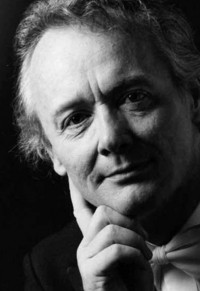 serving in the Nazi army. After the partition of Germany after the war, he ended up in the Russia-dominated East Germany. Tennstedt’s violin career was interrupted when he developed problems with his left hand, but he successfully transitioned to conducting. He started at the Chemnitz (then Karl-Marx-Stadt) opera, but soon after was appointed the Music Director at the more prestigious Dresden State Opera. For more than a decade, he was confined to working in the GDR and the Soviet bloc countries, but in 1971, during a rare appearance in Sweden, he defected. For several years, he lived in Sweden, conducting local orchestras. Then, in 1974, he appeared in North America, conducting the Toronto and then the Boston symphony orchestras. These concerts were very well received, especially his Bruckner’s Eighth, and were followed by invitations to conduct the Chicago Symphony, the New York Philharmonic, the Philadelphia Symphony, and other major orchestras in the US. His successes in the US led to his concerts with the Berlin and Vienna Philharmonic orchestras. Tennstedt led the London Philharmonic Orchestra for four years, but in 1984 his health started to fail. He gave a tremendous performance of Mahler’s Symphony no. 8 in 1987, but collapsed during a rehearsal later that year. He conducted several highly successful concerts in 1991 and 1992, and then stopped performing on the advice of his doctors. Tennstedt died of throat cancer in 1998. Here’s Mahler’s 8th: Part I, Veni, Creator Spiritus, and the longer Part II, Final Scene From Goethe's "Faust." Tennstedt conducts the London Philharmonic Orchestra and Choir, with Felicity Lott and other soloists (Dame Felicity Lott, a great soprano, passed away on May 15th of this year).