This Week in Classical Music: June 15, 2026. Stravinsky, Morton.Igor Stravinsky, one of the most important composers of the 20th century, was born on June 17th, 1882, in Oranienbaum, a town not far from then-Russia’s capital, St. Petersburg.We love Stravinsky and have written about him on many occasions.Like Picasso, Stravinsky went through several creative periods: his early ballets, Firebird, Petrushka, and The Rite of Spring, were highly original and, in the case of The Rite, revolutionary, all the while being influenced by Rimsky-Korsakov.Sttravinsky then became involved with Russian folk music and went through a “Russian period” (L'Histoire du soldat is probably the best-known “Russian” piece, though there are Russian themes in The Rite as well).The Neoclassical period followed; by then, Stravinsky, who had lived in Switzerland since 1914, had permanently moved to France.Neoclassical was his longest phase; it started in 1920 and lasted for about 30 years.Among the significant pieces written during this period were the ballet Apollon musagète, the oratorio Oedipus rex (both from 1927), Symphony of Psalms (1930), and another ballet, Orpheus (1947).What followed was probably Stravinsky’s most contentious Twelve-Tone period; it lasted from about 1950 to 1968.The twelve-tone technique and serialism didn’t come to him naturally: Stravinsky was introduced to it by his young friend the conductor Robert Craft.After some experiments with smaller forms, he wrote Agon (1953-57), a ballet choreographed by George Balanchine.Here it is, performed by the London Symphony Orchestra under the direction of the late Michael Tilson Thomas.We think there’s more of Stravinsky’s whimsical genius in this music than of the sometimes-constricting twelve-tone paradigm.
We find the peregrinations undertaken by many Renaissance composers fascinating.Wars, brigands, famine, lack of roads and transportation notwithstanding, they moved from one country to another.In the middle of the 15th century, Josquin des Prés traveled from Condé in the County of Hainault (now on the border between France and Belgium) to Paris, then Rome, Milan, back to Rome, Vienna, back to Milan and then Rome, all in a matter of six years.He would later visit Troyes in northern France and stay in Ferrara at the court of Este.Half a century earlier, the English composer John Dunstaple served at the court of John of Lancaster, who commanded British forces during the Hundred Years' War, and moved to France with him.Then, still during the war, he traveled all over northern France, incidentally buying properties here and there.We’ve never written about Robert Morton, another early Renaissance English composer.Morton, born around 1430, made it all the way to the Burgundian court of Philip the Good.Burgundian dukes didn’t have a permanent capital (their main cities were Dijon, Brussels, and Lille) and traveled with their entourage, including musicians, throughout their possessions in northern Europe.Philip’s successor, Charles the Bold, fought many wars and brought his musicians with him.Morton was known to perform in Cambrai (close to where Josquin spent his youth) and lived in ’s-Hertogenbosch, in North Brabant, where Hieronymus Bosch was born.
Even though Morton was broadly lauded during his lifetime, little of his music survives.Here’s a pretty rondeau, a type of chanson, called Le Souvenir De Vous Me Tue, performed by the ensemble Gothic Voices.

Stravinsky, Morton, 2026
This Week in Classical Music: June 15, 2026. Stravinsky, Morton. Igor Stravinsky, one of the most important composers of the 20th century, was born on June 17th, 1882, in Oranienbaum, a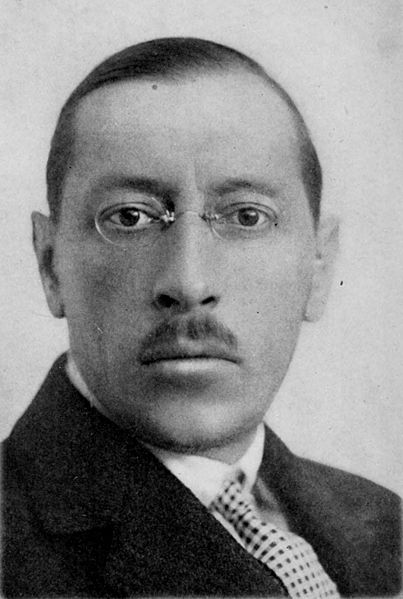 town not far from then-Russia’s capital, St. Petersburg. We love Stravinsky and have written about him on many occasions. Like Picasso, Stravinsky went through several creative periods: his early ballets, Firebird, Petrushka, and The Rite of Spring, were highly original and, in the case of The Rite, revolutionary, all the while being influenced by Rimsky-Korsakov. Sttravinsky then became involved with Russian folk music and went through a “Russian period” (L'Histoire du soldat is probably the best-known “Russian” piece, though there are Russian themes in The Rite as well). The Neoclassical period followed; by then, Stravinsky, who had lived in Switzerland since 1914, had permanently moved to France. Neoclassical was his longest phase; it started in 1920 and lasted for about 30 years. Among the significant pieces written during this period were the ballet Apollon musagète, the oratorio Oedipus rex (both from 1927), Symphony of Psalms (1930), and another ballet, Orpheus (1947). What followed was probably Stravinsky’s most contentious Twelve-Tone period; it lasted from about 1950 to 1968. The twelve-tone technique and serialism didn’t come to him naturally: Stravinsky was introduced to it by his young friend the conductor Robert Craft. After some experiments with smaller forms, he wrote Agon (1953-57), a ballet choreographed by George Balanchine. Here it is, performed by the London Symphony Orchestra under the direction of the late Michael Tilson Thomas. We think there’s more of Stravinsky’s whimsical genius in this music than of the sometimes-constricting twelve-tone paradigm.
We find the peregrinations undertaken by many Renaissance composers fascinating. Wars, brigands, famine, lack of roads and transportation notwithstanding, they moved from one country to another. In the middle of the 15th century, Josquin des Prés traveled from Condé in the County of Hainault (now on the border between France and Belgium) to Paris, then Rome, Milan, back to Rome, Vienna, back to Milan and then Rome, all in a matter of six years. He would later visit Troyes in northern France and stay in Ferrara at the court of Este. Half a century earlier, the English composer John Dunstaple served at the court of John of Lancaster, who commanded British forces during the Hundred Years' War, and moved to France with him. Then, still during the war, he traveled all over northern France, incidentally buying properties here and there. We’ve never written about Robert Morton, another early Renaissance English composer. Morton, born around 1430, made it all the way to the Burgundian court of Philip the Good. Burgundian dukes didn’t have a permanent capital (their main cities were Dijon, Brussels, and Lille) and traveled with their entourage, including musicians, throughout their possessions in northern Europe. Philip’s successor, Charles the Bold, fought many wars and brought his musicians with him. Morton was known to perform in Cambrai (close to where Josquin spent his youth) and lived in ’s-Hertogenbosch, in North Brabant, where Hieronymus Bosch was born.
Even though Morton was broadly lauded during his lifetime, little of his music survives. Here’s a pretty rondeau, a type of chanson, called Le Souvenir De Vous Me Tue, performed by the ensemble Gothic Voices.