This Week in Classical Music: June 22, 2026. Charpentier, performers. Gustav Charpentier was born on June 25th of 1860, in Dieuze, a small town in eastern France. He is “the other Charpentier”: a much more famous Marc-Antoine Charpentier was a leading French Baroque composer and lived two centuries earlier (he was born in 1643). Gustav Charpentier was one of the composers known for just one work (Dukas, with his The Sorcerer's Apprentice, Leoncavallo/Pagliacci, Mascagni/Cavarellia Rusticana, and several other composers belong to the same category). His only work that’s still being performed is the opera Louise, and even that rarely: it is popular for one aria, Depuis le jour (Since the day…), often sung in concerts. Here’s Anna Netrebko’s rendition.
Benedetto Marcello was probably born on June 24th of 1686, though other sources have July 24th as his birth date, and others still believe it was either July 31st or August 1st of that year. Benedetto came from a noble Venetian family: one of his ancestors was a Venetian Doge. His elder brother, Alessandro, also a composer, belonged to the group mentioned above: he is famous for one piece, his Oboe Concerto, written in 1715 and for a while attributed to Benedetto. The concerto was so popular that it was soon transcribed for harpsichord by Johann Sebastian Bach. Benedetto had an active administrative career in Venice, so composing was mostly a hobby for him. His life was full of unusual turns (we’ve written about Benedetto here and both brothers here). Marcello’s best-known opus is Estro poetico-armonico, a setting of the 50 Psalms (Salmi in Italian), which was published in eight volumes in Venice in 1724-27. What is interesting about this collection is that for some psalms, Marcello used the melodies he heard in the synagogues of Venice, in the Ghetto. Out of 50 salmi, 11 were based on Jewish melodies, some from the Ashkenazi tradition and some Sephardic. Here is one of them, called Ma'oz Tzur (Strong Rock in Hebrew). It’s performed by the Jerusalem-based Ensemble Nuria, which specializes in early Jewish-Italian music.
Two conductors were also born this week: James Levine, on June 23rd of 1943, in Cincinnati, Ohio, and Claudio Abbado, on June 26th of 1933, in Milan. Levine was a tremendously talented musician, conductor first and foremost but also a wonderful piano accompanist. He was only 21 when he started at the Cleveland Orchestra, first as an apprentice to George Szell and then as the assistant conductor. At 28, he conducted the Chicago Symphony, and that evolved into a long-term association. That same year, 1971, he first conducted the Metropolitan Opera. Two years later, he became the principal conductor, and in 1976, the Music Director of the Metropolitan Opera, the title he held till 2016, for 40 years. During that time, he built the company’s orchestra into one of the finest ensembles in the world and delivered some of the most interesting productions in modern opera. From 2005 to 2017, Levine was the Music Director of the Boston Symphony; he also conducted major orchestras in the US and Europe. In 2017, allegations surfaced that he had been molesting his young male students for years. All major musical institutions broke ties with Levine; the Met Opera even tried to erase his recordings from its public musical library, but reversed course when it became clear that without them, the library looked rather empty. Levine died, disgraced, in March of 2021.
As for Abbado, he’s probably our favorite conductor of the last half century, and we have several of his recordings in the library.

Charpentier and conductors, 2026
This Week in Classical Music: June 22, 2026. Charpentier, performers. Gustav Charpentier was born on June 25th of 1860, in Dieuze, a small town in eastern France. He is “the other Charpentier”: a much more famous Marc-Antoine Charpentier was a leading French Baroque composer and lived two centuries earlier (he was born in 1643). Gustav Charpentier was one of the composers known for just one work (Dukas, with his The Sorcerer's Apprentice, Leoncavallo/Pagliacci, Mascagni/Cavarellia Rusticana, and several other composers belong to the same category). His only work that’s still being performed is the opera Louise, and even that rarely: it is popular for one aria, Depuis le jour (Since the day…), often sung in concerts. Here’s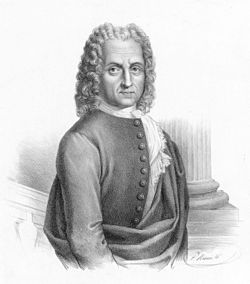 Anna Netrebko’s rendition.
Benedetto Marcello was probably born on June 24th of 1686, though other sources have July 24th as his birth date, and others still believe it was either July 31st or August 1st of that year. Benedetto came from a noble Venetian family: one of his ancestors was a Venetian Doge. His elder brother, Alessandro, also a composer, belonged to the group mentioned above: he is famous for one piece, his Oboe Concerto, written in 1715 and for a while attributed to Benedetto. The concerto was so popular that it was soon transcribed for harpsichord by Johann Sebastian Bach. Benedetto had an active administrative career in Venice, so composing was mostly a hobby for him. His life was full of unusual turns (we’ve written about Benedetto here and both brothers here). Marcello’s best-known opus is Estro poetico-armonico, a setting of the 50 Psalms (Salmi in Italian), which was published in eight volumes in Venice in 1724-27. What is interesting about this collection is that for some psalms, Marcello used the melodies he heard in the synagogues of Venice, in the Ghetto. Out of 50 salmi, 11 were based on Jewish melodies, some from the Ashkenazi tradition and some Sephardic. Here is one of them, called Ma'oz Tzur (Strong Rock in Hebrew). It’s performed by the Jerusalem-based Ensemble Nuria, which specializes in early Jewish-Italian music.
Two conductors were also born this week: James Levine, on June 23rd of 1943, in Cincinnati, Ohio, and Claudio Abbado, on June 26th of 1933, in Milan. Levine was a tremendously talented musician, conductor first and foremost but also a wonderful piano accompanist. He was only 21 when he started at the Cleveland Orchestra, first as an apprentice to George Szell and then as the assistant conductor. At 28, he conducted the Chicago Symphony, and that evolved into a long-term association. That same year, 1971, he first conducted the Metropolitan Opera. Two years later, he became the principal conductor, and in 1976, the Music Director of the Metropolitan Opera, the title he held till 2016, for 40 years. During that time, he built the company’s orchestra into one of the finest ensembles in the world and delivered some of the most interesting productions in modern opera. From 2005 to 2017, Levine was the Music Director of the Boston Symphony; he also conducted major orchestras in the US and Europe. In 2017, allegations surfaced that he had been molesting his young male students for years. All major musical institutions broke ties with Levine; the Met Opera even tried to erase his recordings from its public musical library, but reversed course when it became clear that without them, the library looked rather empty. Levine died, disgraced, in March of 2021.
As for Abbado, he’s probably our favorite conductor of the last half century, and we have several of his recordings in the library.