This Week in Classical Music: July 13, 2026. Henze at 100, Part II. We interrupted our story of Hans Werner Henze to celebrate America’s 250th anniversary, Mahler’s birthday, and some other events, so now we’ll get back to the German composer, who, we admit, repulses and fascinates us at the same time.
In our first post, we stopped at the revolutionary year of 1968, when Henze was living in Italy and joined the Communist Party, then the largest in Western Europe; we also wrote about the scandal surrounding the premiere of his oratorio Das Floß der Medusa, dedicated to Che Guevara. Much of his music written during that period, even the instrumental pieces, were openly political, and the vocal music was much more so. His Sixth Symphony, which Henze composed while in Havana and premiered there, incorporates tunes from many leftist songs and marches, but if you listen to it, musically it’s a thoroughly modernist piece; one wonders how the Cuban communist authorities reacted to it: it’s no Socialist Realism. Still in Cuba, Henze followed up with El Cimarrón (The Runaway Slave), a long work for baritone, the guitar, flute and percussion, based on a highly politicized text by Hans Magnus Enzensberger, a fellow German. Again, politically it’s akin to Soviet agitprop, but again, musically an interesting piece. Some years later, when he was back in Italy, Henze wrote Voices, a cycle of 22 songs set to texts by Bertolt Brecht, the North Vietnamese leader Ho Chi Minh and others. Probably his most political work was the opera We Come to the River, based on an awfully violent libretto by the English playwright Edward Bond.
Henze’s work mellowed somewhat in the late 1970s, while remaining political. He wrote a Requiem in 1990, several operas and symphonies (his Ninth was choral, like the more famous one, and set to the text of Anna Seghers, a German communist writer who lived in East Germany). Henze also worked on promoting contemporary music: he founded festivals of new music in Montepulciano and Munich, taught composition in Cologne and at a workshop in Austria. Later in his life, he received many prizes and honors. Henze died in 2012, aged 86.
Here’s the second movement from Henze’s Symphony no 6, Lento. The Berlin Radio Symphony Orchestra is conducted by Marek Janowski.
We’d also like to note several birthdays that happen this week. Pinchas Zukerman will turn 78 on July 16th. He was born in Tel Aviv, went to music school there, and in 1961 was heard by Isaac Stern and Pablo Casals. Stern suggested that he go to Juilliard, and Zukerman moved to the US in 1962, with Stern serving as his legal guardian. While Zukerman was one of the best violinists of the last 60 years, he was also a great violist; he played this instrument in duos with Stern on several occasions. He often performed with his friends Daniel Barenboim, Jacqueline du Pré, Itzhak Perlman, and Zubin Mehta. Here’s Zukerman and Perlman joining Stern in Vivaldi’s Concerto for Three Violins celebrating Stern’s 60th anniversary. Zubin Mehta conducts the New York Philharmonic.
The Italian tenor Carlo Bergonzi was born on July 13th of 1924 near Cremona. He started as a baritone but eventually found his real voice, the tenor. He sang at La Scala, the Met (for 30 years), and at practically all other major opera houses. He performed at the same time as Franco Corelli, Mario del Monaco and Giuseppe Di Stefano during the golden age of Italian singing. His top notes may not have been as thrilling, but he was an excellent musician, and at his best, Bergonzi was on par with the greatest. Here’s his Celest Aida, recorded in 1975. The New Philharmonia Orchestra is conducted by Nello Santi.

Hans Werner Henze 100, part II, 2026
This Week in Classical Music: July 13, 2026. Henze at 100, Part II. We interrupted our story of Hans Werner Henze to celebrate America’s 250th anniversary, Mahler’s birthday, and some o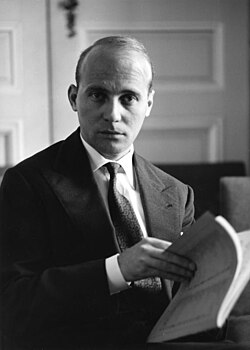 ther events, so now we’ll get back to the German composer, who, we admit, repulses and fascinates us at the same time.
In our first post, we stopped at the revolutionary year of 1968, when Henze was living in Italy and joined the Communist Party, then the largest in Western Europe; we also wrote about the scandal surrounding the premiere of his oratorio Das Floß der Medusa, dedicated to Che Guevara. Much of his music written during that period, even the instrumental pieces, were openly political, and the vocal music was much more so. His Sixth Symphony, which Henze composed while in Havana and premiered there, incorporates tunes from many leftist songs and marches, but if you listen to it, musically it’s a thoroughly modernist piece; one wonders how the Cuban communist authorities reacted to it: it’s no Socialist Realism. Still in Cuba, Henze followed up with El Cimarrón (The Runaway Slave), a long work for baritone, the guitar, flute and percussion, based on a highly politicized text by Hans Magnus Enzensberger, a fellow German. Again, politically it’s akin to Soviet agitprop, but again, musically an interesting piece. Some years later, when he was back in Italy, Henze wrote Voices, a cycle of 22 songs set to texts by Bertolt Brecht, the North Vietnamese leader Ho Chi Minh and others. Probably his most political work was the opera We Come to the River, based on an awfully violent libretto by the English playwright Edward Bond.
Henze’s work mellowed somewhat in the late 1970s, while remaining political. He wrote a Requiem in 1990, several operas and symphonies (his Ninth was choral, like the more famous one, and set to the text of Anna Seghers, a German communist writer who lived in East Germany). Henze also worked on promoting contemporary music: he founded festivals of new music in Montepulciano and Munich, taught composition in Cologne and at a workshop in Austria. Later in his life, he received many prizes and honors. Henze died in 2012, aged 86.
Here’s the second movement from Henze’s Symphony no 6, Lento. The Berlin Radio Symphony Orchestra is conducted by Marek Janowski.
We’d also like to note several birthdays that happen this week. Pinchas Zukerman will turn 78 on July 16th. He was born in Tel Aviv, went to music school there, and in 1961 was heard by Isaac Stern and Pablo Casals. Stern suggested that he go to Juilliard, and Zukerman moved to the US in 1962, with Stern serving as his legal guardian. While Zukerman was one of the best violinists of the last 60 years, he was also a great violist; he played this instrument in duos with Stern on several occasions. He often performed with his friends Daniel Barenboim, Jacqueline du Pré, Itzhak Perlman, and Zubin Mehta. Here’s Zukerman and Perlman joining Stern in Vivaldi’s Concerto for Three Violins celebrating Stern’s 60th anniversary. Zubin Mehta conducts the New York Philharmonic.
The Italian tenor Carlo Bergonzi was born on July 13th of 1924 near Cremona. He started as a baritone but eventually found his real voice, the tenor. He sang at La Scala, the Met (for 30 years), and at practically all other major opera houses. He performed at the same time as Franco Corelli, Mario del Monaco and Giuseppe Di Stefano during the golden age of Italian singing. His top notes may not have been as thrilling, but he was an excellent musician, and at his best, Bergonzi was on par with the greatest. Here’s his Celest Aida, recorded in 1975. The New Philharmonia Orchestra is conducted by Nello Santi.