This Week in Classical Music: July 27, 2026. Two Tenors. Two weeks ago, when we celebrated Carlo Bergonzi, we also mentioned three great Italian singers of his time: Franco Corelli, Mario del Monaco, and Giuseppe Di Stefano.It so happens that Di Stefano’s birthday was three days ago, and Del Monaco’s is today.
Giuseppe Di Stefano was born on July 24th of 1921 in a small village near Catania, Sicily, but spent his youth in Milan. For many people, including Luciano Pavarotti, Di Stefano’s voice was of the utmost beauty, probably the most beautiful since the time of Beniamino Gigli.During WWII, the young Di Stefano was conscripted into the Italian (Mussolini’s) army.A medical doctor decided that he would be more useful as a singer than a soldier, which saved him from being sent to the Eastern Front and a likely death.He was eventually dismissed and allowed to sing professionally, first in local opera houses and then, after the war, internationally.Early in his career, he was a lyric tenor and sang lighter roles, such as Nemorino in L'Elisir d'Amore and Alfredo in La Traviata, adding heavier roles, such as Radames in Aida or Canio in Pagliacci only later.Many felt that heavier roles didn’t suit his voice as well.Di Stefano debuted at La Scala in 1948, and the same year he joined the Metropolitan Opera.In the 1950s, he often sang with Maria Callas at La Scala.Their Lucia di Lammermoor, Carmen, and La Traviata, with Karajan conducting, are legendary (he also sang with Callas’s great competitor, Renata Tebaldi).At that time, he made several recordings, also with Maria Callas.Their 1953 Tosca, with Victor de Sabata conducting, is considered one of the greatest ever made (the wonderful baritone Titto Gobbi was also in the recording in the role of Scarpia).Here is Di Stefano singing Ella mi fu rapita (She was stolen from me) followed by Parmi veder le lagrime (I seem to see tears), from Rigoletto.Parmi veder starts at 2:50 (see below).
Mario Del Monaco’s voice, a dramatic tenor, could not have been more different from Di Stefano’s: it was of enormous power, much heavier, darker, not at all sweet but absolutely thrilling.Del Monaco’s most famous role was the one Di Stefano never attempted: Verdi’s Otello.Mario Del Monaco was born on July 27th of 1915 in Florence.He studied at the Conservatory in Pesaro and made his debut in 1939.He didn’t sing much during the war, but in 1945 his career took off when he sang Pinkerton in Puccini’s Madama Butterfly at La Scala (this became one of his signature roles).While his home stage was La Scala, he sang Aida in Arena di Verona, Tosca in London, Carmen in Rome, and then, famously, Otello in Buenos Aires.In 1959, he came to Moscow and became a sensation with the public and the authorities: Khrushchev gave him the Order of Lenin.During the 1950s, Del Monaco sang at the Metropolitan.He was in a car accident in 1963, which slowed him down.While Otello is Del Monaco's most famous role, we’ll hear him in more lyrical roles.Here’s an excerpt from Puccini’s La Fanciulla del West, with Renata Tebaldi.And here is Parmi veder le lagrime, from Rigoletto.How different is his voice from Di Stefano’s, and how beautiful in its own way!

Two Tenors, 2026
This Week in Classical Music: July 27, 2026. Two Tenors. Two weeks ago, when we celebrated Carlo Bergonzi, we also mentioned three great Italian singers of his time: Franco Corelli, Mario del Monaco, and Giuseppe Di Stefano. It so happens that Di Stefano’s birthday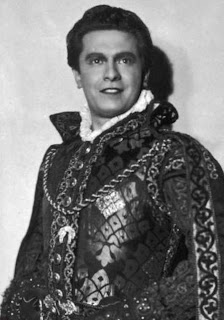 was three days ago, and Del Monaco’s is today.
Giuseppe Di Stefano was born on July 24th of 1921 in a small village near Catania, Sicily, but spent his youth in Milan. For many people, including Luciano Pavarotti, Di Stefano’s voice was of the utmost beauty, probably the most beautiful since the time of Beniamino Gigli. During WWII, the young Di Stefano was conscripted into the Italian (Mussolini’s) army. A medical doctor decided that he would be more useful as a singer than a soldier, which saved him from being sent to the Eastern Front and a likely death. He was eventually dismissed and allowed to sing professionally, first in local opera houses and then, after the war, internationally. Early in his career, he was a lyric tenor and sang lighter roles, such as Nemorino in L'Elisir d'Amore and Alfredo in La Traviata, adding heavier roles, such as Radames in Aida or Canio in Pagliacci only later. Many felt that heavier roles didn’t suit his voice as well. Di Stefano debuted at La Scala in 1948, and the same year he joined the Metropolitan Opera. In the 1950s, he often sang with Maria Callas at La Scala. Their Lucia di Lammermoor, Carmen, and La Traviata, with Karajan conducting, are legendary (he also sang with Callas’s great competitor, Renata Tebaldi). At that time, he made several recordings, also with Maria Callas. Their 1953 Tosca, with Victor de Sabata conducting, is considered one of the greatest ever made (the wonderful baritone Titto Gobbi was also in the recording in the role of Scarpia). Here is Di Stefano singing Ella mi fu rapita (She was stolen from me) followed by Parmi veder le lagrime (I seem to see tears), from Rigoletto. Parmi veder starts at 2:50 (see below).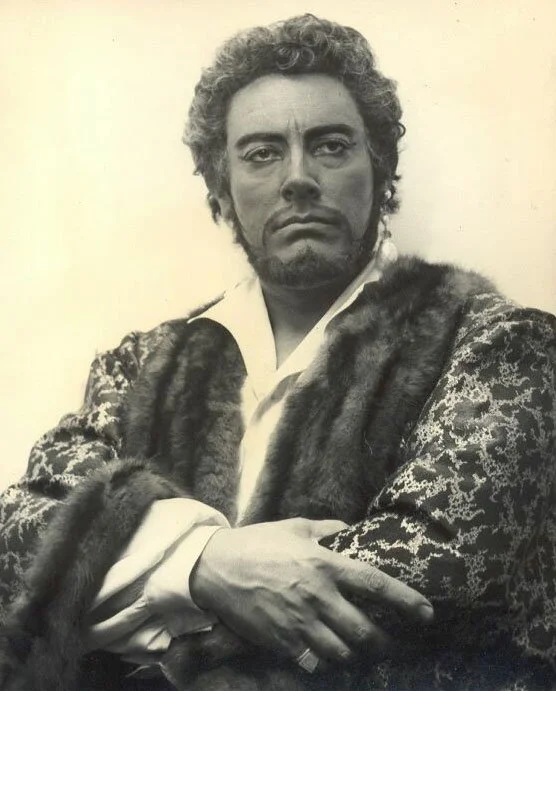
Mario Del Monaco’s voice, a dramatic tenor, could not have been more different from Di Stefano’s: it was of enormous power, much heavier, darker, not at all sweet but absolutely thrilling. Del Monaco’s most famous role was the one Di Stefano never attempted: Verdi’s Otello. Mario Del Monaco was born on July 27th of 1915 in Florence. He studied at the Conservatory in Pesaro and made his debut in 1939. He didn’t sing much during the war, but in 1945 his career took off when he sang Pinkerton in Puccini’s Madama Butterfly at La Scala (this became one of his signature roles). While his home stage was La Scala, he sang Aida in Arena di Verona, Tosca in London, Carmen in Rome, and then, famously, Otello in Buenos Aires. In 1959, he came to Moscow and became a sensation with the public and the authorities: Khrushchev gave him the Order of Lenin. During the 1950s, Del Monaco sang at the Metropolitan. He was in a car accident in 1963, which slowed him down. While Otello is Del Monaco's most famous role, we’ll hear him in more lyrical roles. Here’s an excerpt from Puccini’s La Fanciulla del West, with Renata Tebaldi. And here is Parmi veder le lagrime, from Rigoletto. How different is his voice from Di Stefano’s, and how beautiful in its own way!