This Week in Classical Music: August 31, 2026. Leaving Bayreuth behind.For the previous three weeks, we’ve been engaged with the history of Bayreuth, and there’s still much more to be discovered.The lives of some of the musicians involved with the Festival – singers and conductors – are worth separate entries.Others mostly disappeared from our memory but are very much worth getting back to.We’ll do it in due time, but right now we have to catch up with other notable events.
Itzhak Perlman’s birthday is today; he was born in 1945.Some months ago, we heard that Perlman was very ill, and are happy to report that he seems to have recovered since then: a month ago he performed in Cleveland, conducting and playing violin a little to the adoring public.Without a doubt, Perlman is one of the greatest, if not the greatest, violinists of his generation.We’re not very big on Perlman’s forays into pop or klezmer, but at his best (mostly earlier in his career) he’s incomparable.In the 1970s, Perlman and Vladimir Ashkenazy made recordings of the complete cycle of Beethoven’s sonatas, and they’re an absolute pleasure to listen to (these recordings also received a Grammy Award, when classical music Grammys were still worth something).They also recorded two Prokofiev’s sonatas and Brahms’s First Violin Sonata (here).Of Beethoven’s sonatas, no. 5 (“Spring”) and no. 9 (“Kreutzer”) are most popular, but here is no 8, and we think the Perlman-Ashkenazy interpretation is pretty close to perfect.The recording was made in August of 1975, half a century and a year ago.
There are several other birthdays this week.A big one: Anton Bruckner, who was born in Ansfelden, outside of Linz, on September 4th of 1824.One of the greatest symphonists of the 19th century, he was an unusual man: self-taught as a composer, he was insecure in his talent, dependent on opinions of others, always revising his own work.He looked provincial in fashionable Vienna.A lifelong bachelor, he made numerous unsuccessful marriage proposals to very young girls.He was prone to depression.He was also deeply religious: he spent many years living in St. Florian monastery (Bruckner was buried there, under the great organ of the basilica).
We’ve written about Bruckner almost every year; two years ago we celebrated his 200th anniversary.In our library, we have practically all of Bruckner’s symphonies, except for the so-called “Symphony 00” (Symphony in F minor), his not very successful youthful undertaking. But of some symphonies we have only movements, not the complete piece; that’s the case with Symphony no. 6.We had the first (here) and the third (here) movements, in different interpretations; now we’ve added the second (here) and the fourth, Finale (here).These movements are from the recording made by the Berlin Philharmonic under the direction of Herbert von Karajan in September of 1979.The symphony was composed between 1879 and 1881, and as one of Bruckner’s quirks, he dedicated it to his landlord in Vienna, of all people.Like almost all of Bruckner’s symphonies, it was harshly criticized upon its premiere, especially by his nemesis, the influential music critic Eduard Hanslick.
Also this week: Johann Pachelbel (September 1st of 1653), Engelbert Humperdinck, on the same day in 1854, Darius Milhaud (September 4th of 1892), and John Cage, born September 5th of 1912.

Leaving Bayreuth behind, 2026
This Week in Classical Music: August 31, 2026. Leaving Bayreuth behind. For the previous three weeks, we’ve been engaged with the history of Bayreuth, and there’s still much more to be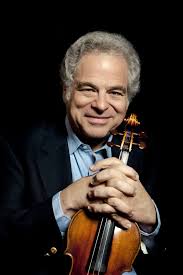 discovered. The lives of some of the musicians involved with the Festival – singers and conductors – are worth separate entries. Others mostly disappeared from our memory but are very much worth getting back to. We’ll do it in due time, but right now we have to catch up with other notable events.
Itzhak Perlman’s birthday is today; he was born in 1945. Some months ago, we heard that Perlman was very ill, and are happy to report that he seems to have recovered since then: a month ago he performed in Cleveland, conducting and playing violin a little to the adoring public. Without a doubt, Perlman is one of the greatest, if not the greatest, violinists of his generation. We’re not very big on Perlman’s forays into pop or klezmer, but at his best (mostly earlier in his career) he’s incomparable. In the 1970s, Perlman and Vladimir Ashkenazy made recordings of the complete cycle of Beethoven’s sonatas, and they’re an absolute pleasure to listen to (these recordings also received a Grammy Award, when classical music Grammys were still worth something). They also recorded two Prokofiev’s sonatas and Brahms’s First Violin Sonata (here). Of Beethoven’s sonatas, no. 5 (“Spring”) and no. 9 (“Kreutzer”) are most popular, but here is no 8, and we think the Perlman-Ashkenazy interpretation is pretty close to perfect. The recording was made in August of 1975,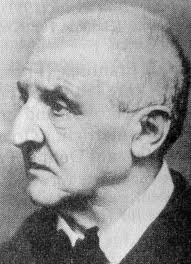 half a century and a year ago.
There are several other birthdays this week. A big one: Anton Bruckner, who was born in Ansfelden, outside of Linz, on September 4th of 1824. One of the greatest symphonists of the 19th century, he was an unusual man: self-taught as a composer, he was insecure in his talent, dependent on opinions of others, always revising his own work. He looked provincial in fashionable Vienna. A lifelong bachelor, he made numerous unsuccessful marriage proposals to very young girls. He was prone to depression. He was also deeply religious: he spent many years living in St. Florian monastery (Bruckner was buried there, under the great organ of the basilica).
We’ve written about Bruckner almost every year; two years ago we celebrated his 200th anniversary. In our library, we have practically all of Bruckner’s symphonies, except for the so-called “Symphony 00” (Symphony in F minor), his not very successful youthful undertaking. But of some symphonies we have only movements, not the complete piece; that’s the case with Symphony no. 6. We had the first (here) and the third (here) movements, in different interpretations; now we’ve added the second (here) and the fourth, Finale (here). These movements are from the recording made by the Berlin Philharmonic under the direction of Herbert von Karajan in September of 1979. The symphony was composed between 1879 and 1881, and as one of Bruckner’s quirks, he dedicated it to his landlord in Vienna, of all people. Like almost all of Bruckner’s symphonies, it was harshly criticized upon its premiere, especially by his nemesis, the influential music critic Eduard Hanslick.
Also this week: Johann Pachelbel (September 1st of 1653), Engelbert Humperdinck, on the same day in 1854, Darius Milhaud (September 4th of 1892), and John Cage, born September 5th of 1912.