This Week in Classical Music: September 14, 2026. Bruno Walter at 150.One of the most important conductors and musical figures of the 20th century, Bruno Walter was born in Berlin 150 years ago tomorrow, on September 15th of 1876.His birth name was Bruno Schlesinger, a son of a middle-class Jewish family.When, at the age of 20 and an aspiring conductor, he came to Breslau (now Wrocław, Poland), the director of the local opera, where Bruno was to work, asked him to change his name: Breslau was the capital of Silesia, Schlesien in German, and Schlesinger meant “Silesian,” a common name there.Bruno suggested several names, and the director, Theodor Löwe, picked Walter. We suspect that there was another reason for the name change: Schlesinger sounded too Jewish.
Walter started as a pianist, but after hearing a concert directed by Hans von Bülow (we mentioned him recently as the first husband of Cosima Liszt, who left von Bülow for Wagner), he switched to conducting.In 1894, the 18-year-old Walter became an assistant to the then 34-year-old chief conductor of the Hamburg opera, Gustav Mahler.Despite the difference in age and stature, they became close friends.Walter was devoted both to Mahler as a person and to his music, and Mahler helped further Walter’s career on several occasions. Walter was at Mahler’s deathbed on May 18th of 1911, and conducted the posthumous premieres of Das Lied von der Erde and Symphony no. 9.
In 1901, after working with several provincial opera houses, Walter accepted Mahler’s invitation to join him in Vienna as the assistant conductor of the Hofoper.In this role, Walter led many performances independently.Soon he developed a significant reputation and was invited to conduct in several European cities.Walter stayed in Vienna till 1913 (he became an Austrian citizen in 1911), and then moved to Munich, where he was appointed Royal Bavarian Generalmusikdirektor.Back then, Munich had three opera houses, the State Opera being the main one, and Walter conducted in all three.He also led the Music Academy, now the Bavarian State Orchestra (the Music Academy in Munich was, like the Vienna Philharmonic, practically the same orchestra as the one that played in the opera house, except that it performed the symphonic repertoire). During the Great War, while the Bayreuth Festival was closed, Munich became the center for performances of Wagner’s operas.Walter also conducted several important premieres, such as Pfitzner’s Palestina and Korngold’s operas.
Even before he resigned from his Munich posts in 1922, Walter regularly conducted the Berlin Philharmonic. In 1923, he toured the US to great acclaim.In Germany and Austria, his career flourished: he became the Music director of the Salzburg Festival, conducted the Berlin State Opera, made recordings with the Vienna Philharmonic, and led the Leipzig Gewandhaus Orchestra.It all ended abruptly in 1933, when the Nazis came to power: Walter's conversion to Christianity didn’t matter to them.
The first, tremendously successful part of Walter’s life was over in a catastrophe, personal and national.The second, different but equally creative, was about to begin.We’ll write about it next week.We have a couple of his recordings made in the 1930s: first, an excerpt fromDie Walküre, recorded in 1935.Great singers, Lauritz Melchior and Lotte Lehmann; Bruno Walter conducts the Vienna Philharmonic (here).And here, recorded three years later with the same orchestra and conductor, is the live performance of Mahler’s Symphony no. 9, first movement Andante Comodo (the first commercial recording of this symphony).

Bruno Walter at 150, Part I, 2026
This Week in Classical Music: September 14, 2026. Bruno Walter at 150. One of the most important conductors and musical figures of the 20th century, Bruno Walter was born in Berlin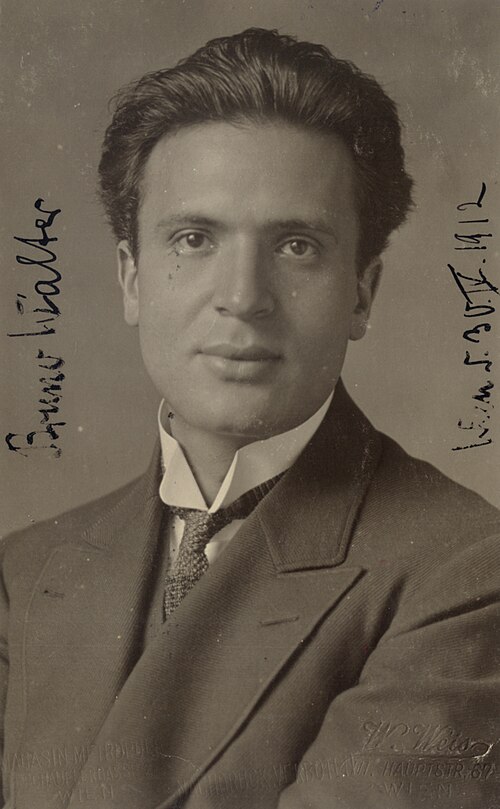 150 years ago tomorrow, on September 15th of 1876. His birth name was Bruno Schlesinger, a son of a middle-class Jewish family. When, at the age of 20 and an aspiring conductor, he came to Breslau (now Wrocław, Poland), the director of the local opera, where Bruno was to work, asked him to change his name: Breslau was the capital of Silesia, Schlesien in German, and Schlesinger meant “Silesian,” a common name there. Bruno suggested several names, and the director, Theodor Löwe, picked Walter. We suspect that there was another reason for the name change: Schlesinger sounded too Jewish.
Walter started as a pianist, but after hearing a concert directed by Hans von Bülow (we mentioned him recently as the first husband of Cosima Liszt, who left von Bülow for Wagner), he switched to conducting. In 1894, the 18-year-old Walter became an assistant to the then 34-year-old chief conductor of the Hamburg opera, Gustav Mahler. Despite the difference in age and stature, they became close friends. Walter was devoted both to Mahler as a person and to his music, and Mahler helped further Walter’s career on several occasions. Walter was at Mahler’s deathbed on May 18th of 1911, and conducted the posthumous premieres of Das Lied von der Erde and Symphony no. 9.
In 1901, after working with several provincial opera houses, Walter accepted Mahler’s invitation to join him in Vienna as the assistant conductor of the Hofoper. In this role, Walter led many performances independently. Soon he developed a significant reputation and was invited to conduct in several European cities. Walter stayed in Vienna till 1913 (he became an Austrian citizen in 1911), and then moved to Munich, where he was appointed Royal Bavarian Generalmusikdirektor. Back then, Munich had three opera houses, the State Opera being the main one, and Walter conducted in all three. He also led the Music Academy, now the Bavarian State Orchestra (the Music Academy in Munich was, like the Vienna Philharmonic, practically the same orchestra as the one that played in the opera house, except that it performed the symphonic repertoire). During the Great War, while the Bayreuth Festival was closed, Munich became the center for performances of Wagner’s operas. Walter also conducted several important premieres, such as Pfitzner’s Palestina and Korngold’s operas.
Even before he resigned from his Munich posts in 1922, Walter regularly conducted the Berlin Philharmonic. In 1923, he toured the US to great acclaim. In Germany and Austria, his career flourished: he became the Music director of the Salzburg Festival, conducted the Berlin State Opera, made recordings with the Vienna Philharmonic, and led the Leipzig Gewandhaus Orchestra. It all ended abruptly in 1933, when the Nazis came to power: Walter's conversion to Christianity didn’t matter to them.
The first, tremendously successful part of Walter’s life was over in a catastrophe, personal and national. The second, different but equally creative, was about to begin. We’ll write about it next week. We have a couple of his recordings made in the 1930s: first, an excerpt from Die Walküre, recorded in 1935. Great singers, Lauritz Melchior and Lotte Lehmann; Bruno Walter conducts the Vienna Philharmonic (here). And here, recorded three years later with the same orchestra and conductor, is the live performance of Mahler’s Symphony no. 9, first movement Andante Comodo (the first commercial recording of this symphony).