This Week in Classical Music: September 28, 2026.Florent Schmitt and more. We’ll be the first to admit that this isn’t a very exciting week.The French composer Florent Schmitt was born on September 28th of 1870 in the village of Blâmont, Meurthe-et-Moselle, Lorraine.He’s probably better known for shouting Heil Hitler! at the concert featuring the music of the Jewish, and by then exiled, Kurt Weil, than for any of his own compositions.One still could find some interesting pieces in his output.Three years ago, we posted a detailed (and we think rather interesting) entry on Schmitt, here, and illustrated it with two pieces: music to the ballet La tragédie de Salomé(here), and his Piano Quintet (here).This time, we present two of his 1920 Antoine et Cléopâtre suites, written for André Gide's translation of Shakespeare’s play. The play was staged at the Paris Opera, with the famous dancer Ida Rubinstein as Cleopatra.Suite no. 1 is here and no. 2 here.
Another Frenchman, Paul Dukas, was also born this week, on October 1st of 1865, in Paris, into a wealthy, assimilated Jewish family.He’s known for just one work, The Sorcerer's Apprentice, even though he also wrote an opera, a symphony, a piano sonata, and several other pieces.
Two Russian pianists were also born on October 1st: the great Vladimir Horowitz, in 1903, and Vera Gornostayeva, in 1929.Horowitz is one of the most celebrated musicians of the 20th century; Gornostayeva, on the other hand, was mostly known in the Soviet Union, both as a wonderful pianist and a great teacher.Among her students were Alexander Slobodyanik, Pavel Egorov, Eteri Andjaparidze, Ivo Pogorelich, Sergei Babayan, Vassily Primakov, Lukas Geniušas, Vadym Kholodenko, and many others.Vassily Primakov is instrumental in bringing her art to Western audiences.
And speaking of musicians born in Russia, David Oistrakh’s birthday is September 30th.He was born in Odesa (then Odessa) in 1908.In the Soviet Union, where rankings were of utmost importance, Oistrakh was considered the greatest violinist.From age five, he studied with Pyotr Stolyarsky, the founder of the Odessa Violin School (among his pupils were Nathan Milstein, Boris Goldstein, Elizabeth Gilels, Mikhail Fikhtengoltz, Valrey Klimov, winner of the First Tchaikovsky Competition, and many others).In 1935, Oistrakh won the second All-Union Competition of Musical Performers, then took the second prize in the Henryk Wieniawski International Competition (Ginette Neveu took the first prize), and two years later won the Ysaÿe Competition in Brussels, which made him world-famous.International music competitions were important to Stalin – for him, they were the way to prove that the Soviet Union was an advanced country, and the young winners, Oistrakh among them, were awarded medals and benefits, such as comfortable apartments, on par with the party officials, something not available to regular citizens.Oistrakh performed widely in the Soviet Union, and after WWII, became one of the few musicians who were allowed to travel internationally.One way or another, Oistrakh was a phenomenal violinist who made many exceptional recordings. Here’s one of them, from 1969: David Oistrakh plays Brahms’s Violin Concerto with the Cleveland Orchestra under the direction of George Szell.

Florent Schmitt and more, 2026
This Week in Classical Music: September 28, 2026. Florent Schmitt and more. We’ll be the first to admit that this isn’t a very exciting week. The French composer Florent Schmitt was born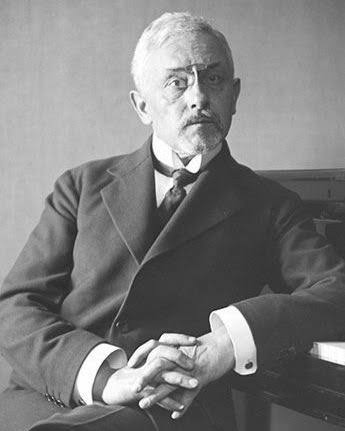 on September 28th of 1870 in the village of Blâmont, Meurthe-et-Moselle, Lorraine. He’s probably better known for shouting Heil Hitler! at the concert featuring the music of the Jewish, and by then exiled, Kurt Weil, than for any of his own compositions. One still could find some interesting pieces in his output. Three years ago, we posted a detailed (and we think rather interesting) entry on Schmitt, here, and illustrated it with two pieces: music to the ballet La tragédie de Salomé (here), and his Piano Quintet (here). This time, we present two of his 1920 Antoine et Cléopâtre suites, written for André Gide's translation of Shakespeare’s play. The play was staged at the Paris Opera, with the famous dancer Ida Rubinstein as Cleopatra. Suite no. 1 is here and no. 2 here.
Another Frenchman, Paul Dukas, was also born this week, on October 1st of 1865, in Paris, into a wealthy, assimilated Jewish family. He’s known for just one work, The Sorcerer's Apprentice, even though he also wrote an opera, a symphony, a piano sonata, and several other pieces.
Two Russian pianists were also born on October 1st: the great Vladimir Horowitz, in 1903, and Vera Gornostayeva, in 1929. Horowitz is one of the most celebrated musicians of the 20th century; Gornostayeva, on the other hand, was mostly known in the Soviet Union, both as a wonderful pianist and a great teacher. Among her students were Alexander Slobodyanik, Pavel Egorov, Eteri Andjaparidze, Ivo Pogorelich, Sergei Babayan, Vassily Primakov, Lukas Geniušas, Vadym Kholodenko, and many others. Vassily Primakov is instrumental in bringing her art to Western audiences.
And speaking of musicians born in Russia, David Oistrakh’s birthday is September 30th.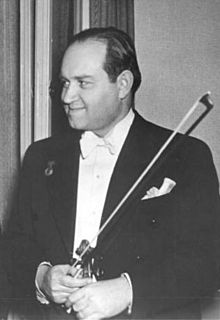 He was born in Odesa (then Odessa) in 1908. In the Soviet Union, where rankings were of utmost importance, Oistrakh was considered the greatest violinist. From age five, he studied with Pyotr Stolyarsky, the founder of the Odessa Violin School (among his pupils were Nathan Milstein, Boris Goldstein, Elizabeth Gilels, Mikhail Fikhtengoltz, Valrey Klimov, winner of the First Tchaikovsky Competition, and many others). In 1935, Oistrakh won the second All-Union Competition of Musical Performers, then took the second prize in the Henryk Wieniawski International Competition (Ginette Neveu took the first prize), and two years later won the Ysaÿe Competition in Brussels, which made him world-famous. International music competitions were important to Stalin – for him, they were the way to prove that the Soviet Union was an advanced country, and the young winners, Oistrakh among them, were awarded medals and benefits, such as comfortable apartments, on par with the party officials, something not available to regular citizens. Oistrakh performed widely in the Soviet Union, and after WWII, became one of the few musicians who were allowed to travel internationally. One way or another, Oistrakh was a phenomenal violinist who made many exceptional recordings. Here’s one of them, from 1969: David Oistrakh plays Brahms’s Violin Concerto with the Cleveland Orchestra under the direction of George Szell.