Welcome to our free classical music site

Do you write about classical music? Are you a blogger? Want to team up with Classical Connect? Send us a message, let's talk!
Do you write about classical music? Are you a blogger? Want to team up with Classical Connect? Send us a message, let's talk!




February 10, 2014. Tomás Luis de Victoria. Only minor composers were born this week. Fernando Sor, the Spanish guitarist and composer, was christened on February 14, 1778 (and probably born a day earlier) in Barcelona. Here is one of his best-known compositions, Variations on a Theme by Mozart, performed by the guitarist Rafael Serrallet. Alexander Dargomyzhsky, born on February 14, 1813, was a Russian composer mostly known for his operas Rusalka (The Mermaid) and The Stone Guest, both based on Alexander Pushkin’s works: the former – on an incomplete poem, and the latter – on a “little tragedy” in blank verse. Dargomyzhsky was an important link between Glinka and the “Mighty Five.”
We’ll turn instead to a composer of genius, the Spaniard Tomás Luis de Victoria. He was born around 1548 in a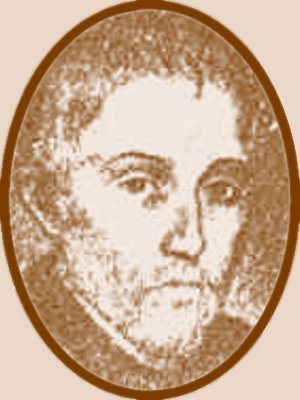 small town of Sanchidrián, not far from the walled city of Ávila. When Victoria was 10, he was sent to the Cathedral of Avila. There, he was a chorister, but also learned to play the organ. In 1567 he was accepted at Gollegium Germanicum, a Jesuit seminary in Rome (Ignatius Loyola was one of the founders). The seminary was created for the German-speaking students, but also accepted young men from other countries. It is quite possible that around that time Victoria took music lessons from Giovanni Pierluigi da Palestrina, the most famous composer of the time. Victoria also became an organist at the Spanish church in Rome, Santa Maria de Monserrat. In 1571 he succeeded Palestrina as the chapel master of the Pontifical Roman Seminary (Palestrina received the prestigious position at the St-Peter Cathedral). The following year in 1572, Victoria published his first book of motets. Three years later he was made the choir master of his alma mater, Collegium Germanicum, which by then had moved to the magnificent Palazzo di Sant’Apollinare. In this position he not only taught music and managed the choir at the college, but also supervised all music-making in the church of St. Apollinare, which was adjacent to the college and were the choir performed during services. Victoria raised the choir to such a level that people from all over Rome flocked to the St. Apollinare to listen to it. In 1575 Victoria, a deeply religious man, was ordained a priest. He retired from Collegium Germanicum in 1578, and for the following seven years worked as a chaplain in one of the churches of Rome, actively composing. Several anthologies of his works were published in Rome during these years and his fame as a composer spread across Italy.
In 1587 Victoria returned to Spain after King Philip II granted him a position of chaplain to his sister, Empress Maria. Maria, daughter of Emperor Charles V, who had served as regent of Spain during the absence of Philip II, by then retired to the Monastery of Las Descalzas Reales in Madrid. Victoria served to Empress Maria for the following 17 years, until her death in 1603. He only took one break, in 1593, when he went back to Rome and stayed there for two years. In 1594, while in Rome, he attended the funeral of Palestrina. Upon Empress Maria’s death Victoria wrote a Requiem Mass, one of his finest compositions. Here is the motet Versa est in luctum (My harp is turned to mourning) from the Mass. It’s performed by the Westminster Cathedral Choir, David Hill conducting. After the Empress’s death Victoria stayed in Las Descalzas Reales as a mere organist, even though his fame had spread all over Spain and several important cathedrals, Seville’s among them, wanted to hire him. He continued composing and published several more books of music. Tomás Luis de Victoria died in the convent of Las Descalzas Reales on August 20th of 1611. Here is another famous composition by Victoria, motet O magnum mysteriumfrom the eponymous mass. It’s performed by the Oxford Camerata, Jeremy Summerly conducting.
PermalinkFebruary 3, 2014. Mendelssohn and Palestrina. Two great composers were born today, Felix Mendelssohn and Giovanni Pierluigi Palestrina: Mendelssohn in 1809, Palestrina – in 1525. Felix Mendelssohn was born in Hamburg into a family of a wealthy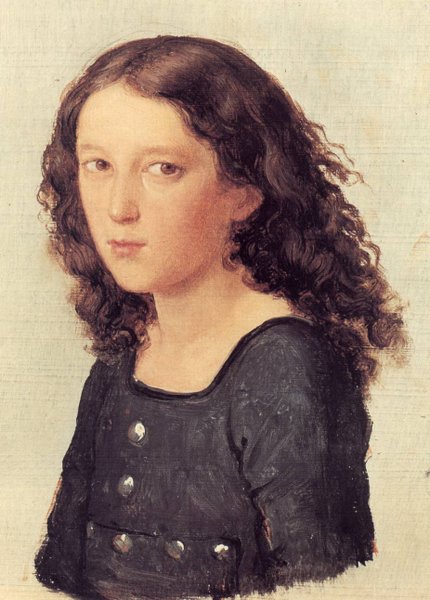 banker, Abraham Mendelssohn. Felix’s grandfather was Moses Mendelssohn, the famous German Jewish philosopher and the founder of the Jewish enlightenment movement. His mother Lea came from the prominent Itzig family; her grandfather Daniel Itzig was the “court Jew” of King Frederick the Great of Prussia – a banker who lent money to the King and to a large extent managed his finances. Felix had three siblings, the musically gifted older sister Fanny, and two younger brothers. The Mendelssohns were not religious (Felix wasn’t even circumcised, which was highly unusual for a Jewish family) and when he was seven, all children were baptized: while proud of their ancestry, the prevailing notion in the Mendelssohn family was that Jews should assimilate with the German people. In 1811 the family moved to Berlin.
Felix was the greatest child prodigy since Mozart. His first piano lessons were with his mother; later he studied piano with several teachers in Berlin, and later in Paris. In 1819, when he was 10, he and Fanny started taking composition and counterpoint lessons from a noted composer, Carl Friedrich Zelter, a friend of Goethe. When he was 12, Felix was taken to Weimar and played for Goethe the music of Bach and Mozart. He even dedicated his Quartet in B minor Op. 3, written in 1824, to Goethe. At the age of 11, in 1820, Felix wrote his first opera, Die Soldatenliebschaft (The soldier’s love affair). Three more operas followed in the next two years. His first published works were piano quartets – Op. 1, in C minor, written in 1822, Op. 2, in F minor, written one year later, and the already mentioned Op. 3, in B minor. Here is the thirteen-year-old Mendelssohn’s Piano Quartet op. 1, no. 1, performed by The Schubert Ensemble of London. It’s a youthful but charming piece. The symphonies, the famous violin concerto, oratorios, the exquisite piano pieces – all that was still to come. The picture above, by the German painter Carl Joseph Begas, was made the year before Op. 1 had been written.
Giovanni Pierluigi da Palestrina’s birthday is tentative, as is so often the case with the 16th century composers. As Grove’s says, he was born “between 3 February 1525 and 2 February 1526.” Palestrina, a Roman, is considered one of, if not the greatest Renaissance polyphonist. He followed in the steps of the Franco-Flemish composers, such as Guillaume Dufay, Josquin des Prez, and Adrian Willaert. The genius of Palestrina deserves much more space than we have here, so we’ll just present two pieces, a brief Nunc dimittis (“now you dismiss…” also called Song of Simeon, a canticle which is usually sung at the end of a religious service), performed by the Tallis Scholars, and the great motet Stabat Mater, very much admired by Richard Wagner. The Choir of King's College is directed by Sir David Willcocks (here).
PermalinkJanuary 31, 2014. Schubert. Today is the 127th birthday of Franz Schubert, who was born in 1797 in a suburb of Vienna. To celebrate this event, we publish an article on one of Schubert’s last composition, the song cycle Schwanengesang (“Swan Song”).
The fourteen songs of Schwanengesang are among the last of Schubert’s compositions. Unlike his previous cycles, Die schöne Müllerin and Winterreise, Schwanengesang is not based on the poetry of a single poet, but instead three: Ludwig Rellstab (Nos. 1-7), Heinrich Heine (Nos. 8-13) and Johann Gabriel Seidl (No. 14). However, Schubert’s intentions for the cycle remain unclear. All but the last song were copied out in the composer’s hand on consecutive manuscript pages and in the traditional performance order, which is an indication that Schubert may have regarded them all as a single coherent work. However, in early October, Schubert offered the Heine songs to the Leipzig publisher Probst, a contrary move that at least shows he either thought those songs separable from the preceding ones based on the poetry of Rellstab, or was willing to divide the work for purposes of publication.
Since Schubert’s ultimate intentions for these songs will never be known, or quite possibly was never fully decided upon by the composer himself, the task of organizing the cycle for publication was left up to Tobias Haslinger, who published Schwanengesang, as well as Winterreise, not long after Schubert’s death. Haslinger respected Schubert’s order as presented in the manuscript, but appended the lone Siedl song, Die Taubenpost, believed to be Schubert’s last completed work.
Whatever may have been Schubert’s intentions for the ordering and structure of Schwanengesang, Haslinger’s edition makes a compelling case for its current representation as a complete cycle of fourteen songs. The Rellstab songs, which make up the first half of the cycle, are overall lighter in nature, touching only briefly on darker, forlorn subjects. The first of these songs (Liebesbotschaft) opens the cycle in G major. From there, the following six pass through a fairly logical progression of keys to the last song (Abschied), which closes the first half in E-flat major, a choice of key that would have pleased any Romantic. The six Heine songs that make up the bulk of the second half, however, deal with far gloomier moods and plunge deeper into the dreary recesses of the human heart. Der Atlas opens the second half in G minor, a shadow of the cheery G major that began the cycle. From thence, each song begins in a key related to the last—the sole exception being the tragic and haunting Der Doppelgänger in B minor following the serene C major of Am Meer. Though quite different in tone, Die Taubenpost provides at least a proper structural close, even if its sudden cheerful mood seems out of place following the immense weight of the Heine songs. In G major, it echoes the confident love of Liebesbotschaft, bringing the cycle, in terms of key and theme, to an adequate close.
You can hear the songs by clicking on their titles. Dozens of wonderful singers recorded Schwanengesang. This one is a classic, with the great German baritone Dietrich Fischer-Dieskau and his partner, the British pianist Gerald Moore. These recordings were made in the 1950s. The complete cycle would be heard here.Permalink
January 27, 2014. Mozart, a trip to Paris. Today is the anniversary of Wolfgang Amadeus Mozart: he was born on January 27th of 1756. When he was 17, he received employment at the court of the Prince-Archbishop of Salzburg. By 1777 he found the_by_Lange_1782.jpg "Wolfgang Amadeus Mozart") situation stifling: not only was his pay very low, he also wanted to compose large-form pieces, especially operas, and the opportunity in Salzburg was limited. (Mozart was interested in operas all his life. He wrote his first one when he was 11; Il re pastore, written in 1775 when Mozart was 19, is still staged today). In August of 1777 Mozart resigned his position hoping for better employment elsewhere. Traveling with his mother (father Leopold stayed back in Salzburg) he went to Mannheim, which in those days boasted the best orchestra in all of Europe. In Mannheim he fell in love with Aloysia Weber, seventeen years of age and a budding soprano (he would eventually marry Aloysia’s younger sister, Constanza). He was sufficiently enamored to compose two Recitatives and arias for Aloysia. Unfortunately, Mozart couldn’t find any decent employment at the Palatinate court of the Mannheim rulers and, accompanied by his mother, he continued to Paris.
situation stifling: not only was his pay very low, he also wanted to compose large-form pieces, especially operas, and the opportunity in Salzburg was limited. (Mozart was interested in operas all his life. He wrote his first one when he was 11; Il re pastore, written in 1775 when Mozart was 19, is still staged today). In August of 1777 Mozart resigned his position hoping for better employment elsewhere. Traveling with his mother (father Leopold stayed back in Salzburg) he went to Mannheim, which in those days boasted the best orchestra in all of Europe. In Mannheim he fell in love with Aloysia Weber, seventeen years of age and a budding soprano (he would eventually marry Aloysia’s younger sister, Constanza). He was sufficiently enamored to compose two Recitatives and arias for Aloysia. Unfortunately, Mozart couldn’t find any decent employment at the Palatinate court of the Mannheim rulers and, accompanied by his mother, he continued to Paris.
Leopold sent a letter to Baron Melchior Grimm, a fellow German who lived in Paris, was a member of the Parisian society who corresponded with Catherine the Great of Russia and Frederick II of Prussia, and, in those enlightened times, was also an Encyclopedist and a friend of Rousseau. Responding to Leopold’s requests, Grimm took Mozart under his wing. Unfortunately their relationship turned out to be difficult and pretty soon they parted ways, with Grimm passing Mozart to his mistress, Mme d’Epinay. Despite all her connections in high society, she couldn’t help him much either. What’s worse, her relationship with Mozart, initially very warm, also soured. It seems that the 22-year-old Mozart was a difficult protégé: in Paris he felt ill at ease, was passive and disagreeable. And he didn’t like the French. “Their manner now borders on rudeness and they’re frightfully arrogant,” he wrote to Leopold. To make the situation even worse, Mozart’s mother fell ill and died on July 3, 1778. With no money, Mozart got into debt; by September of 1778 he left Paris. This was an unfortunate trip, but Mozart continued to compose even under these difficult circumstances. While in Paris, he wrote yet another symphony, his 31st. It was premiered in June of 1778 at the home of the Ambassador of the Prince-Elect of Palatinate to France. Several days later it was also performed in public. We now know it as the "Paris Symphony," one of Mozart’s most famous. Here it is, performed by the English Sinfonia, one of Britain’s oldest chamber orchestras. Sir Charles Groves is conducting.
PermalinkJanuary 20, 2014. We at Classical Connect mourn the passing of Claudio Abbado, one of the greatest conductors of his generation. Maestro Abbado died at his home in Bologna. He was 80.
January 20, 2014. Dutilleux and Willaert. A year ago, when we celebrated Henri Dutilleux’s 96th birthday, he was living in Paris and still working. He died five months later, on May 22nd, leaving behind a major body of work, and already a classic. Dutilleux was born on January 22nd, 1916 in Anger in western France. He studied at the Paris Conservatory, graduating in 1938. After the War, he worked for many years at Radio France as the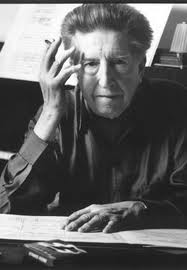 head of music production and left only in 1963 to dedicate himself to composing. In 1961 Alfred Cortot, the founder of École Normale de Musique de Paris, invited him to join the school. After Cortot’s death Dutilleux for a while served as the school’s president. Dutilleux assigned the first opus to his Piano Sonata, which he wrote for his wife, the pianist Geneviève Joy, in 1946-48, even though by then he had already been composing for at least 10 years. Even though he disavowed his earlier composition, his Sonatine for flute and piano (1943) is performed quite often.
Although Dutilleux’s style was affected by Debussy and Ravel, he was a modernist who used atonality and complex rhythms. He was also a perfectionist, revising his compositions over and over. Here is Dutilleux’s sonorous Timbres, espace, movement (Timbre, space, movement), a 1978 composition for an unusual combination of instruments: woodwinds, brass, cellos, percussions, but no violins or violas. Timbres was commissioned by Mstislav Rostropovich, who gave the premier with the National Orchestra the same year. The piece carries a subtitle, “The Starry Night,” after the painting by Van Gogh. The Bordeaux Aquitaine National Orchestra is conducted by Hans Graf. And for someone who likes more austere music, here is his String quartet, Ainsi la nuit (“So the night”), which Dutilleux composed in 1976-76. It’s performed by the Belcea Quartet.
Adrian Willaert had an interesting life: a talented Franco-Flemish composer, he followed in the steps of Josquin des Prez, and then later established the Venetian musical school. Willaert was born in a small Flemish town of Rumbeke around 1490 (the same time as John Taverner, about whom we wrote last week). We know about his life from the writings of his student, the composer and music theorist Gioseffo Zarlino. Willaert went to Paris to study law but switched to music instead. One of his teachers was Jean Mouton, the composer of the Royal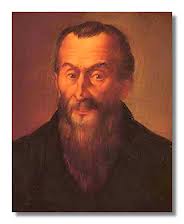 chapel. Around 1515 Willaert moved to Rome. Later, he entered the service of Cardinal Ippolito d'Este of Ferrara (it’s interesting that some years earlier Josquin was employed by Ippolito’s father, Ercole I d'Este, Duke of Ferrara). In 1527 Willaert received an exceptional appointment in Venice, becoming the maestro di cappella of the St. Mark cathedral. He held that post till his death in 1562. During that time he composed a large number of masses, motets, madrigals and other secular music. He also had many students, among them Andrea Gabrieli. Venetian music owes much to the architecture of St. Mark. The cathedral is unusual in that it has not one but two choir lofts, on each side of the main alter, with organs in both lofts. Willaert used this spatial separation to divide the choir in two and wrote “antiphonal” music, in which the melody is sung alternatively by both choirs. The Gabrielis, Andrea and Giovanni, made good use of it, and eventually this technique became known as Venetian polichoral style.
We’ll hear a beautiful madrigal by Willaert, O dolce vita mia, performed by the King’s Singers. And here is his motet Pater Noster as performed by another British ensemble, Magdala, directed by the founder, David Skinner.
Permalink