Welcome to our free classical music site

Do you write about classical music? Are you a blogger? Want to team up with Classical Connect? Send us a message, let's talk!
Do you write about classical music? Are you a blogger? Want to team up with Classical Connect? Send us a message, let's talk!




This Week in Classical Music: January 16, 2023. German and Austrian (Jewish) Music from Mahler to 1933, Part II. In our previous post, we promised to play some music of the Austrian-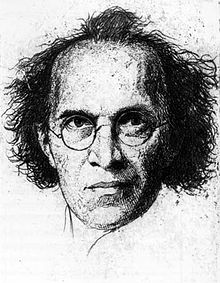 German, mostly Jewish composers whose careers flourished during the first third of the 20th century and then were completely upended by the Nazis. There were nine of them, not counting Mahler himself, and we selected three for this entry: Franz Schreker, Egon Wellesz, and Erich Wolfgang Korngold. All three, while modern in the musical idiom, didn’t accept Schoenberg’s atonality and wrote in a somewhat flowery, Romantic style. We’ll start with two excerpts from Schreker’s opera Der ferne Klang, which premiered in Frankfurt in 1912. This was Schreker’s breakthrough opera, staged in Germany hundreds of times. Schreker’s popularity waned in the mid-20s, as new operas in the zeitoper style, an angular German version of Italian verismo, became fashionable. Still, he was a highly esteemed composer and teacher when the Nazis came to power in 1933. Then, practically overnight, his music was banned, and he was dismissed from the Prussian Academy of Arts. Without means to support himself (his greatest triumphs happened during the period of hyperinflation), he suffered a stroke in December of 1933 and died in March of 1934, two days before his 56th birthday.
 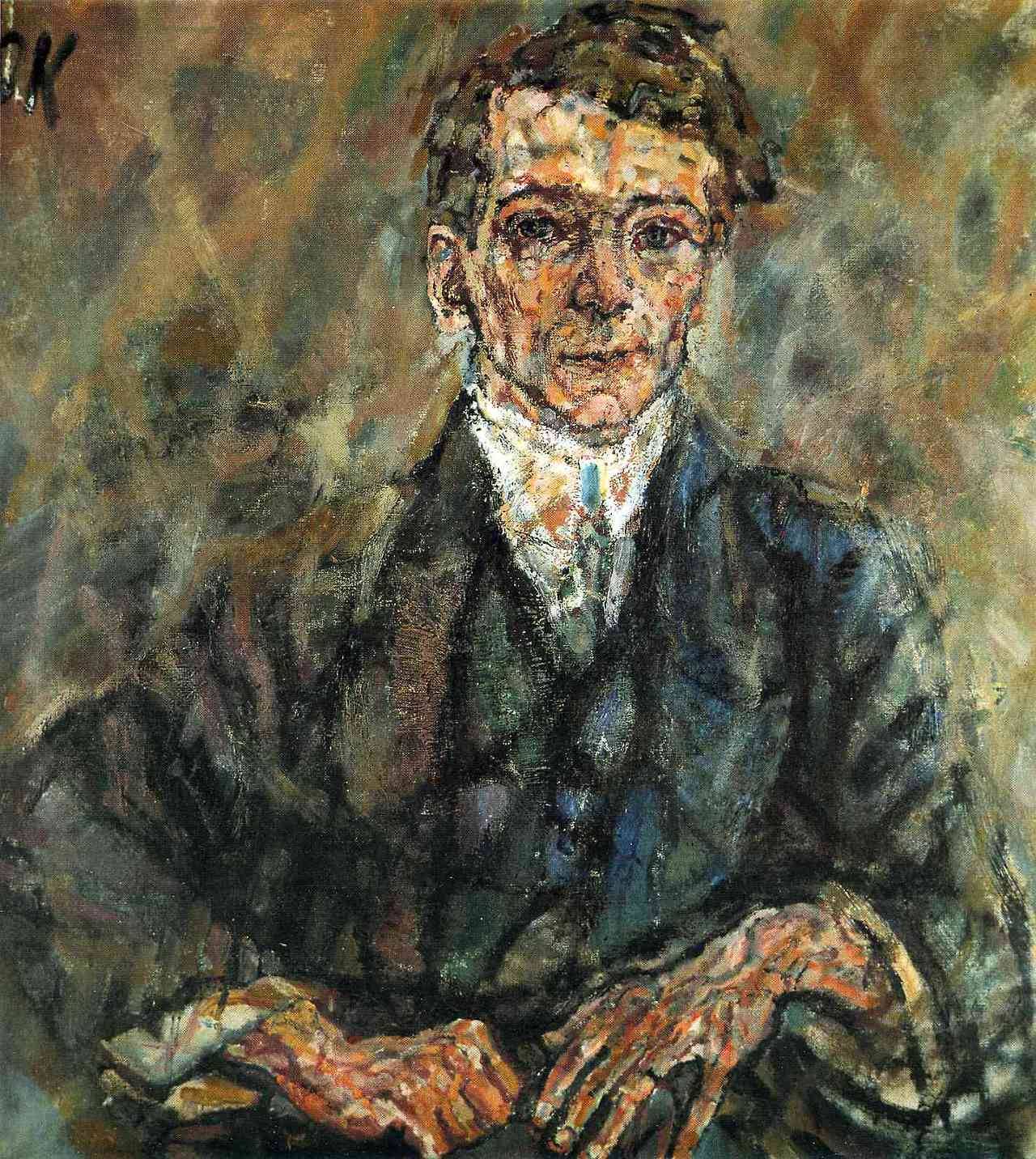 Michael Haas rightly calls him the first victim of Nazism. Here’s Nachtstück, an interlude from Act 3 of Der ferne Klang. It’s performed by the Royal Swedish Orchestra under the direction of Lawrence Renes. And here is the final scene, Grete! Horst Du den Ton? (Do you hear the sound?) with the tenor Thomas Moser and soprano Gabriele Schnaut. The scream at the end reminds one of the final moments of Puccini’s Tosca, written 12 years earlier. Berlin Radio Symphony Orchestra is conducted by Gerd Albrecht.
Next, we’ll turn to Egon Wellesz, whose life, fortunately, was not as tragic as that of many of his Jewish contemporaries: he stayed in Vienna till Anschluss and then emigrated to England, where his life wasn’t easy (he was interned for a while as an “enemy alien”) but where he eventually built a career as an expert in Byzantine music and teacher. However, he was forgotten as a composer, which is a pity, as you can judge for yourself. Here’s Wellesz’s Idyllen, op.21, five short pieces for piano in the impressionistic style, written after poems by Stefan George. It’s performed by Margarete Babinsky. And here is his String Quartet no. 6, op.64, composed in England in 1947. The first several bars remind us of the famous 4th movement of Shostakovich’s Quartet no. 8 from 1960. It’s performed by Artis-Quartett Wien.
This Week in Classical Music: January 9, 2023. German and Austrian (Jewish) Music from Mahler to 1933. Since about a month ago, when we published an entry dedicated to the Austrian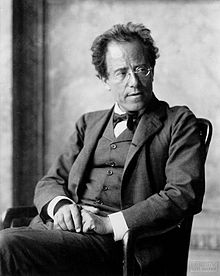 Jewish composer Ernst Toch, we’ve been preoccupied with that tragic but remarkably fecund period of European art of the period. We must give credit to Michael Haas, whose book Forbidden Music and his eponymous blog have guided us in our search. Haas brilliantly explores the history of Austro-Hungarian and German Jewry starting with the Congress of Vienna in 1814 through the midcentury and Wagner’s antisemitism; the Austrian Constitution of 1867 proclaimed by the emperor Franz Joseph I, which emancipated the Jews of much of the Empire and helped to liberate the talents of the country’s Jewry, especially in arts; the underlying antisemitism of the society and first antisemitic political movements, relatively innocuous back then but eventually murderous and later catastrophic;
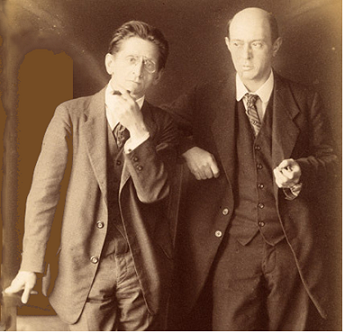 the problems of the German minority of the Empire, and so much more.
For the Jews, the way to become accepted in society, formally free but practically still antisemitic, was through the arts, especially music. The flourishing that followed was quite unprecedented. We’re not even talking about the performing artists or conducting, where Jewish musicians came to occupy very prominent positions – we’re focusing on the composers who changed the music scene of the German-speaking world. Gustav Mahler, born in 1860, was the oldest of this group. Alexander von Zemlinsky, who fell in love with Alma Schindler before Mahler convinced her to marry him, was 11 years younger but still one of the most celebrated composers of the early 20th century, right there after Mahler and Richard Strauss (Strauss, born in 1864, wasn’t Jewish). Arnold Schoenberg, who changed the way we listen to music and even what we consider music, was born in 1874 (you may want to check our three entries here, here, and here). Franz Schreker, for a while more famous than all of the above, was the most popular opera composer in Austria and Germany. He was born in 1878.
Then there were three composers who are practically forgotten these days. Who remembers Karl Weigl, even though his music was praised by Mahler, Schoenberg, and Strauss? Weigl was born in 1881. Egon Wellesz, born in 1885, was one of the most successful pupils of Arnold Schoenberg: his music was published by Universal Edition, the most prestigious music publishing house in Europe, before Berg’s or Webern’s. He was also a noted scholar of Byzantine music. Ernst Toch, to whom we dedicated a recent entry, was born in 1887; his music was admired by Mahler and widely performed, till the Nazis banned it after assuming power.
Erich Wolfgang Korngold, an amazing child prodigy (many compared him to Mozart), was born in 1897 and wrote a ballet (Der Schneemann) at the age of 11, before the much older Zemlinksy composed the bulk of his work. Korngold became one of the most celebrated (and rich) composers of the time. Hanns Eisler, also Schoenberg’s student, was born in 1898 and became famous for his communist sympathies and for composing the national hymn of the German Democratic Republic. And Berthold Goldschmidt, the youngest of this group, was born in 1903. Franz Schreker’s student and a successful composer, he was considered by many to be the brightest star of his generation.
By 1933, when the Nazis took power, Mahler had been dead for 22 years, but everybody else’s careers and personal lives were brutally upended. Their music was declared “degenerate,” and their livelihoods destroyed. Franz Schreker suffered a stroke in December of 1933 and died three months later. Everybody else was forced to emigrate. Most of them never regained the fame they had in Europe. We’ll talk about the aftermath of the Nazi takeover and listen to some of the music in our next post.Permalink
This Week in Classical Music: January 2, 2023. Yes, 2023! The first week of the year is rich in pianistic talent: January 5th alone is the birthday of three tremendously gifted pianists, Arturo Benedetti Michelangeli (born in 1920) Alfred Brendel (1931), and Maurizio Pollini (1942).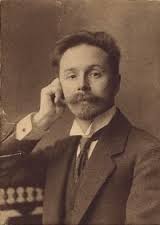 The Russian composer Alexander Scriabin was also born this week, on January 6th of 1872. Scriabin, himself a piano virtuoso, wrote many pieces for the instrument: numerous preludes, etudes, impromptus, mazurkas, poèmes, and ten numbered sonatas, not counting two early piano pieces in that form. We thought that we would find some Scriabin recordings by our pianists to celebrate both their art and that of the composer, but alas, there were none. Michelangeli had a rather limited repertoire, Brendel’s was much broader but even though he did play some 20th-century music, he mostly concentrated on German classics. What surprised us the most was the absence of Scriabin’s recordings in Pollini’s discography. Pollini played so many composers, from Bach to Luigi Nono, that we thought he would’ve recorded some Scriabin along the way, but we were mistaken: not a single record exists. Whether Pollini played Scriabin in concerts we don’t know, so we had to turn to a great interpreter of Scriabin’s music, Sviatoslav Richter. Here’s Sonata no. 5 in F sharp major, Op 53, recorded by Richter in Prague on September 24, 1972.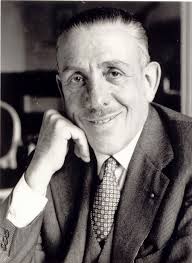
The wonderful French composer Francis Poulenc was also born this week, on January 7th of 1899. Soirées de Nazelles (Nazelles evenings) is a set of variations that Poulenc composed between 1930 and 1936 (Nazelles is a small town on the Loire not far from Tours). Here’s the description at the top of the score, written by Poulenc himself: “The variations that form the center of this work were improvised at Nazelles during long country evenings wherein the composer played "portraits" for friends gathered around his piano. We hope that these variations, each one somewhere between a first draft and a finished work, will have the power to evoke this game in the spirit of a Touraine region living room – with a window open to the night.” Here’s Soirées de Nazelles performed by the French pianist Pascal Rogé.
PermalinkThis Week in Classical Music: December 26, 2022. End of Year. This year will be remembered for the brutal, unprovoked war Russia unleashed against Ukraine in February. Peace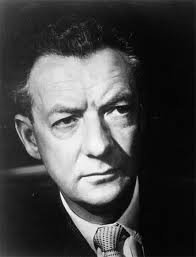 in Europe has failed, yet again, but this time to an extent not seen since WWII. And yet again we see that culture doesn’t help us to fight evil: the country of Tolstoy and Tchaikovsky is killing people very much like the country of Beethoven and Goethe was doing it eighty-some years ago. Neither words nor music, only deadly weapons can stop the aggressor. If we were to play some music to acknowledge the barbarity of the events, that would be Britten’s War Requiem. Written in 1961-62, the music was commissioned to mark the consecration of the Coventry Cathedral, recently rebuilt after being destroyed by German bombs during WWII. For the text of the Requiem, Britten used parts of the Latin mass and nine poems of Wilfred Owen, the English poet who died during the Great War just one week before the armistice (despite all the modern rocketry, what’s happening in Ukraine today reminds one of the hellish trench battles of WWI).
At the premiere of the Requiem Britten wanted to show the newfound European unity, inviting his friends from different countries to perform: the soprano Galina Vishnevskaya from the Soviet Union, Peter Pears, an Englishman, and Dietrich Fischer-Dieskau, a German. But there was no “unity” between the East and the West in 1962: the Soviet Government didn’t allow Vishnevskaya to travel to the UK and Heather Harper had to substitute on very short notice. Several months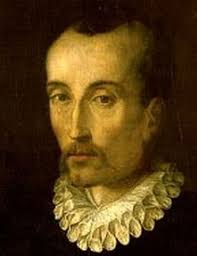 later the Soviets relented and let Vishnevskaya go to London to record the piece. It’s from this recording that we can hear the first movement, Requiem aeternam. Benjamin Britten conducts the London Symphony Orchestra.
It became a tradition of sorts for us to celebrate the approaching New Year by commemorating the numerous composers of the Renaissance whose birth dates were lost in history. We regularly write about the “greats,” such as Guillaume Dufay, Josquin des Prez, Palestrina, Orlando di Lasso, and Tomás Luis de Victoria, but there are scores of talented composers born in the 16th and even 17th centuries that we often miss for the only reason that their birthdays are not fixed in the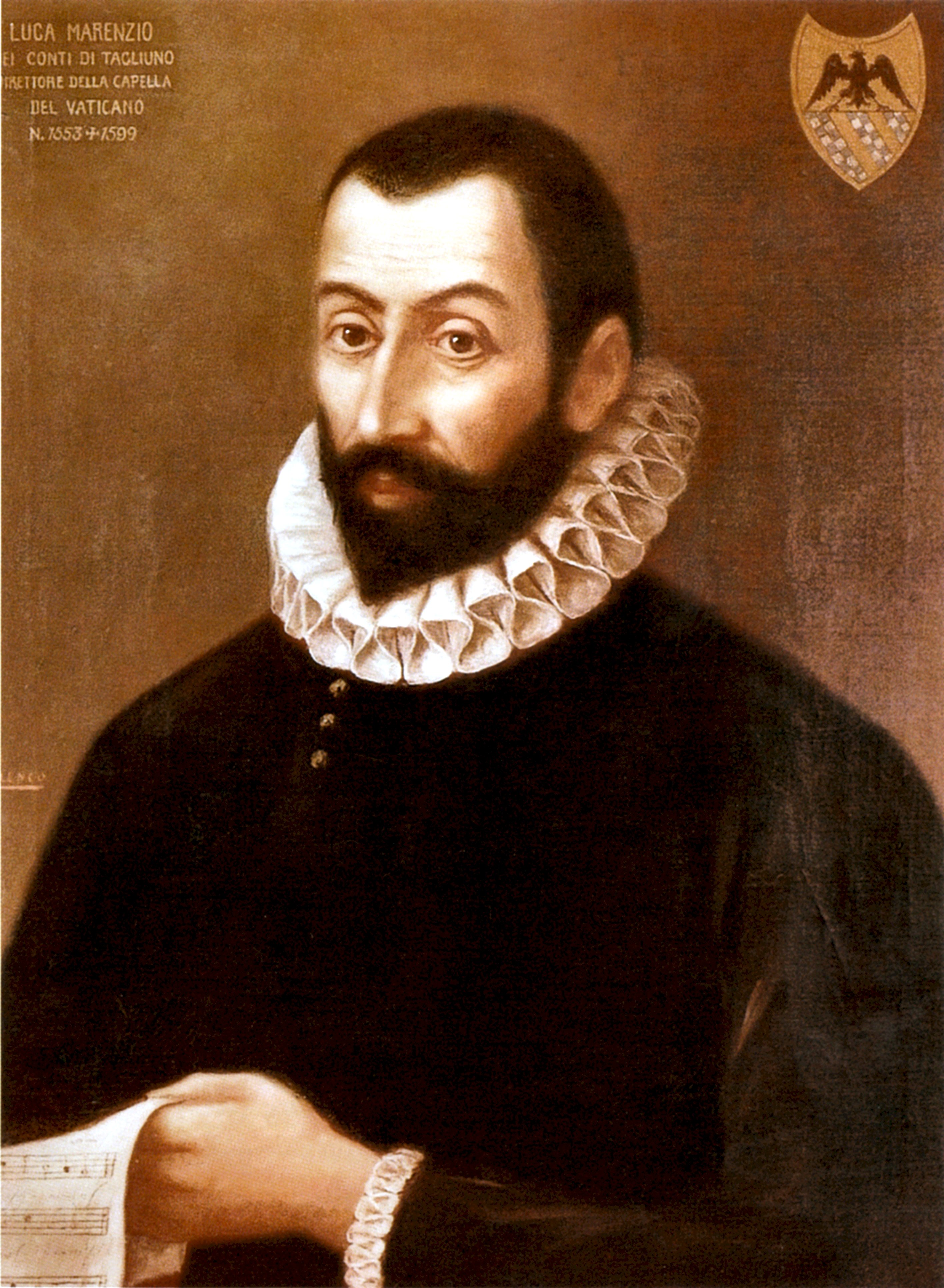 musical calendar. So here is a madrigal Queste Non Son Più Lagrime Che Fuore (These are no longer real tears which rise) by Giaches de Wert. It’s based on a canto from Orlando furioso, a poem by the great Italian poet Ludovico Ariosto and performed by the ensemble La Compagnia del Madrigale. Giaches de Wert was born in 1535 and spent many years at the courts of the Gonzaga and Este families in Mantua and Ferrara, then the musical centers of Italy. Luca Marenzio was 18 years younger than de Wert; he was also famous for his madrigals and also for many years served different branches of Estes and Gonzagas, though mostly in Rome and Florence. Here’s Amor, i' ò molti et molt'anni pianto (Love I've cried many and many years), Marenzio’s madrigal for five voices. It’s set to a text by Petrarch and is performed by the ensemble La Venexiana.
Happy New Year!
PermalinkThis Week in Classical Music: December 19, 2022. Puccini and Christmas. Giacomo Puccini was born this week, on December 12th of 1858. Not long ago we came across a story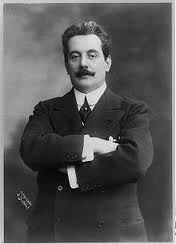 involving him, it’s interesting but rather circuitous so bear with us for a moment. It starts with Michael Haas, the author of a very interesting book, The Forbidden Music, the story of Jewish composers and musicians banned by the Nazis – we highly recommend it. Mr. Haas runs a blog which we also find interesting. One of the recent entries was devoted to the 1903 article by Eduard Hanslick who reviewed the performance of Puccini’s La Bohème at the Vienna Hofoper, the court opera, conducted by Gustav Mahler. It’s fascinating, but we need to set the scene and try to put things into perspective.
Eduard Hanslick was a famous music critic (we had an entry about him several years ago). He worked for a Viennese newspaper called Die Neue Freie Presse (The New Free Press). The newspaper, probably the most influential in the Austrian Empire, was unusual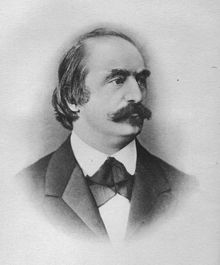 in that it employed a large number of prominent Jewish writers, including Theodor Herzl, the founder of Zionism. Julius Korngold, the father of the composer Erich Wolfgang Korngold, also Jewish, succeeded Hanslick as the chief music critic. Remember that Austria at that time was highly antisemitic; Karl Lueger, the Mayor of Vienna at the time, was one of the leading antisemites. Hanslick, who worked at the newspaper for 40 years, was enormously influential. He was a preeminent supporter of the music of Brahms and a critic of Wagner, Bruckner, and Hugo Wolf (he also disliked Tchaikovsky’s Violin concerto, saying that it “stinks to the ear”). This was the person who wrote a scathing review of Puccini’s La Bohème, a production mounted under the supervision of the then Director of Hofoper, Gustav Mahler, who also conducted the premiere.
We know La Bohème as one of the most popular operas ever, and one of Puccini’s very best; it’s being staged constantly on every continent. In 1903, though, it was quite new: the premier was held in 1896 in Turin with the young Arturo Toscanini conducting. Practically at the same time Ruggero Leoncavallo, the author of Pagliacci, also wrote a La Bohème, now totally forgotten. It was based on the same book by Henri Murger and had a successful premiere; back then it wasn’t that clear which one was better (Hanslick, who hated both operas, didn’t hesitate to let us know which one he thought was worse). Then there is another aspect of the performance: in Austria, as in Germany, the UK, or Russia, operas were staged in the native language. Even though Hanslick liked the singing, La Bohème in German would probably grate our ears today. Finally, about the form of the article. It’s presented not as a brief review we would expect today but as a tremendously detailed, long account of all aspects of the performance. Some articles back then, called feuilleton, could run three-four pages – and people read them. This one is also long, so you may not want to read the whole thing, but skim it, it’s fun and Mr. Haas has wonderful photographs and musical snippets.
So here is the article. And here is O soave fanciulla from Act I, sung by Renata Tebaldi (Mimi) and Jussi Bjoerling (Rodolfo) in 1956. Hard to imagine that Hanslick didn’t like it.
And of course, Merry Christmas to all!
PermalinkThis Week in Classical Music: December 12, 2022. Beethoven. Ludwig van Beethoven was born in Bonn on the 16th of December of 1770. We wanted to celebrate Beethoven with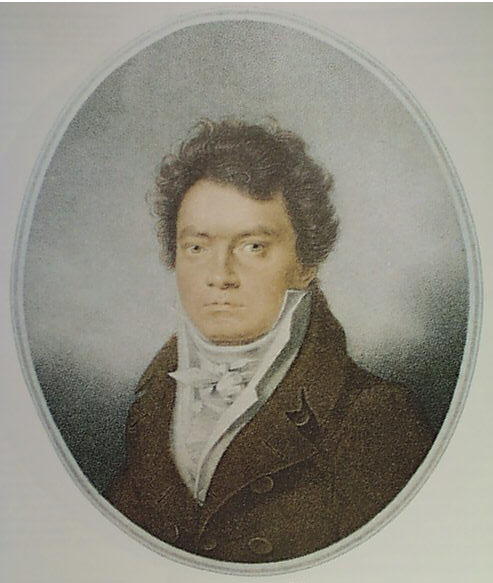 performances made by two musicians whose anniversaries we also commemorate this week, the pianist Rosalyn Tureck and the violinist Ida Haendel, but it turned out to be a more difficult task than we expected. We knew that Rosalyn Tureck, who was born in Chicago on December 14th of 1914 into a poor family of Jewish immigrants from Russia, was one of the most important interpreters of the music of Bach. So much so that Glenn Gould said in an interview that Tureck was his only influence. What we didn’t realize is how few recordings of Tureck playing music other than Bach’s there are. If you check out Discogs, that online bible of available recordings, you’ll find none, even though we know that in 1936, when she made her New York orchestral début she played Brahms's Piano
 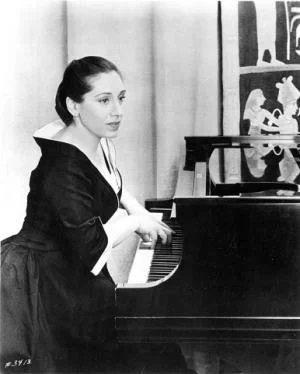 Concerto no. 2 with the Philadelphia Orchestra and earlier in her career played many concerts with a broad repertoire. All we could find for this occasion was her Carnegie Hall live recording of Beethoven’s Emperor concerto no. 5. It was radio broadcast on March 17th of 1940. On that occasion, Sir John Barbirolli conducted the New York Philharmonic Orchestra. Here are the second and third movements of the Concerto (we trimmed a very long ovation at the end).
Ida Haendel was more of a surprise. We knew that Tureck specialized in Bach but we thought we’d find many Haendel recordings of Beethoven, considering that his 10 violin sonatas and the concerto are a staple of concert repertoires. That turned out tonot quite be the case. Haendel was 14 years younger than Tureck and also Jewish. She was born in Poland, but her family moved to Britain before WWII. Haendel was a real child prodigy. In 1935, at the age of seven, she participated in the first Henryk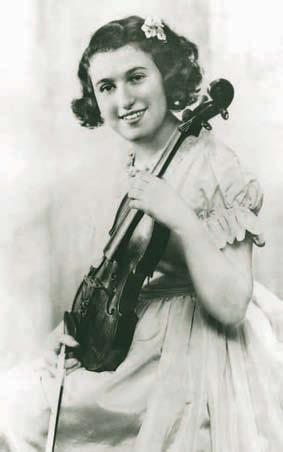 Wieniawski Violin Competition in Warsaw. It was a celebrated event, broadly covered by the European (and Soviet) press, and its results were surprising. The 16-year-old Ginette Neveu won the first prize, beating the already famous 29-year-old David Oistrakh, who took second. Another child prodigy, the 12-year-old Boris Goldstein took a rather disappointing fourth prize. But the greatest sensation was probably the performance of Ida, who took the 7th prize, ahead of scores of talented violinists. She went on to have a wonderful career and lived to the ripe age of 91, still performing into her eighties. She made a significant number of recordings, even though many of them were still mono. Among them are just two pieces by Beethoven, his Violin concerto and the Violin sonata no. 8. We know that she performed his other sonatas in concert, why she never recorded them is a mystery. Here’s a recording of Beethoven’s Violin Sonata no. 8 that Ida Haendel made in 1941. At that time she was 12 years old. Noel Mewton-Wood, then 18, is at the piano. (Mewton-Wood, a talented Australian-born British pianist, had a short life: in tragic circumstances he committed suicide at the age of 31.)Permalink