Welcome to our free classical music site

Do you write about classical music? Are you a blogger? Want to team up with Classical Connect? Send us a message, let's talk!
Do you write about classical music? Are you a blogger? Want to team up with Classical Connect? Send us a message, let's talk!




This Week in Classical Music: September 20, 2021. Geography. This week is rich on anniversaries and exceptionally diverse on geography. Gustav Holst was born on September 21st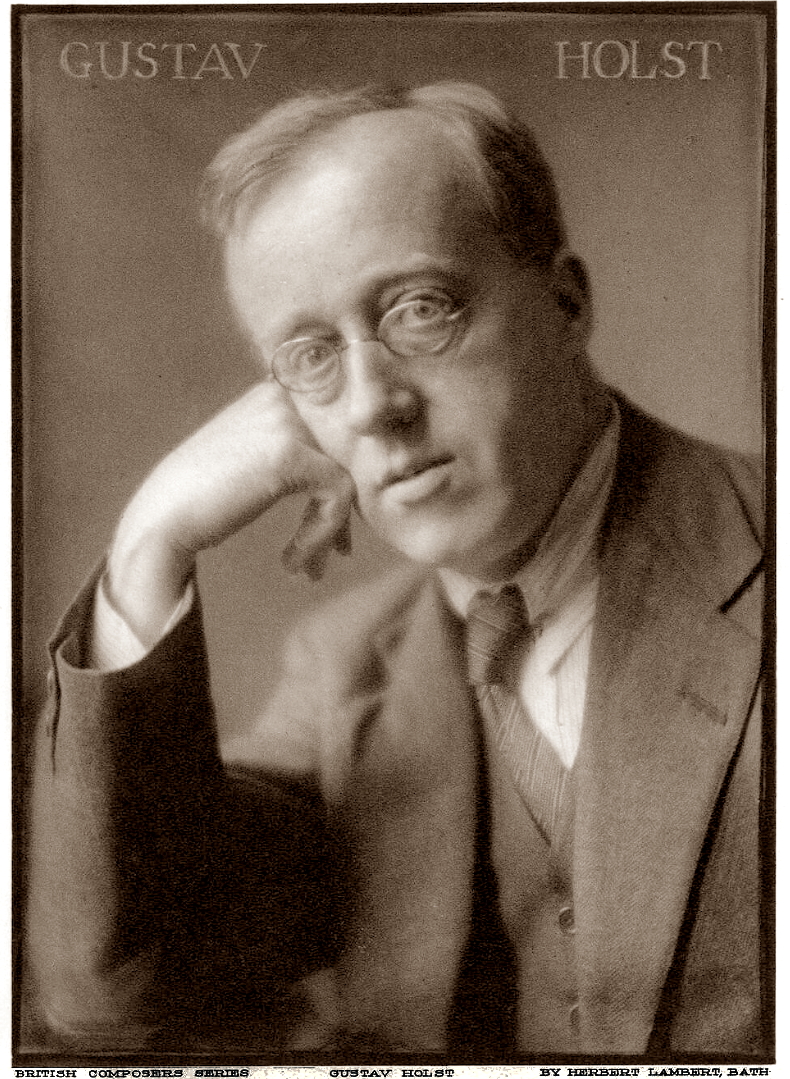 of 1874 in Cheltenham, England. A thoroughly English composer, he got his German-sounding name from his German-Swedish ancestors on the paternal side: his great-grandfather, Matthias Holst, a minor composer, pianist and harpist, was born in Riga and served at the Imperial Russian Court in St. Petersburg. Gustav Holst was quite famous during his lifetime; these days outside of Britain he’s mostly known for his orchestral suite The Planets. Holst studied at the Royal College of Music under Charles Stanford. Another English composer, Ralph Vaughan Williams, was his close friend, and so was Arnold Bax. Holst was a wonderful teacher, among his students were composers Michael Tippett and Benjamin Britten. The Planets were composed between 1914 and 1917. Each of the “planet” movements is supposed to have an astrological meaning, which escapes us, and a certain mood, which can be heard much clearer. Here, for example, is the fourth movement of the suite: Jupiter, the Bringer of Jollity. James Levine conducts the Chicago Symphony Orchestra.
Mikalojus Čiurlionis, a Lithuanian composer, painter and writer, was born on September 22nd of 1875. He’s one of the central cultural figures in modern Lithuanian history. Andrzej Panufnik, one of the most interesting Polish composers of the 20th century, was born on September 24th of 1914 in Warsaw. Here’s what we wrote about him to commemorate his 100th anniversary. Jean-Philippe Rameau, born on September 25th of 1683 in Dijon, was one of the greatest French composers of the Baroque, and probably of all of French music. Here’s the Overture to Rameau’s opera Dardanus, a tragédie en musique, as opera was then called in France. Dardanus premiered at the Paris Opéra on November 19th of 1739. Marc Minkowski leads Les Musiciens du Louvre.
So far we’ve visited England, Lithuania, Poland and France on our list of anniversaries. Three more countries are still ahead. Dmitry Shostakovich was born in imperial Russia, became one of the most famous composers of the Soviet Union and now is venerated as one of Russia’s greatest. Here’s one of our many entries on Shostakovich. Komitas was born in Turkey, in the town of Kütahya, on September 26th of 1869 and died in Paris, France on October 22nd of 1935, but he is an utterly Armenian composer and is celebrated in that country as Čiurlionis is in Lithuania or Shostakovich in Russia. He collected folksongs, as Bartok did in Hungary, and singlehandedly created a Western-style musical tradition in Armenia. And finally, an American: George Gershwin, named Jacob Gershowitz at birth, was born on September 26th of 1898 in Brooklyn, New York.
Seven composers, seven countries. Should we add a Canadian, Glenn Gould, born in Toronto on September 25th of 1932? Maybe next time.Permalink
This Week in Classical Music: September 13, 2021. The Little-Known Boismortier. Today our guest Aleah Fitzwater writes about the French composer Joseph Bodin de Boismortier.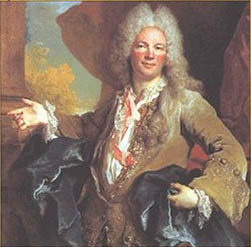 Before we get to this interesting but rather obscure Frenchman, we’d like to mention several composers and singers whose anniversaries are celebrated this week. Girolamo Frescobaldi, one of the first composers to write for a clavier instrument, was born on this day in 1583. Also on this day but in 1819 Clara Wieck was born. We know her better as Clara Schumann, Robert’s wife; she was a wonderful pianist and composer and an influential figure in German musical circles. And Arnold Schoenberg, a great modernist composer who pretty much changed the way we listen to music, was also born on September 13, in 1874. Luigi Cherubini, beloved by Beethoven and Rossini, was born September 14th of 1760. And the three singers, Jessye Norman, Elīna Garanča and Anna Netrebko were born on September 15th of 1945, September 16th of 1976 and September 18th of 1971, respectively. Norman and Netrebko don’t need an introduction (Netrebko will turn 50); Garanča is one of the best mezzos singing today. And now to Aleah and Boismortier:
Joseph Bodin de Boismortier was born in Lorraine, France in 1689. He was a Baroque-era composer who excelled at the concerto form. According to Wikipedia, he was the first French composer to use the Italian concerto form. In his lifetime, he became famous and was known as “The French Telemann.”
The Rococo Era. Boismortier was a composer in the Rococo Era. Rococo translates as “Shell work.” This artistic era originated in France in the late 17th century, and eventually spread throughout Europe as a reaction against Louis XIV and the bright Baroque styles. The Rococo era is signified by its darker undertones, and emphasis on ornamentation and detail. Both painters and composers were affected by this new artistic movement.
Musical Education. When Boismortier’s family moved to Metz, France, he began to study with a motetist named Montigny. During his studies, he wrote several Airs. Boismortier’s early compositions such as his Airs went over extremely well in Paris. He was highly influenced by Italian forms, which made his music quite unique during this time. As his skills as a composer grew, his pieces became statelier and more beautiful.
Over 100 Pieces in 20 Years. From 1724 to 1747, Boismortier wrote and published over 100 different pieces. These ranged from full ballets to sonatas and concertos. It is also reported that he wrote a flute method book, but that it was lost. Let’s delve into some of his more popular pieces!
Opera-Ballets. Boismortier wrote two Ballets during his lifetime: Les Voyages de L’Amour, and Don Quichotte chez la Duchesse. According to Gramophone.com, Les Voyages de L’Amour tells the tale of Cupid searching for his love. Eventually, he meets a Shepherdess named Daphne. The instrumentation of Les Voyages includes a romantic yet bright combination of hurdy-gurdy, flute, cello and bassoon. The score is full of playful dances and Rigadoons and is certainly a feel-good ballet. https://www.youtube.com/watch?v=SsErw9kRbRQ (continue reading here).Permalink
This Week in Classical Music: September 6, 2021. London Young Musician. One of our goals here at Classical Connect is to support and promote young artists. London Young Musician is an online competition which has similar goals. Even though this week is rich on significant birthdays (from Isabella Leonarda to Hernando De Cabezon, Antonin Dvořák, Henry Purcell, William Boyce and Arvo Pärt), we decided to publish their announcement as London’s deadline is fast approaching. Here it is:
London Young Musician is an international online music performance competition focusing on supporting the worldwide learning and creation of classical music. It is open to young musicians under the age of 28 and is available to all classical music instruments and vocals. The competition is held entirely online and welcomes applications from around the world. It provides excellent experience of competing internationally, without the hassle of travelling.
Thousands of candidates from over 70 countries and regions enter the competition. The international jury panel consists of professors from the Royal College of Music and experts from all over the world. It has a unique competition system designed by world-class education specialists, which provides professional pathways and resources for young musicians to build higher musical skills.
The competition seeks talented musicians who have excellent musical skills, a strong personality and fantastic creativity in their video performance.
Seasonal Competitions:
Four separate seasons per year with each seasonal competition being held every three months. All candidates receive an e-certificate and adjudicators’ comments.
For every season, the jury panel awards gold, silver, bronze and special prizes to competitors from each category. Gold Prize winners will have their name displayed in the London Young Musician Hall of Champions and are featured in an official LYM showcase video. Special prizes including Fantastic Technique, Expressive Performance, Characteristic Performance and Stylish Video. These are awarded to the candidate who has shown a unique side of themselves in their video performance. Other exciting prizes are available such as ranking medals, a mid-season online concert invitation, Educator Awards.
Award Points are awarded to all seasonal winners. These points can be used for entering the World Musicians Rankings or for entering the Musician of the Year annual competition in April.
Musician of the Year:
Seasonal winners who have gained 6 award points or more can then enter the annual competition ‘Musician of the Year’. This year-end competition consists of a first round and a Final Round. The final round is live streamed by True Art TV. Apart from jury members’ marks, audience vote helps to determine the final results. The World Musicians Annual Ranking will also be calculated after Musician of the Year results are published. This ranking is calculated based on the total scores of musicians in both seasonal competitions and Musician of the Year in the same competition year.
The annual awards include: cash awards totaling £1000, an interview published in World of New Classical Musicians magazine, a CD making opportunity with the True Art TV label, the opportunity to perform in the mid-season online concert, Champion Trophies, Ranking top 1 medal and exclusive London Young Musician teddy bears.Permalink
This Week in Classical Music: August 30, 2021. Bruckner and more. Anton Bruckner was born on September 4th of 1824 in a small town of Ansfelden near Linz. We love Bruckner, we’ve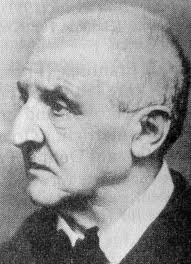 written about him on a number of occasions, and presented many of his symphonies (take a look here). One symphony that so far was missing from our library is Bruckner’s Symphony no. 2. As so many other compositions, it has a rather torturous history. Even though it is listed as number two, it’s the fourth symphony that Bruckner composed. Bruckner was a late starter: the very first symphony he wrote, in F minor without a number (but sometimes called “Symphony 00,” or “Study Symphony”) was an immature attempt composed in 1863; it was premiered more than a century later, in 1972, and is almost never performed. Then, in 1866, came Symphony no. 1, which Bruckner, famously unsure of himself, rewrote a number of times, and which exists in several versions. But at least this one Bruckner felt was worth performing. Three years later, in 1869, he composed Symphony in D minor. At first, Bruckner called it his symphony number two, but after Otto Dessoff, a prominent composer and conductor with the Vienna Philharmonic, asked him, "But where is the main theme [of the first movement]?” he removed the designation, wrote on the front page that it was nullified and put number zero instead of two. Thus, this symphony is often called “Number 0,” or, in German, “Die Nullte.” By 1872, at the time he composed what we now know as his Symphony no. 2, Bruckner was living in Vienna and teaching at three different institutions: music theory at the Vienna Conservatory, harmony and counterpoint at the University of Vienna and piano at St Anna’s teacher-training college for women. A great organist, he also performed in Austria and other countries, and had little time left for composing. Nonetheless, the Second symphony turned out to be his largest, most ambitious and sophisticated piece up to that point. Bruckner attempted to dedicate the symphony to Franz Liszt, but Liszt rejected the offer (we can only imagine how terribly Bruckner was hurt). He later offered this symphony and the next one, number three, to Brahms, who selected the latter. Thus, Symphony no. 2 isthe only one of Bruckner’s symphonies without a dedication. As always, Bruckner, nervous and unconfident of his gifts, wrote several versions, and had several printed editions. We’ll hear the Symphony in its second major revised version, from 1877, in the so-called Haas edition. The Royal Concertgebouw Orchestra is conducted by Bernard Haitink in this 1969 recording (here).
Bruckner was not the only composer born this week. Darius Milhaud, the French composer and one of Les Six, was born on September 4th of 1892. And on September 5th we have four more birthdays: Johann Christian Bach, the youngest of Johann Sebastian’s eleven sons, known as “the London Bach,” the Jewish-German composer Giacomo Meyerbeer, born in 1791, who was probably the most popular opera composer of the 19th century, John Cage, one of the most prominent avant-garde American composers, in 1912, and Amy Marcy Cheney Beach, now more popular than ever, in1867.
We’d also like to mention three conductors, all born on September 1st: the great opera conductor Tullio Serafin in 1878, Seiji Ozawa in 1935 and Leonard Slatkin in 1944.Permalink
This Week in Classical Music: August 23, 2021. Microtonal Music and Easley Blackwood. When we listen to music, we rarely think about tuning: while dissonances abound, the basic scale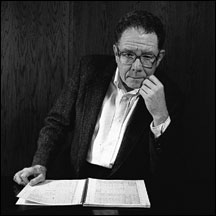 sounds good to our ear. But in reality, this is not quite right: take 12 fifths up from a C, and you'll arrive at B-sharp, which, in perfect-fifth-based tuning is a little higher in pitch than C. But B-sharp and C are meant to be the same in standard tuning! Assuming C is equal to 256 Hz, a perfect-fifth based B-sharp (octave-reduced) is about 259.5 Hz, which is about 23 cents too sharp (or, about a fifth of the way from one note to the next on the standard piano). Even if not perfect, a “well-tempered” (remember Bach?) scale sounds good to our ear. But what if we decided to use microtones intentionally, to create music? Stephen Weigel, a composer and performer, writes about Easley Blackwood, who did just that: he composed many pieces using microtonal scales. Here are two etudes by Blackwood to illustrate his music, the 17-note Etude (that is, when one octave is divided into 17 equal intervals; equal in the sense that the frequency ratios of all intervals are equal) called Con moto and the 21-note, Suite in four movements. The Etudes referenced below. And now, to Stephen Weigel.
Easley Blackwood was born on April 21, 1933, in Indianapolis, Indiana of the United States. He was a composer, pianist, theorist, and professor Emeritus at the University of Chicago. One of his most well-known compositions is the Twelve Microtonal Etudes for Electronic Music Media, which is a set of electronic pieces written in microtonal equal temperaments. For those who are unfamiliar, "microtonal" scales are those that divide the octave into a different number of notes than the standard twelve found on a piano. Microtonality is regularly used in traditional non-Western music, and it allows the opportunity to create completely new-sounding melodies and chord progressions, which is part of the reason why Easley Blackwood wrote music in these novel tunings. The Twelve Microtonal Etudes use equal tunings 13 through 24 individually, and each equal tuning has its own sort of feeling or character. Most of the individual movements are in a strongly tonal style, while some rely less on functional chord progressions and more so on complex altered chord changes or melodic ideas. The tonality you might hear in these pieces is unlike anything you will hear in 12-tone equal temperament. People commonly cite microtonal chord progressions as having a "warped" feeling, like looking in a funhouse mirror. Twelve Microtonal Etudes was recorded in 1981 with the Polyfusion synthesizer, housed in St. Louis's Webster College. It was a lot more difficult to synthesize microtonal scales with the Polyfusion synthesizer back then than it is today with digital synthesizers, which is part of the reason why these pieces are such a monumental achievement for the time period. Blackwood not only had to play each part one melodic line at a time (monophonically), but he also had to create his own notation for each tuning system, and read that on the standard keyboard with the offset! This meant that if he was playing with 13 equal notes per octave, for example, that an octave would span 13 notes on the keyboard instead of the usual 12 - and that logic applies to each equal tuning used. The project was also completed within an extremely short 13-day time period. The tactful composition, golden analog charm, and history have made this piece into a microtonal classic. Recently there has also been a revival of interest in these pieces, because of their age and accessibility. It is commonly cited as microtonal inspiration, and Matthew Sheeran, Stephen Malinowski, and Stephen Weigel have also created arrangements and MIDI follow along videos.Permalink
This Week in Classical Music: August 16, 2021. Ginette Neveu and Karlheinz Stockhausen. Last week we promised to write about the violinist Ginette Neveu. The reason Neveu is not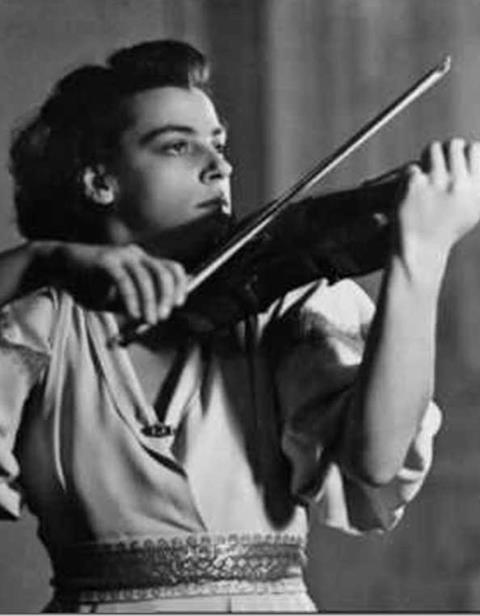 better known is because her life was tragically short. Neveu was born in Paris on August 11th of 1919. Her mother was Ginette’s first violin teacher. Ginette made her first public appearance at the age of seven playing Bruch's Violin Concerto no. 1 and later that same year performing Mendelssohn’s Violin Concerto with the Colonne Orchestra under the direction of Gabriel Pierné. She studied at the Paris Conservatory, receiving a premier prix at the age of 11, and then continued with George Enescu and the Hungarian teacher and violinist Carl Flesch (among Flesch’s pupils were Ivry Gitlis, Ida Haendel, Josef Hassid and Henryk Szeryng). In 1935, aged 15, Neveu won the International Wieniawski Competition; David Oistrakh, who was 11 years her older, took the second place and another Flesch’s pupil, Henri Temianka, took the third prize. Boris Goldstein, then 12 years old, came in the fourth. The Wieniawski win opened all major concert halls for Neveu: after the competition she toured Poland and Germany, then went to the Soviet Union, in 1937 she performed in the United States and Canada. During WWII, Neveu performed very few concerts, all of them in the occupied France (she refused to perform in Germany). In 1946 she played her debut concert in London and a year later – in South and North America. After hearing her perform Beethoven’s Violin Concerto in the first half of a concerts at the Royal Albert Hall, Queen Elizabeth invited Neveu to the royal box for the second half. But it was not just the royal fans who admired her: music critics all over the world praised her playing. Sibelius called Neveu’s performance of his Violin Concerto “extremely sensitive” and “unforgettable.”
On October 27th of 1949 she and her brother, a pianist who accompanied her in many concerts, were on their way from Paris to New York when their plane crashed near the Azores. Everybody on board was killed; her Stradivari was destroyed. Ginette Neveu was thirty when she died. Here’s a recording of Sibelius’s Violin Concerto that so impressed the composer. It was made on November 21st of 1945. Walter Süsskind leads the Philharmonia Orchestra.
Karlheinz Stockhausen was born on August 22nd of 1928 in Burg Mödrath,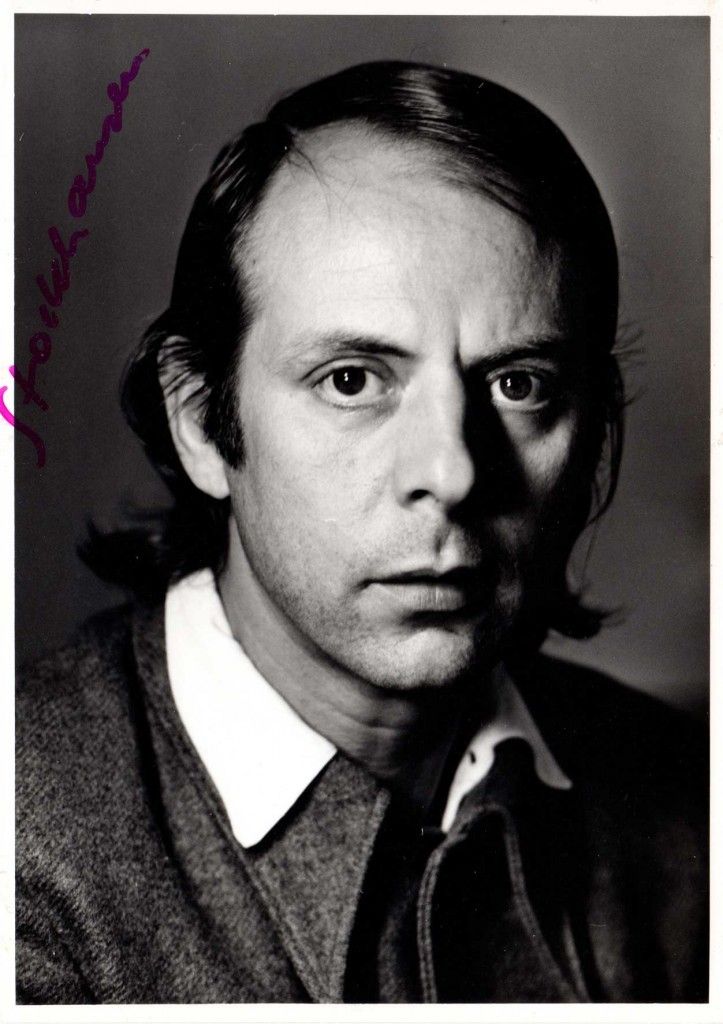 near Cologne. We often mention his name, and always somewhat anxiously: Stockhausen’s music is often very difficult. He was one of the most important composers of the second half of the 20th century, expanding serial composition technique with aleatory, or chance, elements. In the 1950s he was (along with Pierre Boulez and Luigi Nono) one of the most influential figures in the Darmstadt Summer Courses. What is interesting (and, by today’s standards, quite incredible) is that in the 1960s he was the second most recorded composer of the 20th century, after Stravinsky. In the 1970s Stockhausen was appointed professor of composition at the Cologne Musikhochschule. Also in the 1970s Stockhausen started working on his magnum opus. a cycle of seven operas Licht (Light), subtitled "Die sieben Tage der Woche" (The Seven Days of the Week). It was completed in 2003 and consists of 29 hours of music.
Of the three Stockhausen’s pieces in our library, two received “one note,” the lowest rating. Still, we’d like to offer our more adventuresome listeners an early piece called Kreuzspiel (here). It’s not very complicated and, we think, is a lot of fun. Kreuzspiel is performed by the Netherland-based Ives Ensemble. Permalink