Welcome to our free classical music site

Do you write about classical music? Are you a blogger? Want to team up with Classical Connect? Send us a message, let's talk!
Do you write about classical music? Are you a blogger? Want to team up with Classical Connect? Send us a message, let's talk!




This Week in Classical Music: February 22, 2021. Young Handel. George Frideric Handel was born on February 23rd of 1685 in Halle. We’ve written about this great composer many times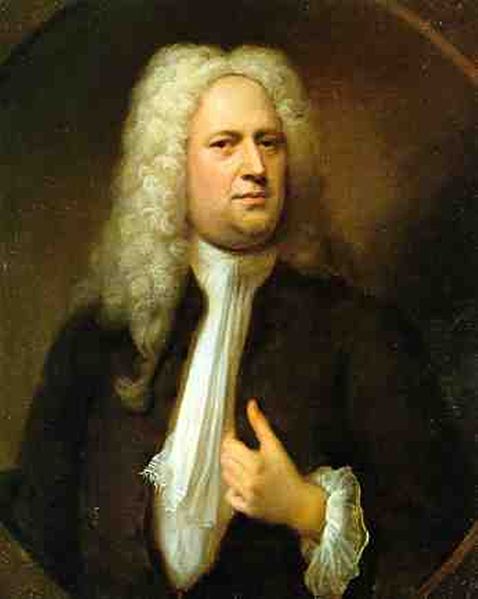 (for example, here and here). We want to come back to his early days in Italy though, as we find the progress of the young Handel quite remarkable even by the standards of major talents. Handel lived in Halle for the first 18 years of his life. From early on it was clear that he was musically gifted; in his teens he played the organ in the main church and composed, but as the only son who lost his father early, he had many responsibilities and couldn’t dedicate himself to music to the extent he wanted. In 1702 Handel visited Berlin, were he probably met with Giovanni Bononcini who was staging operas for the Prussian court. In 1703 Handel moved to Hamburg, hoping for a position at the Oper am Gänsemarkt, then the only municipal opera company in Germany (all other opera theaters were set up by royal courts, of which there were many). Handel was hired as the opera orchestra’s violinist, but later switched to playing the continuo (harpsichord). In 1704 Handel’s first opera, Almira, was staged at the theater and proved to be successful. He composed at least three more operas but the music for them is lost. From the late1690s the Hamburg Opera was dominated by the composer Reinhard Keiser, the author of more than 100 operas. On the one hand, Keiser’s music was influential (Handel quoted him not only in Almira, but in many other operas throughout his life); at the same time, as a junior composer, Handel felt highly constrained.
In 1706 he met the younger brother of Ferdinando de' Medici, duke of Tuscany, who was visiting Hamburg. The prince showed Handel examples of talian music and invited him to the court. Handel declined the invitation but decided to go to Italy on his own. He left Hamburg late in 1706; we don’t know if he visited Florence, but by 1707 he was in Rome. Almost immediately he found several influential patrons, the cardinals Carlo Colonna, Benedetto Pamphili, who became a good friend, and probably also Cardinal Pietro Ottoboni, about whom we wrote an entry several years back. On the commission of Colonna, Handel composed the setting of Dixit Dominus; it was performed in July of that year (here’s the introductory part of it, Le Concert d'Astrée is conducted by Emmanuelle Haïm). Also in 1707, he composed his first Italian opera, Il trionfo del Tempo e del Disinganno, except that it had to be called (and staged as) an oratorio, as the Pope had banned all opera performances in Rome. The libretto was written by Benedetto Pamphili himself. Later that year Handel joined the household of the Marquess Francesco Maria Ruspoli, a member of the Accademia dell'Arcadia and one of the most important secular patrons in Rome. Ruspoli had a castle in Vignanello, about 60 km north of Rome, and Handel was spending part of the time there. For Ruspoli, Handel was writing one cantata a week, plus some miscellaneous music and motets for the church at Vignanello. At the same time, Handel was working on an opera for Ferdinando de’ Medici, as operas were all the rage in Florence. It was produced there in October of 1707 under the title Vincer se stesso è il maggior vittoria, but we know it as Rodrigo. Here’s the Suite from Rodrigo performed by the Arion Orchestre Baroque under the direction of Barthold Kuijken.
We’ve covered, however briefly, the first year of Handel’s short Italian sojourn. We’ll come back with the rest of it soon.Permalink
This Week in Classical Music: February 15, 2021. Pianists. Several pianists of note were born this week and several more just a couple of days earlier. Some of them left us a rich audio record of their art so we can judge their talent for ourselves, but of the ones who were born in the earlier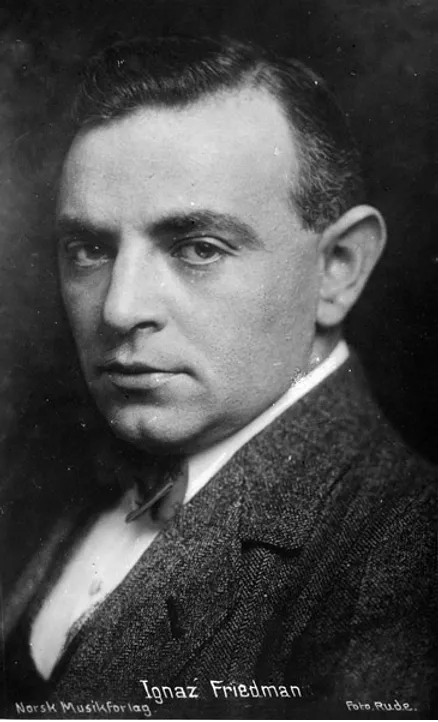 era we know mostly from the effusive descriptions by their contemporaries. Leopold Godowsky and Ignaz Friedman, both Polish Jews, were born on the same day, February 13th, Godowsky in 1870, Friedman in 1882. Godowsky is better remembered these days, partly because of his compositions (especially the piano arrangements), but also because of his pupils, one of whom, Heinrich Neuhaus, continued the legacy through his own numerous pupils, Sviatoslav Richter and Emil Gilels among them. Godowsky’s last acoustic recording was made in 1928, and many of the earlier ones were made on a piano roll, which doesn’t convey the nuances of the performance. Friedman was 12 years younger than Godowsky and could’ve had a much larger recorded legacy as the technology was getting consistently better but, unfortunately, even in his case there are not that many surviving recordings. Friedman was born near Krakow and took his first piano lessons there. He then moved to Leipzig and, in 1901, to Vienna where he studied with Theodor Leschetizky (who also taught Godowsky), eventually serving as his assistant. Friedman played his first public concert in Vienna in 1904; he had a brilliant career in Europe and then in Australia. He gave his last concert in 1943 (Friedman died in Sydney on January 26th of 1948). Vladimir Horowitz used to say that Friedman’s technique was better than his own, but what is most noticeable when one listens to his recordings is the amazingly flexible rhythm and exquisite phrasing, very “romantic” by today’s standards – nobody plays like this these days – but utterly convincing. Here’s Chopin’s Ballade no. 3, recorded sometime around 1940.
Alexander Brailowsky was born February 16th of 1896, 14 years after Friedman. Like Godowsky and Friedman, he was Jewish and also born in the Russian Empire (in Kiev, now the capital of the independent Ukraine). And like Friedman and Godowsky, he studied with Leschetizky in Vienna. At the beginning of the Great War the family moved to Switzerland, where Alexander took lessons with Ferruccio Busoni. Brailowsky was the first pianist ever to perform all of Chopin’s piano compositions. In 1938, during his sensational tour of South America he stayed in Buenos-Aires for two months and gave 19 concerts, never playing the same piece twice. Like Ignaz Friedman, Brailowsky loved to play Chopin, probably the influence of their teacher Leschetizky. Here’s a recording of the Nocturne no. 1 in B-Flat Minor, Op. 9, made in 1957.
Nikita Magaloff, who was born on February 21st of 1912 in St.-Petersburg into a noble Georgian family of Maghalashvilis, came from a very different musical tradition than the pianist we’ve mentioned above, but he, as Friedman and Brailowsky (and to a large degree Godowsky), was also a wonderful Chopinist. Magaloffs emigrated from Russia in 1918 and settled in Paris. Nikita studied at the Paris Conservatory with Isidor Philipp and at the age of 17 won a premier prix. He also studied with Sergei Prokofiev, a family friend. In 1939 he moved to Switzerland and lived there for the rest of his life. While Brailowsky was the first pianist to play all of Chopin’s pieces, Magaloff was the first one to record all of them. He died in Vevey on December 26th of 1992. Here’s Magaloff playing Chopin’s Impromptu no. 3 in G-flat major, Op. 51.Permalink
This Week in Classical Music: February 8, 2021. Berg and Cavalli. Last week we posted, for the first time, a political statement. We’re not going to turn Classical Connect into a Culture Warrior but will comment on the Culture Wars when facts – the outrageous ones – call for it. Today, however, we’d like to point out the gross hypocrisy that the Met Opera perpetrated while hiring a Chief Diversity Officer: the Met is the only major organization currently not paying their orchestra musicians any salary due to Covid; the orchestra is on a verge of complete collapse. In the meantime, we can safely assume that Ms. Marcia Lynn Sells, the new CDO, whose prior position was the Dean of Students at Harvard Law School, is not going to donate her services to the Met but will received a handsome C-level salary. And one other thing: the Met Opera is not the only “Metropolitan” organization that has hired a Chief Diversity Officer: the Met Museum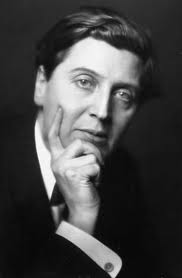 did the same 2 ½ months ago, we guess so that Rembrandt is properly curated with diversity in mind.
Back to the music, though. Alban Berg was born this week, on February 9th of 1885. A student of Arnold Schoenberg, he was, without a doubt, one of the most important composers of the 20th century, especially considering his operas, Wozzeck and Lulu. Two years ago, when we wrote about Berg, we even posted five minutes from Lulu, which clearly is one of the most difficult operas. Nonetheless, the emotional intensity and lyricism of Berg’s music are spellbinding. Here’s another entry about Berg, from 2017. Speaking of modern operas: it’s worth looking up an interesting recently released Russian animation called The Nose or the Conspiracy of Mavericks. It is, very generally, about the great Russian writer Nikolai Gogol working on a short story, Nos (The Nose), Dmitry Shostakovich writing an opera based on the story and the famous director Vsevolod Meyerhold attempting to stage it. Most of the musical score of this full-length animation is from Shostakovich’s opera.
Francesco Cavalli was also born this week, on February 14th of 1602. He stood at the beginning of opera: his first one, Le nozze di Teti e di Peleo, was composed in 1639 and was only the third opera to be performed in Teatro San Cassiano, the very first opera house to be built for the public and inaugurated in 1637. In the following 27 years Teatro San Cassiano staged 15 more operas, 14 of which were composed by Cavalli. La Didone was Cavalli’s third opera, composed and staged at San Cassiano in 1641. Here’s the marvelous Frederica von Stade is singing the beautiful L'alma fiacca svanì, Cassandra’s Lamentation, from Act I. The Scottish Chamber Orchestra is conducted by Raymond Leppard. And a bit more about Teatro San Cassiano: it had a long and glorious history, but in 1805 the theater was closed by the occupying French and in 1812 the building demolished. Almost 200 years later, the British entrepreneur Paul Atkin decided to rebuild the famous theater according to the archival documents as close to the original as possible, and to create there a center for the research and staging of historically informed Baroque opera. Nothing is easy in bureaucratic Italy, especially in Venice; the project has been moving forward, slowly, since 2015 and we wish it the best. The Financial Times has a good article on the project, worth checking out.Permalink
This Week in Classical Music: February 1, 2021. Nota Bene. Of the great composers, only Felix Mendelssohn was born this week. We also celebrate the genius of Palestrina around this time: he died on February 2nd of 1594 and, according to some sources, only one day before his 69th birthday. Of the composers not as famous, Alessandro Marcello was born on this day in 1673. We’ve written about all of them on a number of occasions, so instead we intended to focus on the interpreters, highly talented in their own right if not as creative. Two phenomenal violinists were born on the same day: Fritz Kreisler on February 2nd of 1875 and Jascha Heifetz in 1901.
But as we were about to write about these great musicians, it occurred to us that we cannot. As much as we love them, we simply cannot when we see what is happening around us. We believe in the utmost importance of music, but we cannot ignore what is happening outside, in the real world. What we see is the attack on the freedom of speech, the most fundamental aspect of our society. And this is an attack on our personal freedom as well. What started with assaults on individuals (shaming and canceling) has now grown into attacks on established media companies and inconvenient social media sites: a literary agent was fired because she used them. Not even for the content of the messages she posted there but for the fact that she used them – not that the former would be much better. Journalists who are prime beneficiaries of the freedom of speech now advocate regulations and censorship. And if you think that freedom of speech is unrelated to freedom of musical expressions, think again. Soviet Union and Nazi Germany are prime examples: in 1930 the Soviet Union cancelled all “bourgeois” music which covered most of what was composed in the 20th century; the Nazis banned all Jewish music – and what is most frightening, people supported these decisions. And now Metropolitan Opera hires a Diversity Officer – actually, the title is Chief Diversity Officer, so we can assume that there will be other diversity officers within the organization. According to the Met, her role would be to “develop new diversity initiatives” and help in “dismantling racial inequalities within the institution.” We are well aware that in the past the Met, like so many other institutions, was racist – the great Marian Anderson was allowed to perform on its stage only in 1955, when she was 58. But that was 66 years ago. Is the role of the Chief Diversity Officer to find a new Leontine Price or a Jessye Norman, who were the greatest American singers to ever perform on Met’s stage? What about Shirley Verrett, Kathleen Battle, Lawrence Brownlee and tens of other wonderful black singer who graced the Met with their art during the last 40 years? During that time the Met had its share of scandals involving singers both white (Angela Gheorghiu) and black (Kathleen Battle) but we never heard any complaints about the company being racist. Did it suddenly turn racist in the last six months?
The role of a Chief Diversity Officer reminds us of the Soviet Union. There, every musical organization, from the Bolshoi Theater to a chamber orchestra, had to have a Party organization, at the head of which stood its Secretary. His or her role was to ensure that only the appropriate music is being played, that Party members are duly promoted, and the unreliable ones wouldn’t be sent on a cherished concert tour in the West. Do we really want to live in a new cultural Soviet Union?
If you wish to share your thoughts, the Contact information is at the bottom of this page.Permalink
This Week in Classical Music: January 25, 2021. Calendar Quirks. Why couldn’t Fate be more even-handed? She, the Greek goddess of Time, is responsible for our lives, the moments we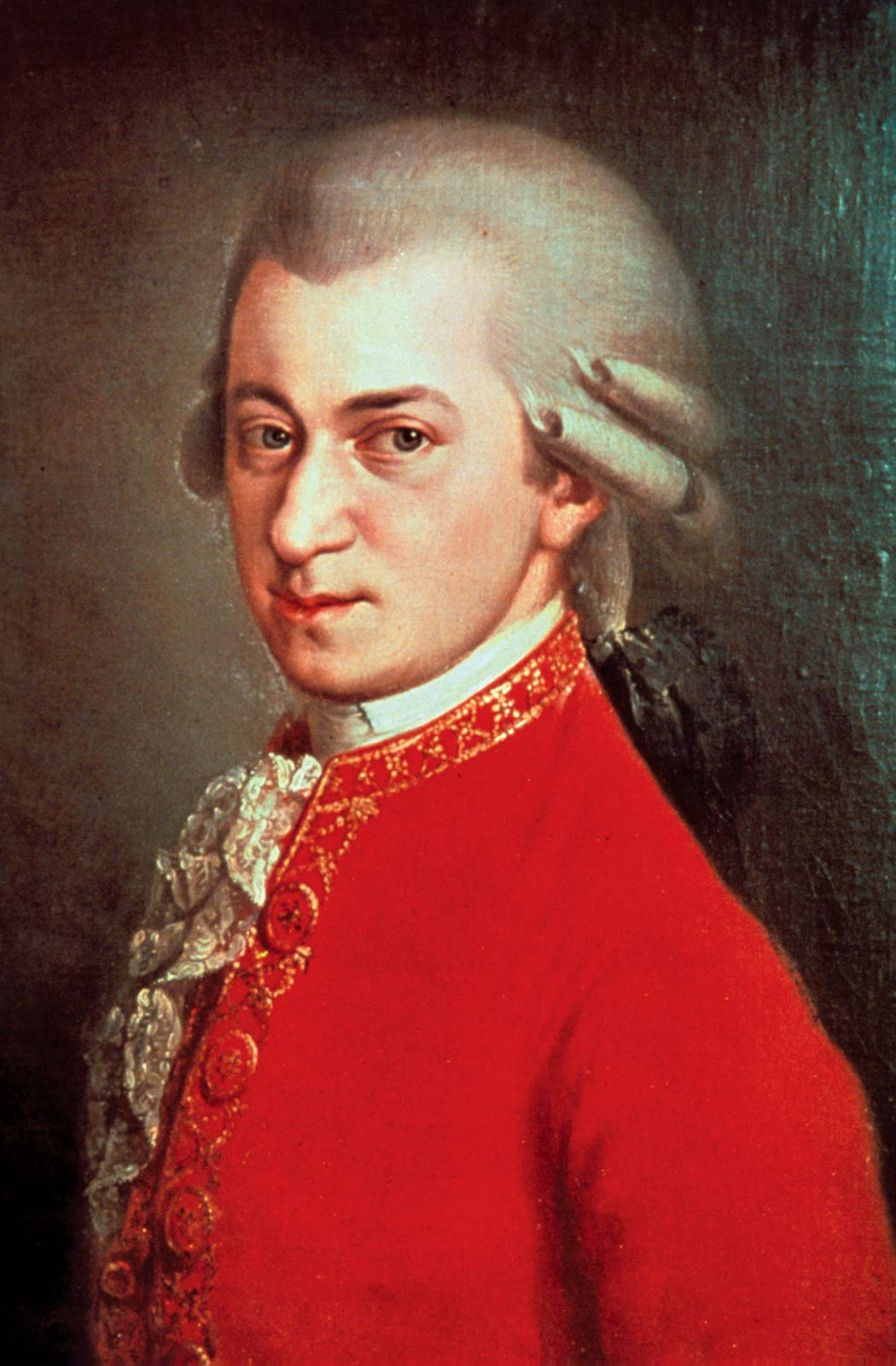 are born and die, so why couldn’t she spread geniuses more evenly? Take 52 of them – and there have been at least that many since the time of Josquin – and just deliver them once a week! But no, she’s capricious or doesn’t pay enough attention to these things. So, four days after Mozart’s birth on January 27th she gives us Schubert! And even that is not enough for her: just next to them she places two important composers of the 20th century: the Polish Witold Lutoslawski and Luigi Nono, an Italian. And then Édouard Lalo of the Symphonie espagnole fame and John Tavener, the Brit made popular by his minimalist Orthodox music. Clearly, she wasn’t done with this week, as, for good measure, she placed two great pianists, Arthur Rubinstein and John Ogdon within it too. And she seems to be keen on the cello because Jacqueline du Pré and Lynn Harrell, who unfortunately left us last year, were also born this week. And
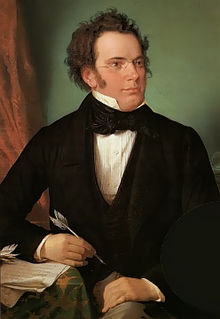 just to top it off, she decided that Wilhelm Furtwängler, one of the greatest conductors of the 20th century, should also be born this week.
There is not much we could say about this cornucopia, but we can play some music. Here is one pair: the 1961 recording of Arthur Rubinstein playing Mozart’s Piano Concerto no. 20 with Alfred Wallenstein conducting the RCA Victor Symphony Orchestra. And here is another: Wilhelm Furtwängler conducts Schubert’s "Unfinished" symphony. The recording, with Furtwängler’s Berlin Philharmonic Orchestra, was made live in 1953. We would’ve loved to play Franz Schubert's Piano Sonata in C minor, D.958 in John Ogdon’s performance – we know that he made that recording in 1972 – but we don’t have access to it. We’d love to share it with you some day.Permalink
This Week in Classical Music: January 18, 2021. Duparc and Elman. Last year this week we celebrated Johann Hermann Schein and Farinelli. Some years ago it was the Russian composer of French descent César Cui and two real Frenchmen, Ernest Chausson and Emmanuel Chabrier (here). And we’ve written about Henri Dutilleux several times (for example, here, here and here). All these composers (and the famous castrato) had their birthdays this week. But, as always, there are several musicians which we, for one reason or another, had left out. One is the composer Henri Duparc. Duparc was born in Paris on January 21st of 1848. He studied with César Franck, to whom he dedicated several compositions, for example this symphonic poem, Lénore. Duparc’s best known pieces are his “art songs,” most of which he wrote around 1870. Here’s Phidylé, sung by Renée Fleming, and here Natalie Dessay sings Supir. At the age of 37 Duparc developed certain mental problems that at the time were diagnosed as "neurasthenia” and stopped composing. He was not mad in the usual sense, it is very likely that his problems were of a physical nature: some suggest hyperaesthesia, an extreme sensitivity of the skin. He moved to the south of France and led a quiet life, and eventually moved to Switzerland. He took up painting as a hobby and spent time with his family. But there were more problems to come: around the turn of the century, he started losing his eyesight and soon went completely blind. Later in his life he destroyed much of his music, leaving only about 40 compositions. Whatever is left is of a remarkably high quality: listen, for example, to this wonderful song, Chanson triste, performed by Elly Ameling. Duparc died on February 12th of 1933 in Mont-de-Marsan, completely blind and partially paralyzed. He was 85.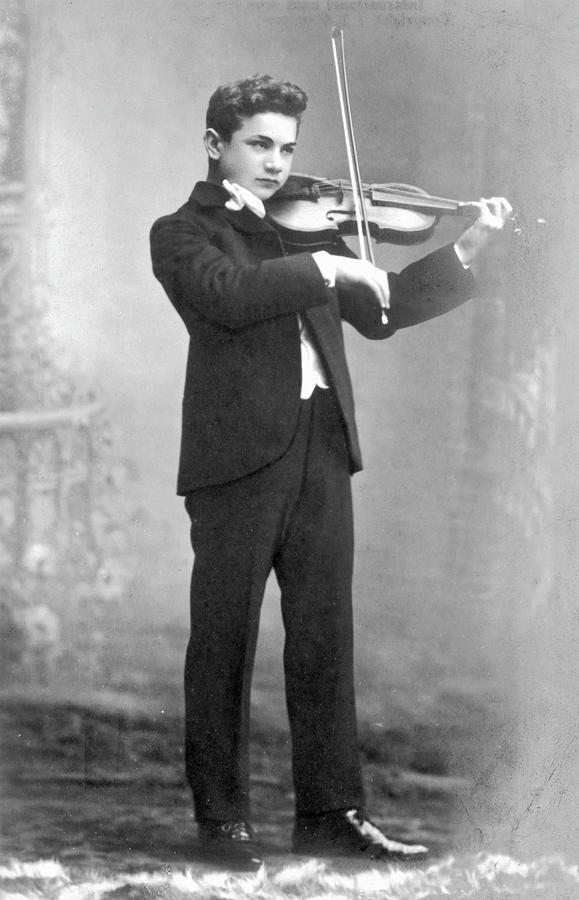
One of the most interesting violinists of the 20th century, Mischa Elman was also born this week, on January 20th of 1891, in a small town of Talnoye not far from Kyiv. From 1897 to 1902 he studied the violin in Odessa with the virtuoso violinist and teacher Alexander Fiedemann. In 1903 he so impressed the visiting Leopold Auer that the famed pedagogue took Mischa to St. Petersburg to study in his class at the capital’s conservatory. One year later he gave a highly successful concert in Berlin, then premiered in London and in December of 1908, in New York. By then he had already established himself as one of the greatest violinists of the era. Elman settled in New York in 1911.
Elman’s career reached its zenith during the years when recordings were still not widespread and few of them were reissued on CDs. His playing was “romantic” but he had great taste; his sound was of incomparable beauty. You can hear it for yourself in this recording from 1959 of Massenet’s Meditation from Thais. Mischa Elman died in New York on April 5th of 1967.Permalink