
P. Kellach Waddle - p. Op. 478: THE MORNING ASHES :Intermezzo-Aire for Solo Alto Saxophone
Javier Oviedo (Saxophone)
Penderecki, 2020
This Week in Classical Music: November 23, 2020. Penderecki. When three year ago we published an entry on 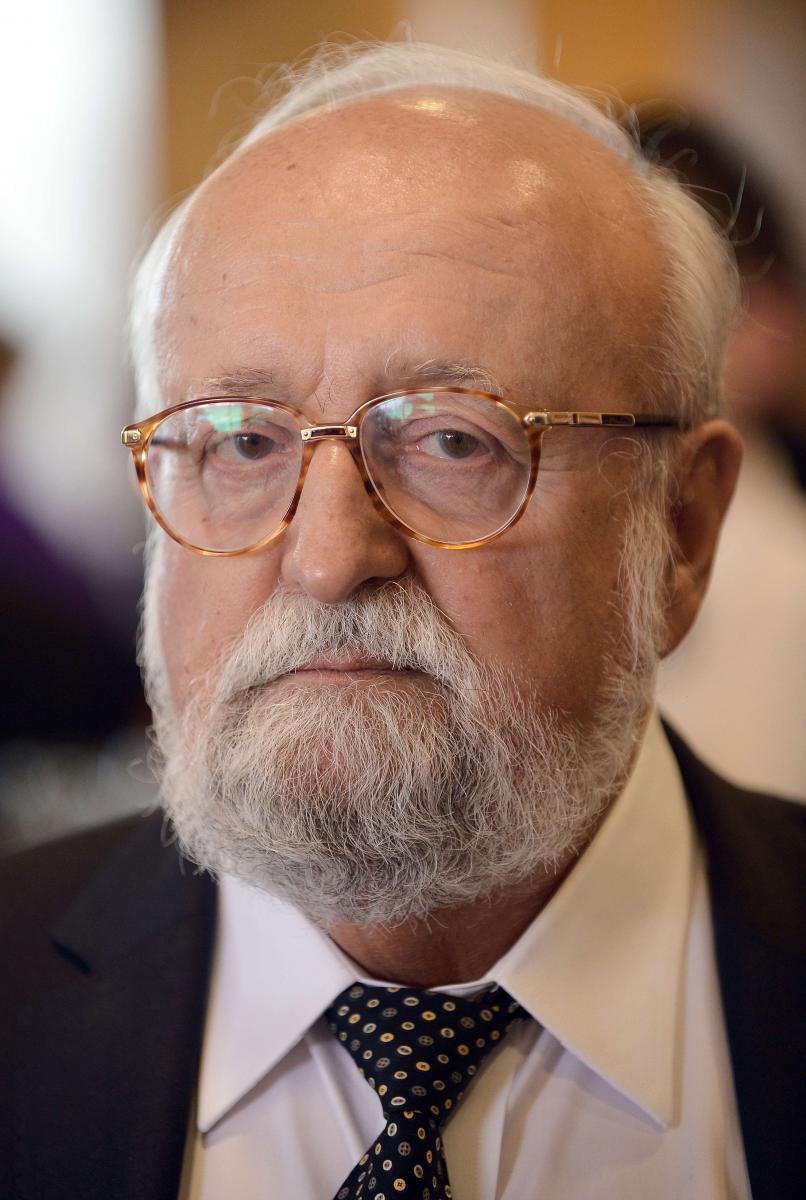 , the great Polish composer was alive and, as we thought then, well. Penderecki died earlier this year, on March 29th, not of Covid-19, but after a long illness. Our previous entry stopped at 1975 and we mentioned that around that time Penderecki’s music changed in many significant ways: before that he was an exponent of the avant-garde, exploring new sonorities, new instruments and textures, whereas after 1975 he moved to much more traditional, melodic 19-century idiom. It’s interesting to note that the Grove article on Penderecki is divided into “Music up to 1974” and “Music after 1975.” By the mid-1970s Penderecki was spending much of his time in the US, where he held a Yale University residence. This was a life unknown to regular Polish citizens. Despite all the censorship and general lack of freedom, the Polish government recognized the value of Penderecki as a representative of Polish culture (very much as the Nazis did in the 30s with some of their musicians, and as the Soviet Union did, even if not allowing them the same freedoms as the Poles). Penderecki could travel and live abroad; he was even given a manor in Lusławice, outside of Krakow, where he created a beautiful garden and later a music festival. It was during his tenure at Yale that he turned away from the 12-tone music back to the melodically based compositions. The first significant work in this new style was the 1976 Violin Concerto no. 1, written for Isaac Stern (here it is, performed by the violinist Kim Chee-Yun with the National Polish Radio Symphony Orchestra, Katowice, conducted by Antoni Wit,) Also, around that time the Lyric Opera of Chicago commissioned Penderecki an opera to commemorate the US Bicentennial. Even though Penderecki delivered it two years late, Paradise Lost, as the opera became known, was successfully staged in Chicago and a year later, in 1979, in La Scala. He also increasingly turned to arge-scale choral works: Te Deum, written in1978-80, and Polish Requiem, 1980-84. The Lacrimosa part of the Requiem was the first to be composed; it was dedicated to Lech Wałęsa and written to commemorate those killed in the uprising of 1970. Penderecki then expanded it into a full-length Requiem. Here is Lacrimosa with Jadwiga Gadulanka, soprano, and Krzysztof Penderecki conducting the Polish Radio Symphony Orchestra, Krakow. Another choral piece, Credo, was written in 1998 and received a Grammy award. Penderecki also wrote several symphonies, the last one, no. 8, subtitled "Lieder der Vergänglichkeit" (Songs of Transience) was completed in 2005 and then expanded in 2007. A prolific composer, Penderecki wrote several operas, a large number of vocal and choral music and several violin sonatas and quartets. Very little of his music was written for the piano.
Lest we forget: another prominent composer of the 20th century, Alfred Schnittke was also born this week, on November 24th of 1934. And so was Jean-Baptiste Lully, on November 28th of 1632.
Read more...Krzysztof Penderecki - Lacrimosa
Jadwiga Gadulanka (Soprano)
Polish Radio Chorus, Krakow (Chorale)
Polish Radio Symphony Orchestra, Krakow (Orchestra)
Krzysztof Penderecki (Orchestra)
Krzysztof Penderecki - Violin concerto no. 1
Kim Chee-Yun (Violin)
National Polish Radio Symphony Orchestra, Katowice (Orchestra)
Antoni Wit (Conductor)
P.Kellach Waddle - Op. 647 When A Vampire Slept On The Floor Of Da Vinci's Library -- Sonata in 7 Impressions for Solo Bass After Works of Leonardo Da Vinci
Dritan Gani (Double Bass)
Alexander Scriabin - Prelude Op 16 / 4
Nico De Napoli (Piano)
Hidemith at 125_2020
This Week in Classical Music: November 16, 2020. Hindemith at 125. Paul Hindemith was born on November 16th of 1895 in Hanau, near Frankfurt. We’ll pick up where we left off four 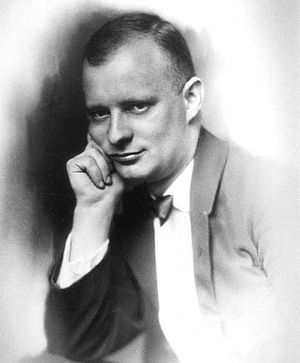 years ago when we wrote about his life until about 1923. He was then living in Frankfurt, already well known both as a composer and a violist (he organized the Amar Quartet where he played the viola), performing in Salzburg and working at the new music Donaueschingen Festival. (A brief note about the festival: it was organized in 1921, it’s the oldest and probably the most prestigious festival of contemporary music in existence, and Hindemith’s music was played there during its first season). Hindemith also got married to an actress and singer named Gertrud Rottenberg; Gertrud came from a prominent Frankfurt family (her grandfather was the mayor of Frankfurt) and was partly Jewish, which affected Hindemith’s life later in the 1930s. In 1927 he was invited to teach at the Berlin Musikhochschule. He soon decided that teaching composition is impossible, and that only the craft of handling music material could be taught. Lacking suitable textbooks, he embarked on leaning Latin and mathematics in order to be able to read old musical manuals. In 1929 Hindemith left the Amar Quartet and founded a string trio with Josef Wolfstahl, who a year later was replaced by Szymon Goldberg, then the concertmaster of the Berlin Philharmonic, and the celebrated cellist Emanuel Feuermann; thus in the early thirties Hindemith was playing in a trio with two Jewish musicians. Hindemith was not a man of the Left, he didn’t share political views of the likes of Bertolt Brecht, Hanns Eisler or Kurt Weill, but when the Nazis came to power in 1933, they nonetheless declared most of Hindemith’s music “cultural Bolshevism.” His trio could no longer perform in Germany, only abroad, and his Jewish colleagues at the Hochschule lost their jobs. Initially, Hindemith thought that this descent into extreme radicalism i was temporary, that another cycle of elections would change everything back to normal – but there were no free elections to come. Hindemith embarked on writing a major composition, the opera Mathis der Maler, for which he wrote his own libretto. The protagonist of the opera is a historical figure, the painter Matthias Grünewald, famous for his incredible Isenheim Altarpiece. In 1934, at Furtwängler’s request, he composed a symphony based on the opera. The premier in Berlin was a huge success, but it only led to more attacks from the Nazis. Hindemith started thinking about emigration; at the same time he asked Furtwängler to intervene with Hitler on his behalf: he wanted Furtwängler to invite Hitler to a composition class of his. Furtwängler did write an open letter in support of Hindemith, it was published in Deutsche Allgemeine Zeitung, a major newspaper of the day, in November of 1934. The letter was met with more derision from the Nazis, especially the Nazi “theoretician” Alfred Rosenberg and Joseph Goebbels, the propaganda minister. In 1935 Hindemith was invited by the Turkish government to advise them on the musical life of the country. Subsequently, he visited Turkey in 1936 and 1937. The establishment of the Ankara State Conservatory owes much to Hindemith. In 1936 the Nazis announced a total ban on Hindemith’s music. A year later Hindemith resigned from the Berlin Hochschule and traveled to the US for the first time. He emigrated to Switzerland in September of 1938 and in February of 1940 moved to the US.
Here’s Hindemith’s Symphony Mathis der Maler, performed by London Symphony Orchestra under the direction of Jascha Horenstein.
Read more...Paul Hindemith - Mathis der Maler
London Symphony Orchestra (Orchestra)
Jascha Horenstein (Conductor)
Dallas Gray - Flinton1. The Well Outside
Dallas Rayner (Piano)
Franz Schubert - Piano Sonata in E Major D157
Wilhelm Kempff (Piano)