
Aaron Alter - For Fred for violin and piano
Andrea Vercoe (Violin)
Elizabeth Hill (Piano)
Recital - Flute and Piano Recital
Burak Gocer (Flute)
Gokce Guven (Piano)
Giulio Briccialdi - Carnevale di Venezia
Burak Gocer (Flute)
Heather Laude/American Spiritual - Let's Go Down To The River And Pray, vocals by Heather Laude
Heather Laude (Mezzo-soprano)
Heather Laude - Isa-Bella composed by Heather Laude
Heather Laude (Piano)
Nicolas Gombert, 2018
January 15, 2018. Nicolas Gombert. We have never written about Nicolas Gombert, which is quite an omission, considering that Gombert is considered to be one of the greatest Flemish composers 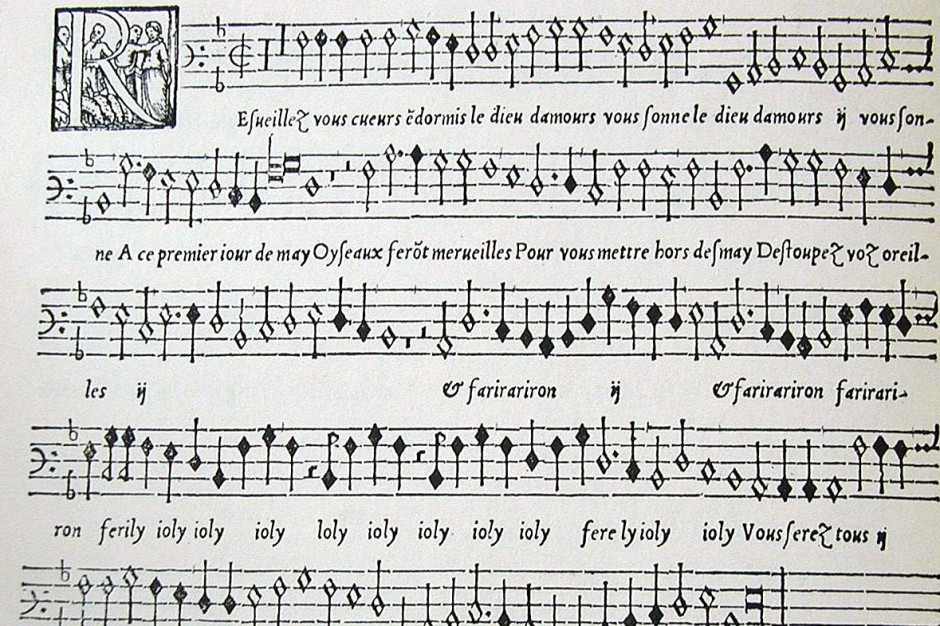 of the generation following Josquin des Prez. Gombert was born around 1495 in southern Flanders. Some musicologists speculate that he studied with Josquin, who at that time was living in Condé-sur-l'Escaut, not far from Gombert’s presumed birthplace. Even if he wasn’t Josquin’s student, Gombert was clearly an admirer, as he wrote music to commemorate Josquin’s death. Sometime around 1526 Gombert found employment with the court of the Holy Roman Emperor Charles V. Charles’s lands stretched from the Netherlands and Flanders to Spain, Austria, some German states and Italy, and he traveled extensively. Gombert accompanied the emperor on his trips, being “Master of the boys” of the court chapel. As he visited different countries, his fame grew, with his music being published in many countries. Even though he was never formally appointed maître de chapelle (music director) of the court, he served as court composer. Gombert’s life changed dramatically in 1540. According to Gerolamo Cardano, a court physician, he committed a “gross indecency” against a boy in the emperor’s employ. Gombert was sentenced to the galleys and spent several years in the high seas. We don’t know how long his punishment lasted and what his conditions were like, but during that time he managed to compose several pieces. Those found their way back to the court and eventually earned Gombert the emperor’s pardon.
It seems that Gombert spent the last years of his in Tournai: in 1547 he sent a letter from there to Ferrante Gonzaga, Charles’s captain (Ferrante was known as a patron of composers – some years later he would bring two great composers to his court, Orlando di Lasso and Giaches de Wert). Gombert probably died in Tournai sometime around 1560.
Gombert is considered one of the last Franco-Flemish composers who still worked outside of Italy. Gombert’s contemporary, Adrian Willaert, would move to Italy, and so would Orlando and practically all other significant Flemish composers. Gombert was considered a master of polyphony, and you can hear it in our samples. Here’s his motet In te Domine speravi. Paul Van Nevel conducts the Huelgas ensemble. And here – the Magnificat secundi toni, performed by the same artists.
Read more...Nicolas Gombert - Magnificat secundi toni
Hueglas Ensemble (Ensemble)
Paul Van Nevel (Conductor)
Nicolas Gombert - In te Domine speravi
Hueglas Ensemble (Ensemble)
Paul Van Nevel (Conductor)
Three pianists, 2018
January 8, 2017. Three pianists. Three great pianists of the last century were born last week, and by remarkable coincidence all three were born on the same day, January 5th: Arturo Benedetti Michelangeli in 1920, Alfred Brendel in 1931, and Maurizio Pollini – in 1942. So very different as performers (even their repertoires have little in common), all three were cerebral musicians who did not wear their hearts on the sleeve. Their playing is faithful to the score and emotions come from the composer, not the artifice.
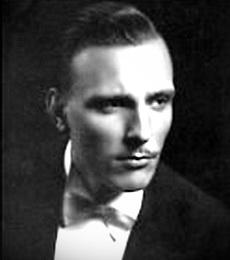 Arturo Benedetti Michelangeli was born in Brescia, northern Italy. Though he started studying the violin (at the age of three), he switched to the piano soon after. He was accepted at the Milan Conservatory at ten and graduated at the age of 14. He was not very successful at the Ysaÿe International Festival in 1938, where he took 7th place (Emil Gilels was the winner) but a year later he won the Geneva Piano competition. There, the perfection of his playing already apparent, and he was called “the new Liszt.” In 1940 he played a sensational debut concert in Rome. During WWII he served in the Italian air force but resumed his career soon after the war’s end. He debuted in London in 1946 and in the US – in 1948. In the 1950s he stopped concertizing for a while, concentrating on teaching, and formed his own International Pianists’ Academy. Maurizio Pollini and Martha Argerich were his students. Michelangeli resumed playing concerts in 1960, even though he was known to cancel almost as many concerts as he played. Michelangeli’s repertoire was very small for a pianist of his standing, especially compared to pianists like Sviatoslav Richter, but the crystalline perfection of his playing was incomparable. Michelangeli died in Lugano on June 12th of 1995. Here’s Chopin’s Ballade no. 1 in his 1972 recording.
The great Austrian pianist Alfred Brendel was born in Wiesenberg in what is now the Czech Republic. His family moved to Zagreb when Alfred was six, and then to Graz, Austria, where he studied at the local conservatory. What is quite unusual for a future virtuoso is that Brendel didn’t have formal piano classes past the age of 14 and was mostly self-taught. Neither did he have a brilliant competition career: he only participated in one, the Buzoni, and took the fourth prize. His career was built slowly, as he played concerts across Europe. His made several recordings, again starting with just a few (later he would record all of Beethoven sonatas three times, and also three times all of Beethoven concertos – with James Levine and the Chicago Symphony, with Simon Rattle and the Vienna Philharmonic, and with Bernard Haitink and London Philharmonic. He also recorded all Mozart piano pieces and most of Schubert). The breakthrough came after his London concert in the late 1960s: it was taped, and the recording companies came calling. In 1972, after living in Vienna for 20 years, Brendel moved to London; he still lives there. Brendel is a supreme interpreter of the music of Schubert, Beethoven, and late Liszt. Here’s Brendel playing Schubert Impromptu Op.90 No.1
Compared to Brendel’s, Maurizio Pollini’s path to fame was more conventional. Born in Milan (he still lives there), he went to the local conservatory, and at the age of 18 won the International Chopin Piano competition. After a shaky couple of years Pollini embarked on a performance career. His technique, interpretive precision and depth brought him great acclaim. Pollini’s repertoire is broad and unusual. On the one hand, he’s one of the greatest Chopin players of the century. At the same time, his Beethoven is superb (not many pianists can play both at the same level). Pollini is also a great champion of contemporary music: in addition to Schoenberg and Webern he plays works of Pierre Boulez, Luigi Nono, Karlheinz Stockhausen and Bruno Maderna. Here’s Pollini’s interpretation of Chopin’s Nocturne No.1 Op.9 in B Flat minor.
Read more... « first ‹ previous … 198 199 200 201 202 203 204 205 206 … next › last »
Aaron Alter - Toccata-Variations on a Theme by Charlie Parker
Vania Pimentel (Piano)