
Frédéric Chopin - Waltz Op. 69 No. 2, B minor
Red Jewel (Piano)
Berg, Rubinstein, Arrau 2018
February 5, 2018. Berg and two pianists. Alban Berg, one of the most influential composers of the 20th century, was born on February 9th of 1885. A year ago, we posted a detailed entry about him, so this time we’ll just play some of his music. Berg wrote the Lyric Suite in 1925/26 using the 12-tone 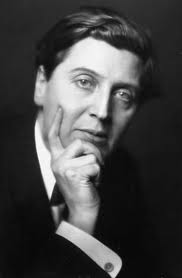 technique following his teacher, Arnold Schoenberg’s theories, and dedicated it to Alexander von Zemlinsky. Here is the first movement of the Suite, Allegretto gioviale, and here – the second, Andante amoroso, lyrical indeed, despite its 12-tone origin. They are performed by the Alban Berg Quartett.
As no other significant composers were born this week (unless you’re fond of the music of Gretry), we’ll turn to the instrumentalists. A week ago was the birthday of Arthur Rubinstein, one of the greatest pianists of the 20th century. Rubinstein life is legendary, both musically and socially; he dominated the music scene for more than 80 years. A small blurb would never do it justice, so we’ll have to start today and continue at a later date. Rubinstein was born on January 28th of 1887 in Łódź, in the part of Poland that back then belonged to the Russian Empire. His Jewish parents owned a small textile factory. Rubinstein was a child prodigy if ever there was one: at the age of three he was taken to Berlin to play for Joseph Joachim, the famous violinist and Brahms’s collaborator, who listen to him and declared that the boy may become a great musician. He played his first concert in Łódź at the age of seven, and made his Berlin debut in 1900, playing Mozart’s Piano concerto no. 23, Saint-Saëns’s Piano concerto no. 2 and pieces by Schumann and Chopin (Joahim conducted the orchestra). He started playing regular concerts in Poland and Germany, and in 1904 moved to Paris. There, he became friends with many musicians: the violinist Jacques Thibaud, composers Maurice Ravel, Paul Dukas and another Pole, Karol Szymanowski. Two years later, in 1906, he made his American debut at the Carnegie Hall, playing with the Philadelphia orchestra. (He would play his last Carnegie Hall concert 70 years later, at the age of 89).
At that time, Rubinstein was leading a very active social life, he was spending much time chasing women (although some would say that they were chasing him) and not studying enough. He didn’t have a regular piano teacher; many of his concerts were carried by his natural talent and enthusiasm but were under-prepared. The New York critics noticed it and his Carnegie Hall debut received rather mixed reviews. By 1908 he was back in Berlin having big financial problems and desperate. He even attempted suicide, half-heartedly it seems. That was a cathartic event, as he was, in his own words, “reborn.” In 1912 Rubinstein made his London debut and settled in Chelsey. He became friends with two American expats, Muriel and Paul Draper, whose Chelsea salon was a center of London music life. There he met Igor Stravinsky, Pierre Monteux, Pablo Casals and many other musicians. He stayed in London during the Great War; very much anti-German by then, he played his last concert in Germany in 1914.
Rubinstein had a very large repertoire and is known as probably the best interpreter ever of the music of Chopin. It’s a revelation to listen to his interpretations of the same piece recorded during the different phases of his career. Here’s Chopin’s Nocturne Op.9 No.2 in it’s perfect simplicity. The recording was made in 1965, when Rubinstein was 78.
Another pianist was born this week and we’d like to at least mention him (we’ll write about him at another date). Claudio Arrau, also one of the greatest, was born in Chillán, Chile, on February 6th of 1903.
Read more...Frédéric Chopin - Nocturne Op. 9, no. 2
Arthur Rubinstein (Piano)
Alban Berg - Allegretto giovale (Part 1), from the Lyric Suite
Alban Berg Quartett (Quartet)
Alban Berg - Andante Amoroso (Part 2), from the Lyric Suite
Alban Berg Quartett (Quartet)
RADIO BROADCAST - Spanish Serenade
02/02/2018 05:52, Jakarta
Radio Arts Indonesia will broadcast my composition Spanish serenade for nonet on 2. Feb. 2018 (Prog 1). Performed by the Czech nonet.
From Palestrina to Nono, 2018
January 29, 2018. From Palestrina to Nono. This week covers an incredible 450 year span of European classical music, from Giovanni Pierluigi da Palestrina, whose first compositions were published in 1554 to Luigi Nono, who died in 1990 and composed till his very last years. Franz Schubert and Felix Mendelssohn were also born this week, Schubert on January 31st of 1797, and Mendelssohn – on February 3rd of 1809. We’ve written about both many times and of course will come back to them in the future.
We celebrate Palestrina this week even though we don’t know for sure what year he was born: 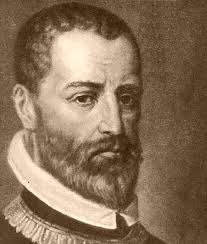 letters and records from Palestrina’s life suggest that he was born sometime between February 3, 1525 and February 2, 1526 but these February dates provide us with a good excuse to commemorate the great Italian composer this week. Palestrina’s life is rather well documented; we know that he started his training at the great basilica of Santa Maria Maggiore in Rome, that he was later appointed to the Capella Giulia at Saint Peter and sometime later to the more prestigious Cappella Sistina. In 1561 he succeeded Orlando di Lasso as maestro di cappella at San Giovanni in Laterano. Funds were lacking, and the capella never reached the level sought by Palestrina; in 1566 he quit. After serving for several years at his alma mater, Santa Maria Maggiore, and then, for a brief period, at the employ of Cardinal Ipolitto d’Este, at the Villa d’Este in Tivoli, he eventually returned to the Vatican’s Capella Giulia and stayed there till the end of his life. His fame grew across Italy and Europe; he was considered “the very first musician in the world” by a person close to Alfonso II d'Este - the Duke of Ferrara, who would know, since theDuke’s court was a major center of cultural life of Italy. Palestrina died in 1594 in Rome. He was widely published during his lifetime and admired by the popes for whom he worked, and other patrons of art: Philipp II of Spain, the Gonzagas and d’Este. Palestrina left a huge legacy: 104 masses, more than 300 motets, 140 secular madrigals and more. We have several of his works in our library but here’s other example, a motet Dies sanctificatus.
Almost half a millennium later, another Italian became famous as one of the most forward-looking composers of his generation. Luigi Nono’s music may sound as difficult as some of Palestrina’s masses, our ear being so used to the melodic tonality of the intervening centuries, but most music lovers would agree that it’s very interesting. Nono was born in Venice on January 29th of 1924. At the Venice Conservatory he studied with the noted composer Gian Francesco Malipiero. After graduation, Nono became friends with Bruno Maderna, a leading modernist composer of his generation. In 1950, Nono’s work, a 12-tone piece, was presented in Darmstadt, the mecca of the avant-garde. Soon after, Nono became a leading figure at Darmstadt, together with Maderna, Stockhausen and Boulez. It’s interesting to note that composers of both the 16th and the 20th century struggled with almost identical problems. In the 16th, the Catholic church was on the verge of banning polyphony masses because Cardinals deemed they made sacred texts incomprehensible. It’s thought that Palestrina "saved" the polyphony with his Missa Papae Marcelli, which demonstrated that a mass can be both, polyphonic and understandable. In the 20th century, Luigi Nono was accused by Stockhausen of the same - that words in Nono’s piece (Stockhausen was talking about Il canto sospeso) were impossible to understand, which, in Stockhausen’s opinion, made the whole idea of using texts absurd. That was a serious accusation, as Nono selected the texts from a poignant collection of arewell letters that captured Resistance fighters wrote before being executed by the Nazis. Nono strenuously objected but it seems Stockhausen was correct. You can judge for yourself. Il canto sospeso is a difficult piece but worth the effort. It’s here, SWR Symphonieorchester is conducted by Peter Rundel.
Read more...Luigi Nono - Il canto sospeso
SWR Symphonieorchester (Orchestra)
Peter Rundel (Conductor)
Giovanni Pierluigi da Palestrina - Dies sanctificatus
Corale San Filippo (Ensemble)
Fabrizio Barchi (Conductor)
Frédéric Chopin - Waltz Op. 64 No. 2., c-sharp minor
Red Jewel (Piano)