
From Gesualdo to Barber, 2018
March 5, 2018. From Gesualdo to Barber. This is another abundant week: Carlo Gesualdo, Carl Philipp Emanuel Bach, Josef Mysliveček, Pablo de Sarasate, Maurice RavelHeitor Villa-Lobos, Arthur Honegger and Samuel Barber all were born between March 5th and March 10th. Plus, Dame Kiri Te Kanawa, the wonderful soprano from New Zealand, was also born this week, on March 6th of 1944. Of this group, Ravel remains the most popular: by some counts, he is one of the most popular (not to be confused with the greatest) classical composers of all time. While it’s impossible not to love Ravel, our personal favorite is Gesualdo, Prince of Genosa, and not because of the incredible life story of this melancholic murderer and composer of genius, which was portrayed by dozens of poets and writers, from Torquato Tasso to Anatole France. Gesualdo appeals on a purely musical level; he’s one of the most interesting composers of the late Renaissance. The astonishing chromaticism of his madrigals sounds fresh even today. Listen, for example, to Moro, lasso, al mio duolo as performed by the Diller Consort.
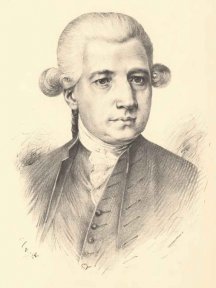 We’ve written about Mysliveček, who was born on March 9th of 1737, just once and so far, our library had only one of his compositions, the Violin Concerto in A Major. Mysliveček, who for a while was a good friend of a much younger Mozart, deserves more attention. A miller’s son and a miller himself till the age of 24, Mysliveček abandoned the family business, leaving it to his twin brother, and devoted himself to music. After taking some music lessons in Prague, he went to Venice where his studied opera. The Italians couldn’t pronounce his name, so they called him “Il Boemo” – the Bohemian. His studies were fruitful: the first opera was premiered in Bergamo in 1765, and two years later his Il Bellerofonte achieved great success at its premier in Teatro San Carlo in Naples. That was a turning point in Mysliveček’s career: for the rest of his life he stayed in Italy, traveling from one city to another to fulfill commissions from major opera theaters. Here’s Argene’s aria Palesar vorrei col pianto from Il Bellerofonte. The role was premiered by one of the most famous sopranos of the time, Caterina Gabrielli. In this recording it is performed by the Argentinian soprano Gladys Mayo; the Prague Chamber Orchestra is conducted by Zoltán Peskó. Here’s another example, the aria Saro qual é il torrente from Mysliveček’s opera Antigona. Antigona was written 36 years after Il Bellerofonte, at the end of 1773. The aria, sung by Creonte, the ruler of Thebes, was written for a tenor. In this recording it’s sung by the wonderful Czech mezzo, Magdalena Kožená, otherwise known as Ms. Simon Rattle.
A brief note on Mysliveček’s relations with the Mozarts. He met Leopold and Wolfgang in Bologna in 1770 (Wolfgang was 14, and was on one of the trips Leopold organized to demonstrate his brilliant virtuosity as a harpsichordist). Mysliveček became good friends with both, and Wolfgang was especially taken with the Czech’s “fire, spirit and life,” as he put it in one of his letters. The friendship lasted for eight years and fell apart when Mysliveček couldn’t deliver on a promise to arrange a commission for Mozart from the Teatro San Carlo. Mysliveček influenced some of Mozart’s early compositions, for example his opera Mitridate, re di Ponto.
Read more...Josef Mysliveček - Palesar vorrei col pianto, from Il Bellerofonte
Gladys Mayo (Soprano)
Prague Chamber Orchestra (Orchestra)
Zoltán Peskó (Conductor)
Chopin, Vivaldi 2018
February 16, 2018. Another rich week. Chopin, Rossini, Smetana, Vivaldi – way too much for one week. Fortunately, last year we wrote about the first three, so we’ll just play a bit of Chopin’s music. Just two days ago we came across a live video of a Chopin recital given by the Georgian pianist Eliso Virsaladze. Ms. Virsaladze, who is 75 years old, 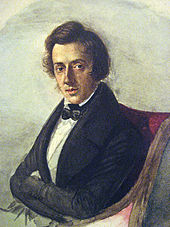 started with the Polonaise-fantaisie op. 61, then played the massive Piano sonata no. 3. In the second half it was several nocturnes, valses and one Etude, no. 3, op. 10. She even played an encore, a Mazurka, Op. 30, no. 4. It was a long program even for a young pianist and the performance, if maybe not technical perfect (she clearly got tired by the end), was very satisfying. Eliso’s first teacher was her grandmother, Anastasia Virsaladze, a pupil of the famous Anna Yesipova (Yesipova, a very influential teacher at the St. Petersburg Conservatory, also taught Sergei Prokofiev and Maria Yudina; she was the second wife of Theodor Leschetizky, who helped Anton Rubinstein in founding the St. Petersburg Conservatory). In 1966 Eliso moved to Moscow to study with Heinrich Neuhaus and Yakov Zak. Eliso took the third prize in the Second Tchaikovsky competition (1962) and won the Schumann competition in Zwickau four years later. Schumann was one of her favorite composers; at the time, Sviatoslav Richter said that she was the best contemporary interpreter of Schumann’s music. She also played a lot of Chopin. Here are 12 Etudes op. 10 in a studio recording made in 1974. We first wanted to select one etude but decided that playing all of them together is so much better – and it’s just 29 minutes of great music.
Antonio Vivaldi was born on March 4th of 1678, so this week marks his 340th birthday anniversary. He’s famous for the hugely overplayed and overused Four Seasons, but, in addition to a lot of second-rate pieces (he wrote an enormous number of concertos, more than 500 of them, mostly for string instruments, and 46 operas) he also wrote some wonderful but rarely performed music. His operas, for example, are just being “discovered,” many of them thanks to the wonderful Cecilia Bartoli. Clearly, Bach thought very highly of Vivaldi, as he took 10 of his violin concertos and transcribed them to either the harpsichord or the organ. Vivaldi seems to have created a unique musical genre he called Introduzioni, or introductory motets, which were intended to be performed before a larger choral composition, such as Gloria or Miserere. Vivaldi wrote eight such introduzioni. One of them is called Filiae Maestae Jerusalem (Mournful daughters of Jerusalem); it was intended to precede a Miserere, now lost. This particular introduzioni consists of three movements: a recitative (listening to it, one is reminded of recitatives in Bach’s Passions), a beautiful Aria, followed by another, shorter recitative. Here it is, performed by the French countertenor Gérard Lesne and the ensemble he founded, Il Seminario musicale.
Read more...Antonio Vivaldi - Filiae maestae Jerusalem
Gérard Lesne (Countertenor)
Fabio Biondi (Violin)
Il Seminario Musicale (Ensemble)
Frédéric Chopin - 12 Etudes Op. 10
Eliso Virsaladze (Piano)
From Blow to Kurtág, 2018
February 19, 2018. From Blow to Kurtág. We have a wonderful group of musicians to celebrate this week. Luigi Boccherini was born on this day in 1743 in Lucca. He studied in Rome, at the age of 14 he moved to Vienna where he played the cello at the Burgtheater, and four years later, in 1770 he moved to Madrid. There he was employed by the younger brother of the King of Spain, Infante 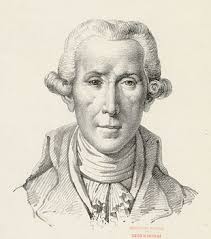 Luis Antonio. His official title was compositore e virtuoso di camera. He lived in Spain for the rest of his life, even while holding an appointment with the Crown Prince of Prussia. Boccherini died in Madrid on May 28th of 1805. He wrote more than 100 quartets – Minuet from String Quintet in E Major, Op.11 No. 5 is probably his most famous piece of music. Here’s another of his string quartets, “La Tiranna,” in G major, Op. 44, no. 4. It’s performed by the Ensemble 415.
Also born today but almost two centuries later, in 1926, was one of the most influential composers of the second part of the 20th century, György Kurtág. A Hungarian, he was born in the town of Lugoj, part of the Austria-Hungary that reverted to Romania after the Great War. He studied music in Timișoara (also formerly a Hungarian city) and in 1946 moved to Budapest. He became friends with another young composer, György Ligeti. In 1957 Kurtág went to Paris where he studied with Olivier Messiaen and Darius Milhaud. After the limitations of the socialist Hungary, Paris offered Kurtág access to all the modern music he wanted to hear. He listened to the Viennese, especially Webern; other influences were Stravinsky and Bartók. Had he stayed in Paris, his life would’ve been very different, but he chose to return to Hungary. There he earned money as an accompanist and voice coach.
He didn’t receive international recognition as a composer till the 1980s. He could afford to retire from teaching only in 1986, and left Hungary in 1993. Since then, he has worked in Berlin, Paris, Vienna and other cities. He now lives in Bordeaux. Kurtág’s music is difficult, but as we’ve said many times when talking about contemporary composers, it’s usually worth the effort. Here’s a piece dedicated to his friend, Pierre Boulez, Petite musique solennelle en hommage à Pierre Boulez. The Lucerne Festival Academy Orchestra is conducted by Matthias Pintscher.
The English Baroque composer John Blow, the oldest in our group, was born on February 23rd of 1649. At the age of 19 he was appointed the organist at the Westminster Abbey and later assumed the same position at the Chapel Royal. In 1664 he was made Master of the Children of the Chapel. In this position he taught a generation of future composers, Jeremiah Clarke among them. Daniel Purcell, the younger brother of Henry Purcell, was also his student. Blow was very fond of Henry and even resigned as theorganist at the Westminster Abbey to allow Purcell to take his place. The two composers were good friends, and when Henry Purcell died at the age of 36 in 1965, Blow wrote an Ode on his death. Blow’s favorite musical genre was the Anthem, a form similar to a catholic motet, and usually written to a specific text. Here’s the coronation anthem for King James II, God Spake Sometimes in Visions, which Blow composed in 1695. The Choir of King's College, Cambridge and Academy of St. Martin in the Fields are conducted by David Willcocks.
The greatest in the group, George Frideric Handel, was also born this week, on February 23rd of 1685. A German, he visited London in 1710, staged his new opera, Rinaldo, to great success and moved to England permanently in 1712 to become England’s national composer. We’ve celebrated him many a time and will do so again in the future. And speaking of opera, Enrico Caruso, probably the greatest tenor of all time, was also born this week, on February 25th of 1873.
Read more...John Blow - God spake sometime in visions
Academy of St. Martin in the Fields (Orchestra)
Choir of King's College (Chorale)
David Willcocks (Conductor)
György Kurtág - Petite musique solennelle en hommage a Pierre Boulez
Lucerne Festival Academy Orchestra (Orchestra)
Matthias Pintscher (Conductor)
Luigi Boccherini - String Quartet in G major, Op. 44, no. 4, "La Tiranna"
Ensemble 415 (Quartet)
Josef Mysliveček - Saro qual é il torrente, from Antigona
Magdalena Kožená (Mezzo-soprano)
Prague Philharmonia (Orchestra)
Michel Swierczewski (Conductor)