
Giacomo Puccini - Vittoria, Vittoria, from Tosca
Franco Corelli (Tenor)
Orchestra of the Teatro Regio di Parma (Orchestra)
Giuseppe Morelli (Conductor)
Giacomo Puccini - E lucevan le stele, from Tosca
Franco Corelli (Tenor)
Rome Opera orchestra (Orchestra)
Oliviero De Fabritiis (Conductor)
Haydn and Pogorelich
April 3, 2018. Haydn, Pogorelich. We’d like to come back to Joseph Haydn, whom we mentioned, rather perfunctorily, last week. As we were looking for a sample of Richter’s recording of a Haydn sonata (Richter made several and played Haydn often) we came across one made by Ivo 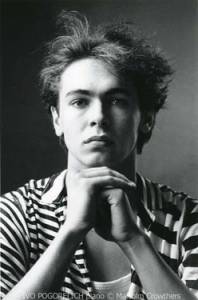 Pogorelich in 1991. It was a recording of a wonderful Piano Sonata no. 30 in D major, Hoboken XVI:19, composed in 1767. Pogorelich, born in Belgrade, is one of the most unusual pianists of his generation. His career began with a scandal: in 1980 the jury of the Chopin International Competition eliminated him after the second round. Martha Argerich resigned in protest (she was not the only one to object, so did Nikita Magaloff and Paul Badura-Skoda, although they didn’t quit). The publicity generated by the Warsaw scandal helped Pogorelich’s career. While some of his interpretations were eccentric, they were not outlandish, on top of which he had a flawless technique. In 1981 Pogorelich was invited to the Carnegie Hall (he played there many times; his 1992 performance of Balakirev’s Islamey became legendary). That same year, 1981, he debuted in London, and a year later he was signed by Deutsche Grammophon. Pogorelich had studied in the Soviet Union since 1976; the year of the Chopin Competition he married his teacher, Alisa Kezheradze, 21 years his senior. Little is known about Kezheradze. When she met Pogorelich, she was married to a Soviet functionary, living in a large apartment in the center of Moscow. She taught piano at the Music department of the Pedagogic Institute (Vladimir Genis, a Russian-German composer and pianist who studied there, remembers Kezheradze as “the only bright spot in that theater of the absurd, … striking, slim, of indeterminate age, with a face of a Georgian princess.”
She also worked with several Conservatory students. One of them was the young Mikhail Pletnev, whom Kezheradze prepared for the 1978 Tchaikovsky Competition after the death of Pletnev’s professor, Yakov Flier, six months earlier. Pletnev went on to win the competition. By then Kezheradze had already divorced her first husband. Her and Ivos’ marriage application was first rejected, but later the authorities relented, allowing them to marry and emigrate. Kezheradze and Pogorelich moved to Europe where they lived together till her death of liver cancer in 1996. Pogorelich, devastated by the loss, practically abandoned the concert stage. When, some years later, he resumed his public career, the eccentricities of his earlier years developed into interpretations that were often incomprehensible. He took the tempos so slow that the whole musical structure fell apart (for example, his recording of Chopin’s Nocturne op. 48, no. 1 takes an insane but mesmerizing nine minutes and ten seconds. Arthur Rubinstein plays it, stately, in a 5:47). He’d play either pianissimo or fortissimo, with strange accents. Anthony Tommasini of the New York Time finished his 2006 review of a Carnegie Hall concert thusly: "Here is an immense talent gone tragically astray. What went wrong?" It’s impossible to answer this question, but there are many of Pogorelich’s recordings that could be enjoyed today. The Hob. XVI:19 is one of them. Every one of Haydn’s musical ideas is brilliantly enunciated, every line is clear, the sound is beautiful, everything is balanced – a great performance overall. Listen to it here.
Read more...Franz Joseph Haydn - Piano Sonata no. 30 in D major Hob. XVI:19
Ivo Pogorelich (Piano)
Richter, Haydn 2018
March 26, 2018. Richter and Haydn. Last week we started writing about the pianist Sviatoslav Richter, and made it all the way to 1941, when Nazi Germany invaded the Soviet Union. Richter, 26 years old, joined many other musicians who continued to perform during the war, often on the front line. In January 1943 he premiered Prokofiev’s Piano Sonata no. 7, one of the three so-called “War Sonatas” (sonatas sixth through eighth). Richter already new Prokofiev: they met over Prokofiev’s Sonata no. 6. .jpg "Sviatoslav Richter") Premiered by the composer, the sonata became part of Richter’s repertoire; he played it on his first “official” Moscow concert in 1940. And even though he didn’t premier Prokofiev’s Eighth (Emil Gilels did), he played it at the Third All-Union competition in 1945, which Richter won (Victor Merzhanov shared the first prize with him). Here’s a live recording of Prokofiev’s Piano Sonata no. 7 from 1958.
Premiered by the composer, the sonata became part of Richter’s repertoire; he played it on his first “official” Moscow concert in 1940. And even though he didn’t premier Prokofiev’s Eighth (Emil Gilels did), he played it at the Third All-Union competition in 1945, which Richter won (Victor Merzhanov shared the first prize with him). Here’s a live recording of Prokofiev’s Piano Sonata no. 7 from 1958.
In 1943 Richter met Nina Dorliak, a fine opera and chamber singer. Nina was born into a prominent family: her father was a deputy to the Czar’s finance minister; her mother in her youth was a lady-in-waiting to dowager Empress Maria, later she became a well-known singer herself. Considering such legacy, it’s a miracle that Nina was not arrested during the Great Purge. Dorliak and Richter became good friends and played many concerts together. In 1945 Richter, most likely a closeted homosexual (he never talked about it), proposed to Nina. They married in 1945 and stayed together to the end of his life.
After the war, Richter, by then one of the most popular young pianists, extensively toured the Soviet Union and the countries of the Eastern bloc, but not in the West. Part of the “problem” was his parents (his German father was executed at the beginning of the war, his mother moved to Germany), partly because of his connections to the artists out of favor with the State, such as Prokofiev, who, from 1948 on was repeatedly criticized as “formalist,” as well as the poet Boris Pasternak. All of this changed with Khrushchev’s “thaw,” when Richter was allowed to go on a tour of the US. He played his first American concert on October 15th of 1960 in Chicago (Brahms’s Second Piano Concerto with the Chicago Symphony Orchestra and Erich Leinsdorf). On October 19th he played a massive concert in Carnegie Hall: five Beethoven sonatas, including the Appassionata (no. 23); two Etudes from Chopin’s op. 10, a Schubert’s Impromptu (D 899, no. 4) and Robert Schumann’s Fantasiestücke, opus 12, no. 2. He played another concert several days later, this one consisting of Prokofiev’s piece: piano sonatas nos. 6 and 8, and smaller pieces. Two more concerts followed: Haydn's Sonata No. 50 in C Major, Schumann and Debussy in one, and Schumann, Chopin, Ravel and Scriabin in another. He continued the tour through the end of the year, visiting Boston, Philadelphia, Chicago again, and the West coast. In December he played Carnegie Hall two more times. Altogether, he played more than 60 different pieces, including five different piano concertos: Tchaikovsky’s First, Brahms’s Second, Beethoven’s First, Liszt’s Second, and Dvořák’s. It’s difficult to think of another pianist with such a breadth of repertoire.
Franz Joseph Haydn was born on March 31st of 1732. Richter played many of his pianos sonatas (and also the piano concerto). Here’s Haydn’s Piano Sonata in C major, Hob.XVI:35. It was recorded in 1967.
Read more...Sergei Prokofiev - Sonata No. 7 in F-flat Major, Op. 83
Sviatoslav Richter (Piano)
Aaron Alter - Solar Rays - Big Band version - World Premiere in New York
CompCord Big Band (Ensemble)
Bach and Richter, 2018
March 19, 2018. Bach and Richter. In two days we’ll celebrate Johann Sebastian Bach’s 333rd birthday. We’ve written about Bach’s early years in Leipzig (here and here), the years that were dedicated to his work as the Kantor at Tomasschule, the school of the St. Thomas church, wherehe also served as the choir director. All along Bach was the music director of two other 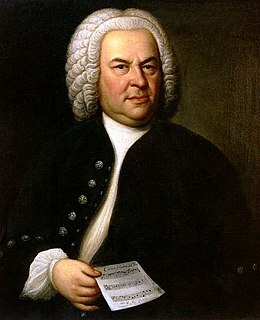 important churches in the city, St. Nicholas church (Nikolaikirche) and Paulinerkirche, the University church. His duties included writing music for Sunday services, and in the early Leipzig years he produced an astonishing number of cantatas, more than 300 altogether, of which 200 plus are extant. He also wrote several Passions, of which the St. John’s and St. Matthew survive. By the year 1729 the accumulated volume of compositions was such that he could allow himself to either perform the old music, or reuse pre-existing material, creating what is called “parody” cantatas. (The old and rather unusual musical term “parody,” or imitation, has nothing to do with humor. “Parody mass,” for example, was one of the major types of Renaissance mass where the composer used – and acknowledged – the borrowed material. The intellectual property rules were very vague in those days). By the year 1729, Bach’s creative forces shifted away from church music to secular music. One impetus was Collegium Musicum, of which Bach was appointed the director in 1729. Collegium Musicum was created by Telemann in 1702 as an association of professional musicians and students for the purpose of producing regular public concerts. During the winter the concerts were given at Café Zimmermann, one of the largest coffee houses in Leipzig (the building was constructed in 1715; it was destroyed during the Allied air raid in 1943). Bach’s Coffee Cantata, BWV 211, was probably premiered at Zimmermann’s. Several of Bach’s keyboard and violin concertos were written for Collegium Musicum. It’s quite likely that Wilhelm Friedemann and Carl Philipp Emanuel, two of Bach’s sons, performed with the Collegium.
Bach also continued writing keyboard pieces. Those were published in four books called Clavier-Übung, or keyboard exercise. The first volume, published in 1731, contained six partitas for harpsichord, the second, in 1735 – two pieces, the Italian Concerto BWV 971 and Overture in the French style, BWV 831. You can hear the Italian Concerto here, and the Overture – here. Both are performed by Sviatoslav Richter; the recordings were made in 1991, when Richter was 76.
One of the greatest pianists of the 20th century, Sviatoslav Richter was born on March 20th of 1915 in Zhitomir, Ukraine. His father, Teofil Richter, was a pianist and a German expat, his mother was Russian. The family moved to Odessa in 1921. Even though Teofil taught at the Conservatory, little Sviatoslav studied music mostly on his own. At the age of 15 he started working at the local opera as a rehearsal pianist. Without any further formal education, he auditioned for Heinrich Neuhaus at the Moscow Conservatory in 1937. Neuhaus, who had the strongest class in all of the Conservatory (Emil Gilels and Radu Lupu were his students), accepted him immediately. Richter’s studies didn’t last long, though: he wouldn’t attend the non-music classes, was kicked out after several months and returned to Odessa. Neuhaus, who considered his pupil a genius, insisted that he return. Richter was re-admitted but got his official diploma only in 1947. That didn’t stop him from playing concerts: in 1940 he premiered Prokofiev’s Sixth Piano sonata, then played his first Moscow concert with the orchestra. As Germany attacked Russia in 1941, Sviatoslav’s life, as that of every other Soviet citizen, changed forever. His father, as so many Russian Germans, was arrested and later executed. His mother disappeared and was presumed dead; only many years later would Sviatoslav find out that she eventually made it to Germany. To be continued next week.
Read more...Johann Sebastian Bach - Overture in the French style, BWV 831
Sviatoslav Richter (Piano)
Gaetano Donizetti - Vivi ingrato - Quel sangue versato, from Roberto Devereux
Montserrat Caballé (Soprano)
Orchestra of the Teatro la Fenice (Orchestra)
Bruno Bartoletti (Conductor)