
Alessandro Scarlatti and Marcel Dupré, 2018
April 30, 2018. Alessandro Scarlatti and Marcel Dupré. We love Alessandro Scarlatti: he was аcomposer of great talent and these days is clearly underappreciated. Yes, things are changing, and baroque opera is being staged more often. And of course, the great Cecilia Bartoli did much to popularize some of his music, as well as the new generation of counter-tenors, Philippe Jaroussky among them. .jpg "Alessandro Scarlatti, by Lorenzo Vaccaro, c. 1770") Still, we’d like to hear much more of Alessandro’s music, instead of the standard ration dispersed by the classical music radio stations. Alessandro Scarlatti was born in Palermo, on May 2nd of 1660. Here’s what we wrote about him a year ago, so let’s just listen to a couple of his pieces. In addition to operas, Scarlatti wrote a number of oratorios. Musicologists view these oratorios as a substitute for opera; most of Scarlatti’s oratorios were composed in Rome where the Pope was strongly opposed to opera performances. We’ll hear two excerpts from the oratorio Il Sedecia, re di Gerusalemme. It was written in Rome in 1705. Scarlatti was living in Rome since 1702. It was his second visit to the city (he first arrived in Rome at the age of 12 with his family and stayed there for 10 years before moving to Naples). Even though he was under the patronage of Cardinal Ottoboni, Scarlatti wasn’t employed by him directly; instead, he would serve, usually for a short time before being fired, as maestro di cappella at different churches. Eventually Ottoboni made the unhappy Scarlatti one of his “ministers,” but even that didn’t last long as a year later Ottoboni replaced him with Arcangelo Corelli. Operas, Scarlatti’s favorite genre, were virtually prohibited by Pope Clement XI. Scarlatti wrote five operas for Ferdinando de' Medici, then the Grand Prince of Florence but that relationship also ended rather soon, as Ferdinando decided that he likes Giacomo Antonio Perti’s operas better.
Still, we’d like to hear much more of Alessandro’s music, instead of the standard ration dispersed by the classical music radio stations. Alessandro Scarlatti was born in Palermo, on May 2nd of 1660. Here’s what we wrote about him a year ago, so let’s just listen to a couple of his pieces. In addition to operas, Scarlatti wrote a number of oratorios. Musicologists view these oratorios as a substitute for opera; most of Scarlatti’s oratorios were composed in Rome where the Pope was strongly opposed to opera performances. We’ll hear two excerpts from the oratorio Il Sedecia, re di Gerusalemme. It was written in Rome in 1705. Scarlatti was living in Rome since 1702. It was his second visit to the city (he first arrived in Rome at the age of 12 with his family and stayed there for 10 years before moving to Naples). Even though he was under the patronage of Cardinal Ottoboni, Scarlatti wasn’t employed by him directly; instead, he would serve, usually for a short time before being fired, as maestro di cappella at different churches. Eventually Ottoboni made the unhappy Scarlatti one of his “ministers,” but even that didn’t last long as a year later Ottoboni replaced him with Arcangelo Corelli. Operas, Scarlatti’s favorite genre, were virtually prohibited by Pope Clement XI. Scarlatti wrote five operas for Ferdinando de' Medici, then the Grand Prince of Florence but that relationship also ended rather soon, as Ferdinando decided that he likes Giacomo Antonio Perti’s operas better.
In this recording of the duet Caro figlio from Il Sedecia, Anna, the wife of the King Zedekiah (Sedecia), a soprano role, is sung by Virginie Pochon and Ismaele, her son, – by the countertenor Philippe Jaroussky. Notice that his part often lies above the soprano’s. And from the same oratorio, here is Isamele’s aria Caldo sangue, except that in this recording it’s performed by Cecilia Bartoli. Two wonderful, if very different, interpretations.
Marcel Dupré, the French organist and composer, was born on May 3rd of 1886 in Rouen. His father was an organist and a friend of Aristide Cavaillé-Colli, the greatest French organ-maker of the time (organs by Cavaillé-Colli still perform in scores of French churches, starting from the Notre Dame de Paris, Saint-Sulpice, Sainte-Trinité and Sacré-Cœur in Paris to numerous churches and concert halls across Europe and South America, for example, in the Great Hall of the Moscow Conservatory). Dupré entered the Paris Conservatory in 1904, where he studied with famous organ players and composers such Charles-Marie Widor and Louis Vierne. A professor of organ performance at the Paris Conservatory since 1926, in 1934 he succeeded Vidor as the organist at the church of Saint-Sulpice, whose Great Organ is widely considered the best instrument ever built by Cavaillé-Colli. Here’s Dupré’s Prelude and Fugue, Op. 7 no. 3 in G minor. It’s performed byJulian Bewig on a modern instrument, an organ built in 2003 by the firm Fischer & Krämer for the church of St. Marien in Emsdetten, Germany.
Read more...Alessandro Scarlatti - Caldo sangue, from Il Sedecia, re di Gerusalemme
Cecilia Bartoli (Mezzo-soprano)
Les Musiciens Du Louvre (Ensemble)
Marc Minkowski (Conductor)
Alessandro Scarlatti - Caro figlio, from Il Sedecia, re di Gerusalemme
Philippe Jaroussky (Countertenor)
Virginie Pochon (Soprano)
Il seminario musicale (Ensemble)
Gérard Lesne (Conductor)
Prokofiev, Piano sonata no. 5, 2018
April 23, 2018. Prokofiev. Sergei Prokofiev was born on this day in 1891. Two years ago we celebrated his 125th anniversary and last year we again wrote about him in some detail, so today we’ll focus on some of Prokofiev’s music, especially the piece that so far has been missing from our library. Piano sonata no. 5 is unusual in two respects: it’s the only sonata written outside of Russia, 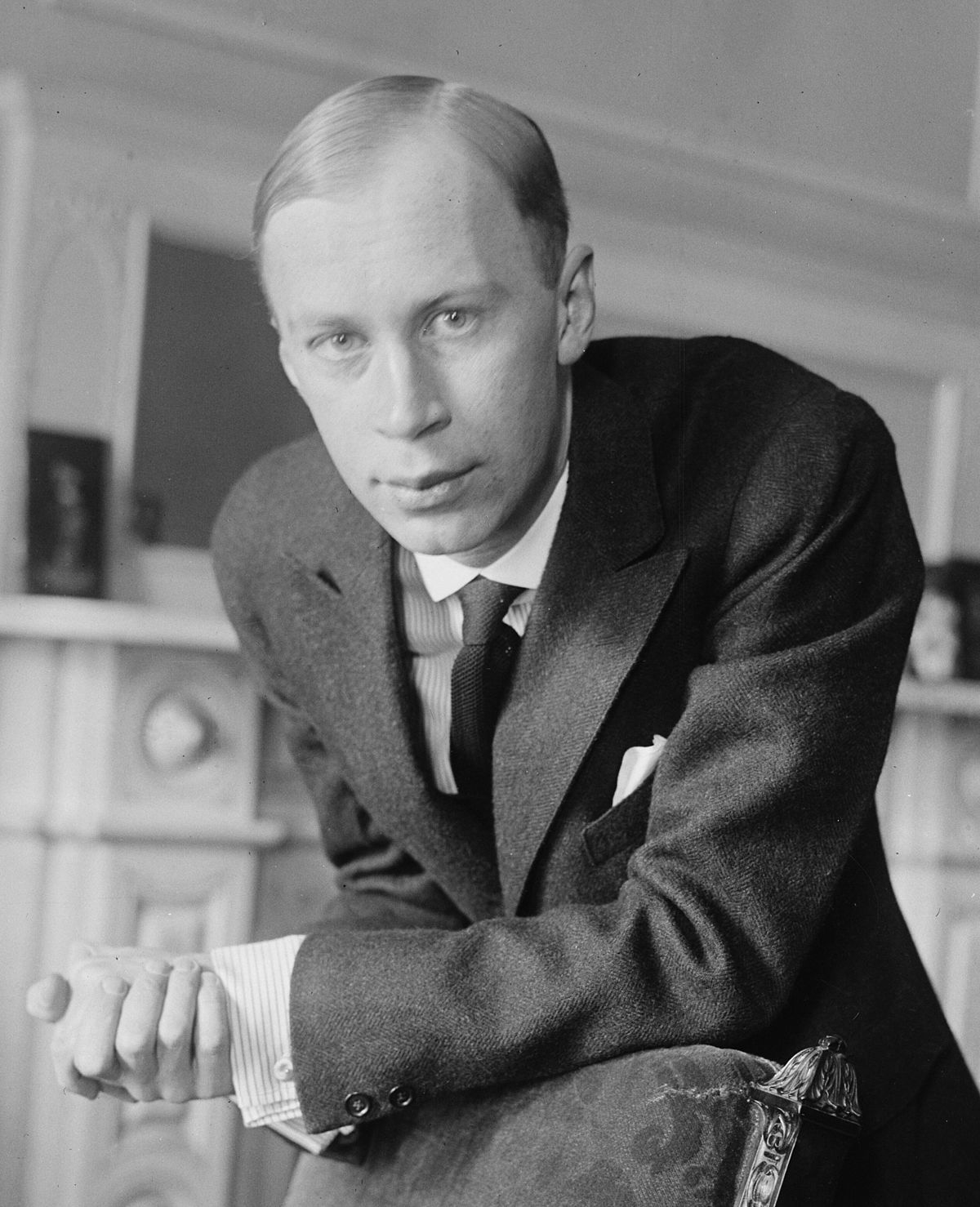 and it’s also the only sonata to have two opus numbers. The first version, op. 38, was composed in 1923. After spending two not very successful years in the US, Prokofiev returned to Europe in 1920. By 1922 he settled in the town of Ettal in the Bavarian Alps (Ettal is a place where the mad King Ludwig II, Wagner’s benefactor, built one of his folly palaces). During that time Prokofiev spent much of his time working on the opera The Fiery Angel, which he had started working on in 1919 and wouldn’t finish till 1927 (the opera was never staged during Prokofiev’s lifetime; the first concert performance took place in 1953 in Paris, the theatrical premier took place in La Fenice, Venice, in 1955). While in Ettal, Prokofiev, a virtuoso pianist, toured many countries, thus earning a living. Also in Ettal, in October of 1923, Prokofiev married the Spanish singer Lina Llubera. Soon after they moved to Paris, and it was there that Prokofiev played the Sonata no. 5 for the first time. The reception was lukewarm, which Prokofiev acknowledged himself. But clearly, he thought better of the music than most listeners and music critics, as he returned to the Sonata in 1952. It’s difficult to imagine more different circumstances: in 1923 Prokofiev, 32 years old and full of energy was free, traveling around Europe, working with Diaghilev, arguing with Stravinsky, about to be married for the first time – and in 1952, only 61 but very ill, he was living in the suburbs of Moscow, suffering official prosecution for “formalism,” with many of his works officially banned, and Lina, his first wife, was arrested and in the Gulag.
During his final years Prokofiev composed little new music but concentrated on reworking some of the earlier compositions, his Sonata no. 5, which acquired the new opus number, 135, and Symphony no. 2, which, like the sonata, wasn’t received well on its premier in Paris in 1925. He completed reworking of the piano sonata but never did much work on the Symphony. Prokofiev died on March 5th of 1953, the same day as Stalin. The notice of his death was published two weeks later, so as not to detract people from the main “tragic event.”
Here’s the Piano Sonata no. 5 in it’s final edition. It’s performed by Boris Berman (no relation to the great pianist Lazar Berman). Boris Berman was born in Moscow and studied at the Moscow Conservatory with Lev Oborin. He emigrated from the Soviet Union in 1973. Boris Berman is the first pianist to record all of the piano works by Sergey Prokofiev.
Read more...Sergei Prokofiev - Piano Sonata no. 5
Boris Berman (Piano)
Franz Schubert - Der Musensohn, D. 764
Mario Diaz-Moresco (Baritone)
Spencer Myer (Piano)
Franz Schubert - Ständchen, D. 957, No. 4
Mario Diaz-Moresco (Baritone)
Spencer Myer (Piano)
Franz Schubert - Im Frühling, D. 882
Mario Diaz-Moresco (Baritone)
Spencer Myer (Piano)
Franz Schubert - Die Forelle, D. 550
Mario Diaz-Moresco (Baritone)
Spencer Myer (Piano)
Marcel Dupré - Prelude and Fugue in G minor op. 7, no. 3
Julián Andrés Bewig (Organ)