
Frédéric Chopin - Berceuse Op.57
Grigory Ginzburg (Piano)
Georg Muffat - Concerto Grosso IV "Dulce Somnium"
Musica Aeterna Bratislava (Ensemble)
Peter Zajíček (Conductor)
Nilsson and Wagner, 2018
May 21, 2018. Nilsson and Wagner. Four days ago, on May 17th, the music world celebrated the 100th anniversary of Birgit Nilsson, the great Wagnerian soprano. And tomorrow, May 22nd, is the 205th anniversary of the composer himself. Nilsson was born Märta Birgit Svensson in a 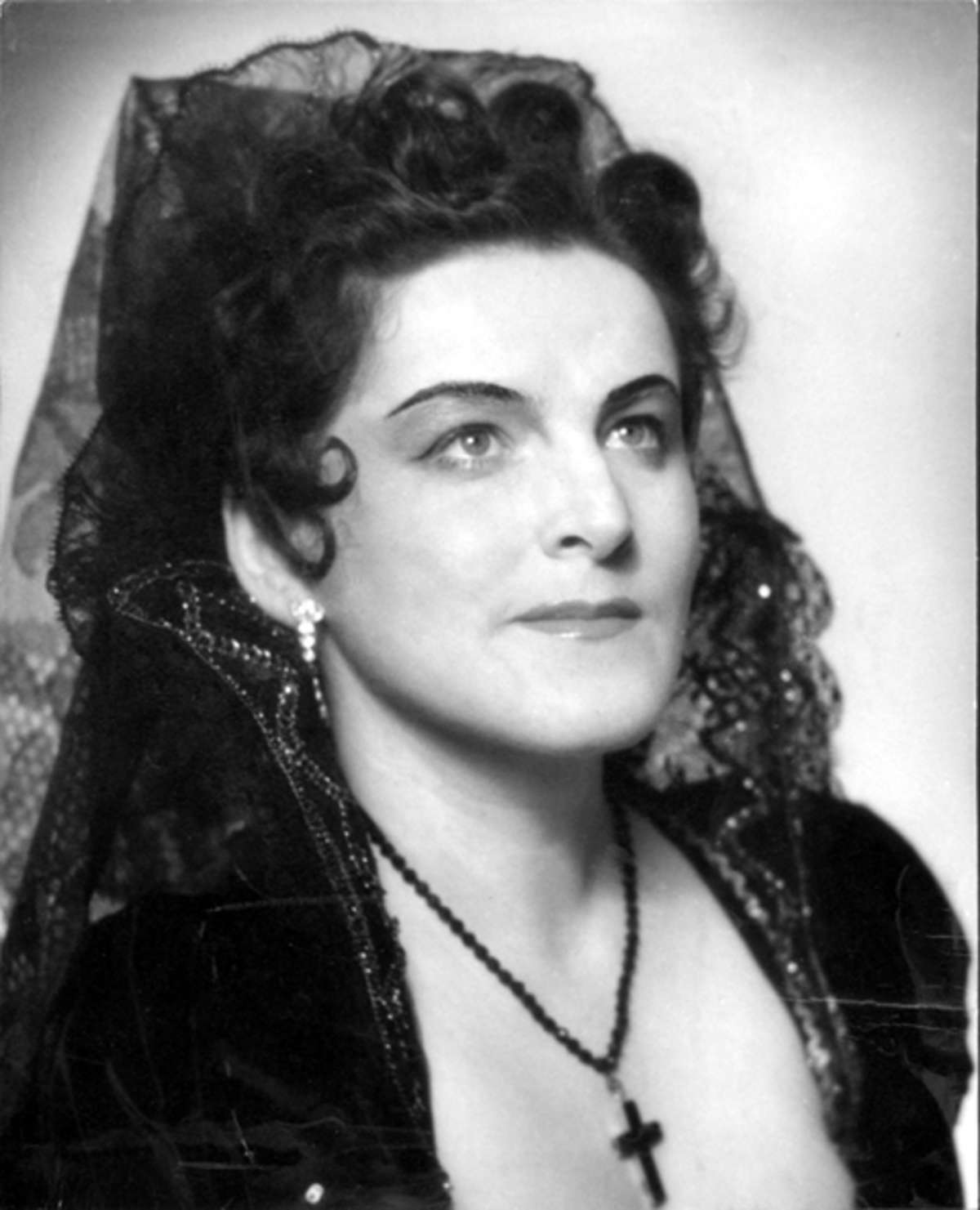 tiny village of Västra Karup in the southwestern part of Sweden. She started singing early, sung in the local church choir and later was admitted to the Royal Academy of Music in Stockholm (she didn’t appreciate her voice teachers and considered herself to be self-taught). She debuted at the Royal Swedish Opera in 1946 and in a short time developed a large repertoire, singing in Italian, Russian and German operas, all in Swedish. In 1953 she performed, for the first time, at the Vienna Opera. The next year she sung her first Wagner role, that of Elsa in Lohengrin, at Bayreuth, and the first Brünnhilde, her future calling card role, in the complete Ring cycle at the Bavarian State Opera. Bayreuth became one of her favorite places, she sung there till 1970. In addition to Brünnhilde, her roles there included Sieglinde in Die Walküre and Isolde. By the end of the 1950s she had sung, to great acclaim, at Covent Garden, the San-Francisco Opera, La Scala and the Metropolitan Opera. Other major opera houses followed – Chicago, Paris, Berlin. She established herself as the finest Wagnerian soprano of the generation, able to carry the mantel of Kirsten Flagstad. Her tone was pure, the sound brilliant, even from the top to the bottom of the register; the size of her voice was enormous. Listen, for example, to her astounding Liebestod from Tristan un Isolde, recorded at the Bayreuth Festival in 1966. Karl Böhm conducts the Orchestra of the Bayreuth Festival (here).
In addition to Wagner, she excelled in the operas of Richard Strauss (many consider Electra to be her greatest achievement). She was also a great Turandot (she was invited to La Scala to open the 1958 - 1959 season with the Puccini opera; Nilsson later said that it was the biggest events in her life). But today we’re celebrating Nilsson and Wagner, so here is another recording, made in 1954, also in Bayreuth. It’s the aria Einsam in trüben Tagen – Lonely, in troubled days (I prayed to the Lord) – from Act 1 of Lohengrin. The orchestra, as always is that of the Bayreuth Festival (Orchester der Bayreuther Festspiele); it’s assembled each year just for the Festival; the best musicians are invited, mostly from German orchestras. In this recording the conductor is another eminent German, Eugen Jochum. And finally, the famous Nun zäume dein Ross (Now bridle thy horse), from Act 2 of Die Walküre. In this 1961 recording, Birgit Nilsson is Brünnhilde, George London – Wotan. The London Symphony Orchestra is conducted by Erich Leinsdorf (here).
Read more...Richard Wagner - Nun zäume dein Ross, from Die Walküre
Birgit Nilsson (Soprano)
George London (Bass)
London Symphony Orchestra (Orchestra)
Erich Leinsdorf (Conductor)
Richard Wagner - Einsam in trüben Tagen, from Lohengrin
Birgit Nilsson (Soprano)
Bayreuth Festival Orchestra (Orchestra)
Eugen Jochum (Conductor)
Richard Wagner - Liebestod, from Tristan und Isolde
Birgit Nilsson (Soprano)
Bayreuth Festival Orchestra (Orchestra)
Karl Böhm (Conductor)
Monteverdi, Curzon, François, 2018
May 14, 2018. Monteverdi, Curzon, François. On May 15th of last year we celebrated the 450th anniversary of the great Italian composer Claudio Monteverdi. We’ve also written about him on many previous occasions, for example here and here. Even though he’s famous as the “father of the opera,” Monteverdi worked in practically all musical genres popular at the end of 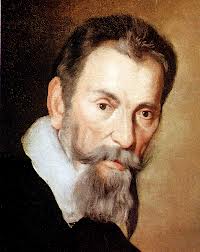 the 16th – early 17th centuries. He wrote sacred music (vespers and motets), but his madrigals are especially beautiful. The seventh book of madrigals (altogether he wrote nine “books” or collections) was written in Venice, where Monteverdi moved in 1613 after a long and highly productive period at the Mantuan court. In Venice he held a prestigious position of the maestro di cappella at San Marco. The seventh book was published in 1619 and contains 28 madrigals. Within the book, the music varies significantly. Compare, for example, Ohimè dov'è il mio ben, dov'è il mio core? (Alas! Where is my beloved, where is my heart?) with its beautiful duet of two sopranos (here), with Sinfonia – Tempro la cetra (I tune my lyre), which opens the book (here) orChiome d’oro (Golden hair), here. Monteverdi continued composing for many years, publishing two more books of madrigals and several operas, most of them lost. He died in 1643 at the ripe age of 76.
Two prominent pianists were born on May 18th: Clifford Curzon in 1907 and Samson François in 1924. Curzon, one of the finest British pianists of the 20th century, was born Clifford Siegenberg; his Jewish father changed the family name at the outbreak of the Great War. Clifford studied at the Royal Academy of Music and in 1928 went to Berlin to study with Arthur Schnabel. He also studied with Nadia Boulanger and Wanda Landowska. Curzon’s career flourished in the 1930s, when he toured Europe and the United States. The war affected Curzon as it did so many musicians, but he resumed concert playing at the end of the war. In 1952, together with Joseph Szigeti, William Primrose and Pierre Fournier he formed a highly successful Edinburgh Festival Piano Quartet. Curzon suffered from stage fright and almost always played from the score. He was also highly critical of his own studio recordings. Here, for example, is a recording of Mozart’s Piano Concertos No. 20, K. 466 made in 1970, with the English Chamber Orchestra under the direction of Benjamin Britten. Curzon didn’t approve of it and it was issued only after his death in 1982.
Samson François was a French pianist and composer. His family moved from one country to another: Samson was born in Frankfurt, where his father worked at the consulate, and by the age of six he was living in Italy, where Pietro Mascagni gave him several lessons. Eventually François settled in Paris where he studied with Alfred Cortot, Marguerite Long and Yvonne Lefebure. In 1943 he won the first Marguerite Long - Jacques Thibaud Competition. François was famous for his (often idiosyncratic) performances of the music of Debussy, Fauré and Ravel, and also the 19th century Romantics. Here’s his recording of Maurice Ravel’s Gaspard de la nuit. It was made in 1958.
Read more...Maurice Ravel - Gaspard de la Nuit
Samson François (Piano)
Wolfgang Amadeus Mozart - Piano Concerto No. 20 in D minor K. 466
Clifford Curzon (Piano)
English Chamber Orchestra (Orchestra)
Benjamin Britten (Conductor)
Béla Bartók - Piano Sonata (1926)
Zoltán Kocsis (Piano)