
Clara Schumann - Three Romances op. 22
Maria Ioudenitch (Violin)
Renana Gutman (Piano)
Abbado, 2018
June 25, 2018. Claudio Abbado. We may be wrong about Gustave Charpentier, but it seems not a single significant composer was born this week. As for Charpentier, who was born on this day in 1860, he’s known for just one composition, the opera Louise, which was premiered (to great success, we might add) in 1900. One aria is still being performed quite often on the concert scene – Depuis le jour. You can hear it nicely sung by Anna Netrebko. The Prague Philharmonia is conducted by Emmanuel Villaume.
As long as we’re lacking composers with known birth dates, let’s mention one from the older ages. Alessandro Striggio, an Italian, was born around 1536 into an aristocratic Mantuan family. In 1559 he moved to Florence, to the court of Cosimo I de' Medici, Grand Duke of Tuscany. Apparently, he was close to the Duke, as in 1567 Cosimo sent him on a diplomatic mission to London. Later Striggio traveled to Austria and Bavaria. In 1584 Alfonso II d’Este, Duke of Ferrara, invited Striggio for a short visit. At the time, Ferrara was known as one of the musical centers of Italy (and, by extension, of the world); one of the jewels of the court was a group of virtuoso female singers called concerto di donne. Later, Striggio visited Ferrara several more times. In 1587 he moved back to his native Mantua, were he served at the court of Vincenzo Gonzaga. Striggio died in Mantua of a fever on February 29th of 1592. At the time the 25-year-old Claudio Monteverdi was a viola player at the court. Here’s Striggio’s famous motet Ecce 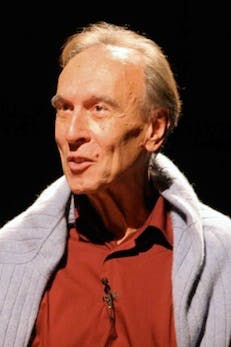 Beatam Lucem. It’s performed by Ensemble Huelgas under the direction of Paul van Nevel.
Claudio Abbado, one of the greatest conductors of the “post-Karajan” era, was born in Milan on June 26th of 1933. As a youngster he went to Wilhelm Furtwängler and Arturo Toscanini’s rehearsals (he found Toscanini’s dictatorial manner unpleasant). Abbado attended the Milan Conservatory, where he studied piano and conducting. Upon graduating, he spent some time in Vienna; there he befriended Zubin Mehta and listened to the rehearsals of Bruno Walter and Karajan. He conducted his first public symphony concert in 1958, and one year later he led a performance of Prokofiev’s The Love for Three Oranges. In 1960 he successfully debuted at La Scala (in 1969 he became the theater’s resident conductor). Abbado’s career took off in the 1970s: he was invited to the major opera theaters, such as Covent Garden and the Vienna Staatsoper. In 1984 he became the music director of the Vienna opera. All along he was extensively performing with symphony orchestras, often programming the music of the 20th century. He became the Principal conductor of the London Symphony and the principal guest conductor of the Chicago Symphony. In 1990, upon the death of Herbert von Karajan, the Berlin Philharmonic selected Abbado as its next conductor.
In 2000 Abbado had major surgery for stomach cancer, which severely affected his performance schedule. After formally leaving the Berlin Philharmonic in 2002 he continued working with many orchestras, but especially with the European Union Youth Orchestra, which he co-founded in 1978, the Gustav Mahler Youth Orchestra, which he founded in 1986, and the Chamber Orchestra of Europe.
Abbado’s discography is vast and of extremely high quality, but he was especially well known as a superb interpreter of the music if Mahler. Here he conducts the Vienna Philharmonic. The mezzo is Federica von Stade.
Read more...Alessandro Striggio - Ecce Beatam Lucem
Ensemble Huelgas (Ensemble)
Paul Van Nevel (Conductor)
Gustave Charpentier - Depuis le jour, from Louise
Anna Netrebko (Soprano)
Prague Philharmonia (Orchestra)
Emmanuel Villaume (Conductor)
Marcello, Rozhdestvensky, Levine, 2018
June 18, 2018. Marcello, Rozhdestvensky, Levine. Benedetto Marcello, a gifted Italian composer of the late Baroque, was born on June 24th of 1686 in Brescia. We’d like to get to his interesting Requiem in the Venetian Manner, but for now we’ll direct you to our earlier entry about Benedetto and his brother Alessandro, as we have more urgent topics.
First, some sad news: Gennady Rozhdestvensky, one of the best Soviet conductors, died on June  16th in Moscow. Rozhdestvensky was born on May 4th of 1931 into a musical family: his father was the noted conductor Nikolai Anosov, his mother – a singer, Natalia Rozhdestvenskaya. Gennady studied the piano with Elena Gnesina and Lev Oborin and, later, conducting with his father. He was only 20 when he found himself on the podium of the Bolshoi conducting Sleeping Beauty. From 1961 to 1974 Rozhdestvensky was the music director of the Moscow Radio Symphony Orchestra. He was also the music director of the Bolshoi Theater Orchestra. From 1974 to 1985 he was the music director of the experimental Moscow Chamber Music Theater, where he supervised performances of the old Baroque and Classical operas, and also productions of modern operas rarely if ever heard in Russia, like Stravinsky’s The Rake Progress and Shostakovich’s The Nose. Contemporary composers were of special interest to Rozhdestvensky: he often performed works that, if not banned, then were clearly not favored by the Soviet music establishment: Stravinsky, Poulenc, Orff, and the Soviet nonconformist composers like Edison Denisov, Sofia Gubaidulina and Alfred Schnittke. Rozhdestvensky was also a raconteur: very often, before conducting a piece, he would turn toward the audience and deliver a witty introduction. Nobody else did it back then, which probably was a good thing, as few had his knowledge, sense of humor and storytelling skills.
In 1974 Rozhdestvensky was hired as the director of the Stockholm Royal Philharmonic, the first Soviet conductor to lead a European orchestra. Later, he worked with the BBC Symphony Orchestra and the Vienna Symphony. He was invited to conduct many major orchestras: the Berlin Philharmonic, the Royal Concertgebouw, the Chicago Symphony. Among his numerous recordings are all of Shostakovich and Prokofiev’s symphonies and also all of Bruckner’s, in different editions. Gennady Rozhdestvensky is survived by his wife of many years, the pianist Victoria Postnikova.
And now another date, that could’ve been joyful but isn’t. On June 23 James Levine, who lead the Metropolitan Orchestra for 40 years, will turn 75. A conductor of enormous talent, two years ago he was credibly accused of sexually abusing his students and younger colleagues. This is terrible, and our perception of his art will never be the same. Levine had a brilliant career, which started with his apprenticeship with George Sell at the Cleveland, whose assistant he soon became. Guest-conducting major orchestras followed, as did a long association with the Chicago Symphony (he was the music director of the Ravinia Festival for 20 years). In 1971, he was invited to conduct the Metropolitan Opera orchestra in Tosca; a year later he was offered the position of Principal conductor and in 1975 became the Music Director. He built the orchestra into a world class ensemble, which, except for the Vienna Philharmonic, has no rivals among opera bands. His 1990 Ring cycle, with James Morris, Christa Ludwig and Siegfried Jerusalem, telecast on PBS, was a cultural event. All these achievements are now clouded. For a while the Met itself engaged in a Soviet-style rewriting of history, eliminating any mention of Levine on their Our Story page, as was discovered by the NY Times; since then, his name has reappeared.
Peter Sylvanus - Obodom "An Ibibio Dance for Piano"
Echezonachukwu Nduka (Piano)
Christian Onyeji - Ufie III
Echezonachukwu Nduka (Piano)
Chijioke Ngobili - Echezonachukwu
Echezonachukwu Nduka (Piano)
Fred Onovwerosuoke - 24 Studies in African Rhythms No. 3 ( Udje)
Echezonachukwu Nduka (Piano)
Wolfgang Amadeus Mozart - Violin Sonata in B-flat Major, K. 378
Maria Ioudenitch (Violin)
Renana Gutman (Piano)