
Frédéric Chopin - Etude Op. 25, No. 1 in A-flat major
Karen Hakobyan (Piano)
Frédéric Chopin - Nocturne in D-flat Major, Op. 27, No. 2
Karen Hakobyan (Piano)
Flagstad, Stern 2018
July 16, 2018. Flagstad and Stern. We missed two anniversaries last week. One was the birthday of Carl Orff, a somewhat controversial German composer, who was born on July 10th of 1895. He deserves a full entry, and that’s what we’ll do next year. Also last week was the 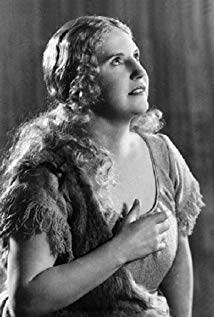 birthday of Kirsten Flagstad: she was just two days younger than Orff, born on July 12th of 1895. The Norwegian soprano was regarded as one of the greatest, if not the greatest, Wagner singers of all time. She had a voice of phenomenal beauty, clarity and power. For the first 10 years or so of her operatic career Flagstad sang mostly lyric roles in the opera houses of Sweden and Norway. She then took on the heavier roles in Verdi’s Aida and Tosca, and, in 1932, sang the role of Isolde in Tristan und Isolde. She successfully auditioned for Winifred Wagner, Richard Wagner’s pro-Nazi daughter-in-law who ran the Bayreuth Festival, and in 1934 sang Sieglinde in Die Walküre and Gutrune in Götterdämmerung at the Bayreuth. The next year she appeared at the Metropolitan Opera, first as Sieglinde, then in the role of Isolde. Her Brünnhilde, later that same year, was a phenomenal success. An invitation from the Covent Garden followed, and there she was also received with great enthusiasm. By the end of 1936 she was world-famous. In 1941 she returned to the Nazi-occupied Norway; that chagrined some of her American listeners (her husband was accused of collaborating with the Nazis but died before his trial ended). The British were more forgiving, and Flagstad resumed her after-war career in London. She sang the difficult Wagner roles, plus Strauss and more till about 1952.
By that time her tone became darker and it was harder for her to reach the top notes. She retired from the opera in 1952; fr a while she continued giving concerts, but her health began deteriorating. Flagstad died on December 7th of 1962, she was only 67 years old. Here is Kirsten Flagstad in Liebestod from Tristan und Isolde. Wilhelm Furtwangler conducts the Philharmonia Orchestra. Even though in 1952, when this recording was made, Flagstad was beyond her prime, this is a superlative live performance, both by her and by the conductor. We cannot have enough of her Isolde, so here is another live performance of Liebestod, from 1936. The recording is technically far from perfect, but Flagstad is absolutely glorious. Fritz Reiner leads the London Philharmonic Orchestra.
The great America violinist Isaac Stern was born in Kremenetz, Ukraine, on 21 July 21st of 1920. He was 14 months old when his family emigrated to the United States. One of the greatest violinist of the 20th century and one of the most important cultural figures of his time, he deserves a full entry, and we’ll do it on an occasion. For now, here Isaac Stern and Eugene Istomin are playing Beethoven’s Sonata for Piano and Violin no. 7 Op. 30, no. 2.
Read more...Ludwig van Beethoven - Violin Sonata No. 7 in C minor, Op. 30, No. 2
Isaac Stern (Violin)
Eugene Istomin (Piano)
Richard Wagner - Liebestod, from Tristan und Isolde
Kirsten Flagstad (Soprano)
London Philharmonic Orchestra (Orchestra)
Fritz Reiner (Conductor)
Richard Wagner - Liebestod, from Tristan und Isolde
Kirsten Flagstad (Soprano)
Philharmonia Orchestra (Orchestra)
Wilhelm Furtwangler (Conductor)
Respighi and Diamond, 2018
July 9, 2018. Respighi, Diamond, Cliburn. Ottorino Respighi, an important Italian composer of the 20th century, was born on this day in 1879. We’ve written about him on a number of occasions, for example here and here. While his best-known compositions are the so-called “tone poems,” the Fountains of Rome and the Pines of Rome in particular, Respighi also wrote quite a bit of chamber music. Here, for example, is the Violin sonata in B minor, which Respighi completed in 1917. 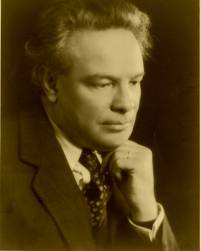 A three-movement work in a late-Romantic style, it’s performed by the distinguished American violinist Aaron Rosand, with the pianist John Covelli.
While Respighi was featured in several of our posts, we’ve never written about the American composer David Diamond. Diamond was born on July 9th of 2015 in Rochester, NY. His Jewish parents immigrated from Austria and Poland. Diamond studied the violin and music theory at the Cleveland Institute of Music before moving to New York to study with Roger Sessions at the New Music School. He won a scholarship to go to Paris; there, he met Ravel, Milhaud and Roussel, and the writers André Gide and James Joyce. While in Paris, he studied with Nadia Boulanger. He returned to the States at the outbreak of WWII, in 1939. The next 12 years were difficult, as Diamond didn’t have a permanent position, but productive: he wrote four symphonies and several other orchestral compositions, a violin concerto and a number of vocal pieces. In 1951 Diamond returned to Europe, this time as a professor at the University of Rome. A year later he moved to Florence, where he lived, more or less permanently, till 1965, avoiding the US of the McCarthy era.
After returning to the US, Diamond served as the chair of the composition department at the Manhattan School of Music, and as professor of composition at Juilliard. Diamond wrote mostly tonal music, well-orchestrated, dynamic, with a great sense of overall shape. This style became quite unfashionable with the advent of the Darmstadt-influenced young composers, such as Pierre Boulez, Bruno Maderna, Karlheinz Stockhausen and Luigi Nono, who wrote in the atonal and 12-tonal mode and used serialism. Diamond never recovered his popularity, even when tonal music made a partial comeback. Still, he was a masterful composer, with many students, and his name will be remembered. Here’s David Daimond’s joyous Rounds for String Orchestra. It was commissioned in 1944 by Dimitri Mitropoulos who was then the principal conductor of the Minneapolis Symphony Orchestra. Diamond composed it that same year and Metropoulos premiered it with his orchestra. In our case, Gerard Schwarz, a champion of Diamond’s music, is conducting the Los Angeles Chamber Orchestra.
Also this week, the American pianist Van Cliburn, mostly famous for winning the First Tchaikovsky piano competition in 1958, was born on July 12th of 1934. Here he plays Un sospiro, the third of Three Concert Études by Franz Liszt.
Read more...Franz Liszt - Un Sospiro, from Trois Etudes de concert, S. 144
Van Cliburn (Piano)
David Diamond - Rounds for String Orchestra
Los Angeles Chamber Orchestra (Orchestra)
Gerard Schwarz (Conductor)
Frédéric Chopin - Etude Op. 10 No. 3 in E Major
Karen Hakobyan (Piano)