
Vic Voss - The Long Lament
Vic Voss (Ensemble)
Pporpora, Salieri 2018
August 13, 2018. Two Italians. Nicola Porpora, a prolific opera composer, was born in Naples on August 17th of 1686. He was 10 when he enrolled in the Conservatorio dei Poveri di Gesù 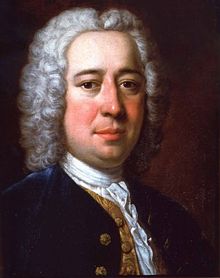 Cristo. In 1708 he received his first opera commission but had to wait several years to get another, as the Neapolitan opera scene was dominated by Alessandro Scarlatti who had returned to Naples from Rome that year. In the meantime, Porpora was earning money at the Conservatorio di S Onofrio and giving private lessons. In 1719 Scarlatti went back to Rome and that opened the stage for Porpora. One of the operas composed during that period was Angelica, on the libretto by the young Pietro Metastasio. The role of Orlando was sung by Porpora’s star pupil, the 15-year old castrato Farinelli, who would become one of the most celebrated singers in the history of opera. Among Porpora’s pupils was also Gaetano Majorano, known as Caffarelli, also a castrato, second only to Farinelli; he became one of Handel’s favorite singers.
In 1723-24 Porpora traveled to Vienna and Munich but received no appointments. He returned to Italy and settled in Venice. An intense rivalry developed between him and Leonardo Vinci, Porpora’s classmate in Naples. In 1730 Porpora and Vinci both produced operas which ran simultaneously in two leading Roman opera houses, one in Teatro della Dame, another – in Teatro Capranica. In 1730 Vinci died at age 40, and for a while Poprora’s competitive impulse focused on another successful opera composer, Johann Adolph Hasse.
In 1733 Porpora received an invitation from a group of Londoners who were setting up an opera company, Opera of the Nobility, to rival Handel’s Royal Academy of Music. During his three years in London Porpora composed five operas. The first, Arianna in Naxo, turned out to be the most successful one (Farinelli made his London debut in the subsequent Polifemo). Porpora left London in 1736, and less than a year later both the Opera of the Nobility and Handel’s opera house went bankrupt. Here‘s Philippe Jaroussky singing the aria Alto Giove, from Polifemo. Porpora returned to Italy, splitting his time between Venice and Naples. The opera commissions were drying up, and Porpora traveled to Dresden, where he received an appointment as Kapellmeister at the court of Saxony, which lasted for five years. In 1752 he retired and moved to Vienna. There he renewed his friendship with Metastasio; and it was probably Metastasio who introduced the 20-year old Joseph Haydn to Porpora. Haydn, who was trying to make a living as a freelancing pianist and composer, became Porpora’s valet, keyboard accompanist, and student. It seems Porpora treated Haydn badly, but nonetheless, Haydn later claimed that he learned "the true fundamentals of composition from the celebrated Herr Porpora.” In 1759 Porpora moved back to Naples. He was made maestro di cappella in the Conservatorio di S Maria di Loreto. His final opera was a failure, he had to resign from the conservatory and spent the last years of his life in poverty. Porpora died in Naples on March 3rd of 1768. At that time, our second composer, Antonio Salieri, was 17. As different as their music was, there are things that link them together: first off, Vienna, where Porpora was rather unhappy and where Salieri prospered, and also Metastasio, their mutual friend, who played important role in the lives of both.
Antonio Salieri was born on August 18th of 1750 in Legnago, Veneto. His brother, a student of Giuseppe Tartini, was Antonio’s first music teacher. Their parents died when Salieri was 14 and he ended up in Venice, the ward of a local nobleman. He was soon noticed by Florian Leopold Gassmann, a chamber composer to the Austrian Emperor Joseph II. In 1766, Gassmann brought Salieri to Vienna. Gassmann gave the youngster composition lessons and, more importantly, took him to the court to attend the evening chamber concerts. The Emperor noticed the young man; that started a relationship, which lasted till the Emperor’s death in 1790. Salieri made several other important acquaintances: one with Metastasio, another with the great composer, Christoph Willibald Gluck. Armida, Salieri’s 6th opera, was composed in 1771 when Salieri was just 21. His first big success, it was strongly influenced by Gluck. The libretto was based on a story from Torquato Tasso’s Gerusalemme liberate; it followed several illustrious operas on the same subject, such as Armide by Jean-Baptiste Lully (1686), George Frideric Handel’s Rinaldo (1711) and Armida al campo d'Egitto by Antonio Vivaldi (1718). Upon completion of Armida, Salieri wrote an even more popular La fiera di Venezia (The Fair of Venice). In 1774 the Emperor Joseph II made him the chamber composer. As the Emperor grew more interested in the spoken theater, Salieri found receptive audiences in Italy, writing operas for La Scala in Milan and theaters in Rome and Venice. In 1782, with Gluck’s help and a letter of recommendation from Joseph II, Salieri went to Paris where he picked up a commission that the very ill Gluck couldn’t fulfill. He wrote several operas while in Paris, Tarare, on a libretto by Beaumarchais, being the most successful. When Salieri returned to Vienna in 1784, he found a lot of competition, from established composers like Giovanni Paisiello to the 28-year-old Mozart. Despite his success, Salieri was entering a more challenging phase of his life.
Read more...Three French composers
August 6, 2018. Three French composers. Cécile Chaminade, one of the few French women composers, was born on August 8th of 1857 in Paris. Her first music lessons came from her mother, a pianist and a singer. Later she studied composition with Benjamin Godard. She started 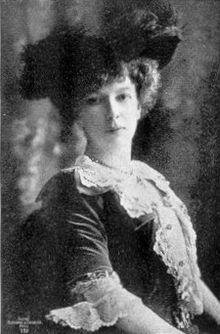 composing very young (when she was eight, she played some of her music for Georges Biset) and gained prominence with the publication of Piano Trio in 1880. An excellent pianist, she toured England many times, playing mostly her own music and became very popular there. In 1908 she went to the US, the country of “Chaminade fan clubs” and played in 12 cities, from Boston to St Louis. Between 1880 and 1890 Chaminade composed several large orchestral compositions and music for piano and orchestra. In the following period she scaled down, limiting herself to piano character pieces, of which she wrote more than 200. Many of them are charming though they became dated even during her time (Chaminade lived till 1944). Here ’s her short piano character piece, Scarf Dance. It’s performed by Lincoln Mayorga.
André Jolivet was also born in Paris and also on August 8th but in 1905. In his childhood he studied the cello but never went to the conservatory (he did study composition with Paul Le Fem, a composer and critic). In his youth Jolivet was influenced by Debussy and Ravel, but it all changed when he became familiar with atonal music: in December of 1927 he attended a concert at the Salle Pleyel during which several Schoenberg pieces were performed and that changed his life. Soon after he became a pupil of Edgard Varèse, an influential French-American avant-garde composer. He also befriended Olivier Messiaen, who was better known at the time and helped Jolivet by promoting his music. After the war Jolivet served as the musical director of the Comédie Française and composed a number 14 scores for plays performed at the theater.
During that time, he moved away from atonality, but his music retained dissonance and rhythmic drive. He continued composing till his death in Paris, December 20th of 1974: at that time, he was working on the opera Le soldat inconnu, commissioned by the Paris Opera. Here’s his piece for flute and piano, Chant de Linos, composed in 1944. It’s performed by Emmanuel Pahud, the Principal Flute of the Berlin Philharmonic, and the pianist Eric Le Sage.
Reynaldo Hahn wasn’t French by birth but he took on French nationality later in his life, in 1909. He was born in Caracas, Venezuela, on August 9th of 1874. His father was a German-Jewish engineer, his mother came from a Spanish family. When Reynaldo, the youngest of 12 children, was four, the family moved to Paris. In 1885 Hahn entered the Paris Conservatory, where one of his teachers was Jules Massenet. At the Conservatory Hahn befriended Ravel and Cortot, and through them, many other writers and musicians. A closeted homosexual, Hahn met a young writer, Marcel Proust in 1894; they became intimate friends and lovers. Hahn is best known for his wonderful songs, here is one of them, L'enamourée. It’s sung by the soprano Anna Netrebko; the Prague Philharmonic is conducted by Emmanuel Villaume.
Read more...Reynaldo Hahn - L'enamourée
Anna Netrebko (Soprano)
Prague Philharmonic (Orchestra)
Emmanuel Villaume (Conductor)
André Jolivet - Chant de Linos
Emmanuel Pahud (Flute)
Eric Le Sage (Piano)
Cécile Chaminade - Scarf Dance
Lincoln Mayorga (Piano)
Johannes Brahms - Hungarian Dance no. 5
Muen Wei (Piano)
Johannes Brahms - Hungarian Dance no. 4
Muen Wei (Piano)
William Bolcom - Blue, from Cabaret Songs
Mischa Bouvier (Baritone)
Yegor Shevtsov (Piano)
Gustav Mahler - Symphony No. 4, mov. 4
Reri Grist (Soprano)
New York Philharmonic Orchestra (Orchestra)
Leonard Bernstein (Conductor)