
Bloch, Ernest - Prayer - From Jewish Life, B.54
Miguel Zaparolli (Cello)
Villa-Lobos, H. - Bachianas brasileiras No.1, Modinha
Miguel Zaparolli (Cello)
Armando Vazquez - Sonatina for solo clarinet
Armando Vazquez (Clarinet)
Armando Vazquez - Arlequin for solo Clarinet
Armando Vazquez (Clarinet)
Schoenberg and so much more, 2018
September 10, 2018. Schoenberg and so much more. One of the mild frustrations we have with this page is the unevenness with which nature spreads musical talent across the calendar. Just last week we wrote about Bruckner, Perlman and Ozawa, but had to omit any mention of the .jpg "Arnold Schönberg by Ego Schiele (1917)") fine French composer Darius Milhaud, a member of Les Six; Johann Christian Bach, the so-called “London Bach,” Johann Sebastian’s youngest son and one of the most important composers of the Classical era; the pioneering American, Amy Beach; Giacomo Meyerbeer, who as some point was the most celebrated opera composer; and Antonin Dvořák, probably the greatest Czech composer. Maria Yudina, an influential Russian pianist, and the wonderful conductor, Christoph von Dohnányi, were also born last week. This week turns out to be not much easier: Henry Purcell and another Englishman, William Boyce; Arvo Pärt, an Estonian Minimalist (Wikipedia claims that he’s the most performed living composer in the world); Girolamo Frescobaldi, a great keyboard composer of the late Renaissance; Arnold Schoenberg, one of the most important composers of the 20th century; and the fine opera composer Luigi Cherubini. That’s not counting the talented Clara Schumann; Michael Haydn, Franz Joseph’s younger brother, and the very interesting Swiss-Dutch composer Frank Martin. Plus, Jessye Norman, one of the greatest Wagnerian sopranos of all time.
fine French composer Darius Milhaud, a member of Les Six; Johann Christian Bach, the so-called “London Bach,” Johann Sebastian’s youngest son and one of the most important composers of the Classical era; the pioneering American, Amy Beach; Giacomo Meyerbeer, who as some point was the most celebrated opera composer; and Antonin Dvořák, probably the greatest Czech composer. Maria Yudina, an influential Russian pianist, and the wonderful conductor, Christoph von Dohnányi, were also born last week. This week turns out to be not much easier: Henry Purcell and another Englishman, William Boyce; Arvo Pärt, an Estonian Minimalist (Wikipedia claims that he’s the most performed living composer in the world); Girolamo Frescobaldi, a great keyboard composer of the late Renaissance; Arnold Schoenberg, one of the most important composers of the 20th century; and the fine opera composer Luigi Cherubini. That’s not counting the talented Clara Schumann; Michael Haydn, Franz Joseph’s younger brother, and the very interesting Swiss-Dutch composer Frank Martin. Plus, Jessye Norman, one of the greatest Wagnerian sopranos of all time.
Under these circumstances we try to present a composer or a performer whom we haven’t featured before or had mentioned only in passing. Surprisingly, we haven’t written about Arnold Schoenberg at any length for many years. And when we’ve done it, here and here, it was of necessity rather sketchy. We’ll try to add some specifics to our narrative.
One of Schoenberg most important compositions is Variations for Orchestra, Op. 31. It’s his first completely twelve-tone piece. Simply put, the twelve-tone technique is a method of composition which tries to make all notes of the 12-tone scale equal. Not only the pitch and tonal harmonies are avoided, but also an attempt is made to use each note as often as any other. As Schoenberg himself put it, it’s a "Method of composing with twelve tones which are related only with one another." Variations for Orchestra were written in 1926-1928. Up till 1926 Schoenberg lived, with short interruptions, in Vienna. In 1923 his first wife, Mathilde, died. Even though their relationship never fully recovered after an “episode” in 1908 when Mathilde left Schoenberg for the painter Richard Gerstl, they remained friends, and her death was a blow to Schoenberg. Several months later he married Gertrud Kolisch, the sister of his pupil Rudolf Kolisch, a violinist who lead the Kolisch Quartet in Vienna, and later, after emigrating to the US, the Pro Arte Quartet. In 1926 Schoenberg accepted the directorship of a Master Class in Composition at the Prussian Academy of Arts in Berlin. He moved to Berlin and several of his students followed him there. The following seven years, till the Nazis came to power and Schoenberg was forced to flee Germany, were one of the best of his life. He taught for just six months of the year, had a comfortable salary, and was in complete control of his own courses. He had a lot of time to compose and he used it productively. In addition to the Variations for Orchestra, he wrote a play, Der biblische Weg (The biblical Way), a major opera, Moses and Aaron, for which he also wrote the libretto, the Third Quartet, and several smaller pieces.
So, what holds together a 12-tone piece if there’s no tonality to anchor it on? Clearly, it’s the relationship between the consequent sounds, but also such things as the timbre, texture, rhythm, tempo, dynamic changes in volume. Whether it works is always a question, but here is Schoenberg’s Variations for Orchestra, performed by Pierre Boulez and the Chicago Symphony Orchestra. Try it and see if it works for you.
Read more...Arnold Schoenberg - Variations for Orchestra, Op. 31
Chicago Symphony Orchestra (Orchestra)
Pierre Boulez (Conductor)
Bruckner and more, 2018
September 3, 2018. Bruckner and more. Anton Bruckner was born on September 4th of 1824. We’ve written about several of his early symphonies; this time we’ll focus on the Sixth, which was written between September of 1879 and September of 1881. At that time, Bruckner, 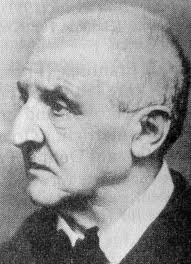 who had lived in Vienna since 1868, was teaching at the Conservatory; he was also on the faculty of the Vienna University, teaching harmony and counterpoint. In addition to teaching, Bruckner was one of the organists in the Hofkapelle, so he hadn’t much time left for composition. Bruckner started working on the Sixth symphony after the period marked by the disastrous first performance of his Third (the one dedicated to Wagner) which he so ineptly conducted. For three years he didn’t write anything new, revising his older compositions (we’ve written about Bruckner’s insecurities and his tendency to revise his own music based on the sometimes uniformed opinion of others many times, for example here). The Sixth isn’t performed very often, clearly not as often as either the Fourth or the last three (Seventh through Ninth). Still, it’s a magnificent work, with most beautiful themes throughout the composition. Sergiu Celibidache was a champion of this work, but in the spirit of the recent centenary, we’ll play it in the performance by the New York Philharmonic under the direction of Leonard Bernstein. The symphony consists of four movements: Majestoso (here); Adagio: Sehr feierlich (Very solemnly), here; Scherzo: Nicht schnell (Not fast) — Trio: Langsam (Slowly), here; and Finale: Bewegt, doch nicht zu schnell (With motion, but not too fast), here.
We’ve been preoccupied with the Bernstein centenary and have missed several anniversaries. August 31st is the birthday of Itzhak Perlman, one of the greatest violinists of the second half of the 20th century. His technique is probably the best since Jascha Heifetz’s, the tone huge, beautiful and immediately recognizable. Perlman was born in Tel-Aviv; at the age of four he contracted polio, since then he plays while seated. He moved to the US in 1955 to study at the Juilliard with Ivan Galamian and Dorothy DeLay. From the mid-1960s to mid-1980, when his playing was it its peak, he made numerous recordings of extremely high quality. He often collaborated with the pianist Daniel Barenboim and the violinist/violist Pinchas Zukerman (the two, plus Zubin Mehta and Jacquelinedu Pré,- Barenboim’s wife, were close friends), as well as with the pianists Vladimir Ashkenazy and Martha Argerich, the cellist Lynn Harrell and the conductor Seiji Ozawa. Perlman and Azhkenazy recorded all of Beethoven’s violin sonatas in the early 1970s. Here’s the “Spring,” Sonata for piano and violin no. 5 in F Major.
We mentioned Seiji Ozawa – his birthday is also celebrated this week. Ten years older than Perlman, he was born on September 1st of 1935 to Japanese parents in Mukden, in the Chinese province of Manchuria, which was then occupied by the Japanese. The family returned to Japan in 1944. Seiji started playing the piano and only later switched to conducting. He moved to Paris, won several international competitions, and then to the US. After leading several major orchestras, he became the music director of the Boston Symphony in 1973 and led it for 29 years. Even though by the end of his tenure some critics felt that many performances were rather routine, he still could reach great heights: we heard him in Vienna in the late 1990s; he was on tour with the Boston Symphony and conducted Mahler’s Third. It was a sublime event. He was a great champion of the music of the 20th century. In 1990s he recorded all of Mahler symphonies and the reviews were very positive.
Read more...Ludwig van Beethoven - Sonata No. 5 for Violin and Piano in F Major, Op. 24 "Spring"
Itzhak Perlman (Violin)
Vladimir Ashkenazy (Piano)
Anton Bruckner - Symphony No 6, 4th mov., Finale: Bewegt, doch nicht zu schnell
New York Philharmonic (Orchestra)
Leonard Bernstein (Conductor)
Ennio Morricone - Gabriel's Oboe
Miguel Zaparolli (Cello)