
The Art of the Piano: Teo Milea
11/03/2018 07:00, Gallery 345
Gilels and Flier, 2018
October 15, 2018. Gilels and Flier. Last week we were celebrating the life of Monserrat Caballé, and missed the birthday of one of her stage partners, the incomparable Luciano Pavarotti, who was born on October 12th of 1935 in Modena. We mentioned a recording he made in 1984 with Joan Sutherland and Caballé. Here’s the trio from Act I of Bellini’s Norma: Pavarotti is Pollione, Sutherland, who was 58 at the time of the recording, is Norma and Caballé – Adalgisa.
Two great Soviet pianists were also born this week in what was then the Russian Empire: Emil Gilels on October 19th of 1916 and Yakov Flier, on October 21st of 1912. Gilels was born in Odessa (now in Ukraine), Flier – in a small town not far from Moscow. Both were Jewish; with few exception (the rich merchants, the highly educated) Jews were not allowed to live outside of the Pale of Settlement, in the western part of the Empire. How Flier’s parents, a poor family of a watchmaker, managed to live so close to Moscow, isn’t clear.
Gilels, a child prodigy, started his piano studies at the age of five and a half. By the age of 12 he had acquired a considerable repertoire, gave his first recital and was accepted at the Odessa 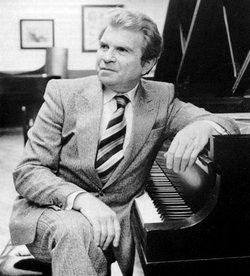 Conservatory. In 1933, at the age of 16, he won the First All-Union Competition of Musicians-Performers. That made him famous and allowed him to perform across the country. In 1935-38 he studied with Heinrich Neuhaus, the famed Moscow Conservatory teacher. By that time Yakov Flier was his main competitor: in 1936 Gilels lost to Flier at the International piano competition in Vienna, where Flier took the first prize, while Gilels took the second, but two years later he had his revenge at the Ysaÿe International Festival in Brussels (after the war this competition would be renamed the Queen Elizabeth): Gilels won and Flier took third place (Moura Lympany came in second). The Second World War put the breakes on Gilels’s international career: he was scheduled to play in the US in 1939 but the tour was canceled. After the war, the great Sviatoslav Richter became his main competitor and eventually overtook him in the Soviet hierarchy, which always needed one person at the top. This had little to do with Gilels’s real achievements: in 1955 he made his US debut, which was highly successful; he played in a trio with Leonid Kogan and Mstislav Rostropovich; he was invited to every major concert hall of Europe. Gilels had a heart attack in 1981 from which he never completely recovered. He died on October 14th of 1985.
Yakov Flier was somewhat of a late starter. He studied with the famous Konstantin Igumnov but wasn’t a star at the Conservatory. He graduated in 1934 and only then did his career take off. 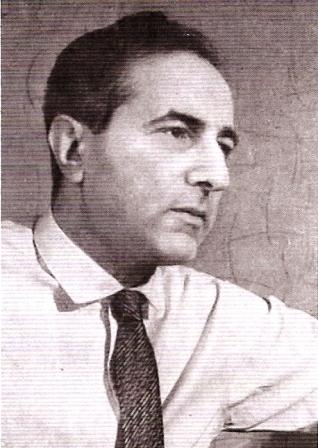 After several triumphs at international competitions he became as famous as Gilels. His style, though, was very different, more romantic, sometimes verging on exalted, and so was his repertoire, Romantic at the core – Liszt and Chopin were his favorites, together with Rachmaninov (he also played compositions by contemporary Soviet composers, like Prokofiev, Shostakovich and Kabalevsky). Tragically, his career was cut short: around 1945 he developed a problem in his right hand, which progressed; by 1949 he stopped playing recitals. Flier resumed his solo career in 1959-1960; though not as much a virtuoso as before, his playing had by then acquired the depth which he sometimes lacked in his earlier years. Here’s a live recording of Schumann’s Symphonic Etudes Op. 13 made in 1960.
A year ago, we wrote two entries about an old photo depicting a group of six young Soviet musicians; Gilels and Flier were among them. You can read them here and here. More on Gilels is here.
Read more...Robert Schumann - Symphonic Etudes, Op.13
Yakov Flier (Piano)
Vincenzo Bellini - Ma di l'amato giovane, from Norma
Luciano Pavarotti (Tenor)
Joan Sutherland (Soprano)
Montserrat Caballé (Soprano)
Orchestra of the Welsh National Opera (Orchestra)
Richard Bonynge (Conductor)
Montserrat Caballé
October 8, 2018. Caballé and Verdi. Only three of the 20th century sopranos were ever given affectionate monikers by their adoring fans: “La Divina,” “La Stupenda,” and “La Superba” were indeed the greatest. La Divina – Maria Callas – died years ago, in 1977, she was just 53; La 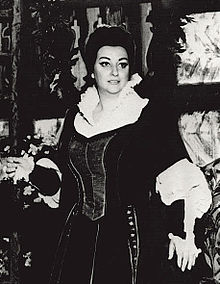 Stupenda – Joan Sutherland – just three years younger than Callas, lived a much longer life, and her singing career was also longer; she died in 2010. We were going to write about Giuseppe Verdi, as his birthday happens to be this week, but on Saturday welearned that La Superba, Monserrat Caballé, had died in Barcelona after a long illness. Caballé was an extraordinary singer. She had a real bel canto technique, a huge vocal diapason that allowed her to sing coloratura arias, and an incomparable repertoire of more than 100 operas. But more than anything else she was known for the purity of her voice and amazing vocal control that allowed her to sustain a long and even pianissimo line.
Monserrat Caballé was born in Barcelona on April 12th, 1933. She studied at the Barcelona Conservatory and graduated in 1954 with a gold medal. She then moved to Basel, sung in the Basel Opera and then in Bremen. In 1960, she appeared in a small role in La Scala. Her breakthrough came in 1965 when she replaced, on short notice, Marilyn Horne in a New York concert staging of Donizetti’s Lucrezia Borgia. The public didn’t know her, but she earned a 25-minute ovation. That evening launched her to stardom, which stayed with her for the rest of her life.
That year, 1965, she made her debut at the Glyndebourne in such diverse roles as Marschallin in Richard Strauss’s Der Rosenkavalier and Countess in Mozart’s Marriage of Figaro. Later that year she sung for the first time at the Metropolitan Opera, where she would sing for the next 20 years, appearing on stage 98 times. She went on to conquer every major opera house in the world. She officially premiered at La Scala in 1970, and two years later at London’s Covent Garden and the Lyric Opera in Chicago. In 1974, when La Scala was visiting Moscow, she sung a phenomenal Norma. Bellini’s Norma had a special place in Caballé’s repertoire. She was one of the greatest Normas of all time and recorded it in 1972 with Domingo as Pollione. Twelve years later she made another recording, in which she sung Adalgisa, the role usually sung by a mezzo. In that historic recording, Luciano Pavarotti was Pollione. She partnered with the best tenors of the time, Franco Corelli, Giuseppe Di Stefano and Jose Carreras (and of course with Domingo many times, and Pavarotti).
We mentioned that Caballé had an unusually large repertoire. She sung most of the bel canto roles, the German and French operas, the Spanish zarzuelas, but throughout her career Verdi was in the center. And as we’d still like to celebrate the great Italian, we offer several samples from his operas. Here is D'amor sull'ali rosee, from Il Trovatore. This recording was made in 1974. Orquesta Sinfonica de Barcelona is conducted by Gianfranco Masini. Also in 1974, Caballé recorded Aida. Here’s O Patria mia from Act III. Riccardo Muti leads the New Philharmonia Orchestra. Earlier, in 1968, she recorded this aria from Due Foscari, which isn’t performed very often (RCA Italiana orchestra is under the direction of Antón Guadagno). And finally, from 1971, Ave Maria from Otello. Antón Guadagno again, but this time conducting the Royal Philharmonic Orchestra.
Read more...Giuseppe Verdi - Ave Maria, from Otello
Montserrat Caballé (Soprano)
Royal Philharmonic Orchestra (Orchestra)
Antón Guadagno (Conductor)
Giuseppe Verdi - Tu al cui sguardo onnipossente, from I Due Foscari
Montserrat Caballe (Soprano)
RCA Italiana orchestra (Orchestra)
Antón Guadagno (Conductor)
Giuseppe Verdi - O Patria mia, from Aida
Montserrat Caballe (Soprano)
New Philharmonia Orchestra (Orchestra)
Riccardo Muti (Conductor)
Giuseppe Verdi - D'amor sull'ali rosee, from Il Trovatore
Montserrat Caballe (Soprano)
Orquesta Sinfonica de Barcelona (Orchestra)
Gianfranco Masini (Conductor)
Niccolò Paganini - Caprice No. 3
Augustin Hadelich (Violin)