
Jehan Titelouze - Magnificat Sexti Toni
Striped Gazelle (Organ)
Refat Hasan - Deep In Spirit
Refat Hasan (Orchestra)
Borodin 2018
November 12, 2018. Borodin. Russian composer Alexander Borodin was born on this day in 1833. He was the illegitimate son of a Georgian Prince Luka Gedianov and his mistress, Avdotya 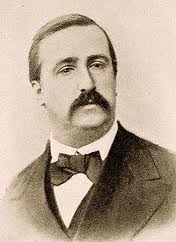 Antonova. Alexander was registered as a son of one of Gedianov’s serfs, Porfiry Borodin, a common practice in those days. Borodin was thus officially born a serf, so the prince had to formally free him, which he did when Alexander was seven. The prince also arranged Avdotya’s marriage to a retired army physician who died two years later. Alexander was educated by private tutors at home; when he was 13, his mother took on a boarder, Mikhail Shchiglev, and the boys became good friends. Both liked music and took piano lessons. Around that time Alexander started composing, and even had three pieces published to good reviews. He never thought of becoming a professional musician – he was interested in chemistry and at the age of 17 entered the St Petersburg Medical-Surgical Academy. Soon after graduating, he was sent to Heidelberg for advanced studies (the famous Russian chemist Dmitry Mendeleyev lived there at the time). In Heidelberg he found a thriving musical community and played regularly in cello duets and quartets. He continued composing, mostly for himself. Borodin’s scientific research brought him to many European cities; these travels broadened his musical horizons as well: in Mannheim, for example, he became acquainted with the music of Wagner, for the first time listening to Der fliegende Holländer, Tannhäuser and Lohengrin. While in Heidelberg, he met a 29-year-old Russian pianist, Yekaterina Protopopova. They fell in love and Borodin proposed. Protopopova was ill with tuberculosis, and doctors suggested that she go to Pisa, Italy. Borodin went with her and arranged for some scientific work in the city in order to stay with his fiancée. A year later, in 1862, they returned to St.-Petersburg where Borodin received a position at the Medical-Surgical Academy and married. They stayed together for the rest of his life: Borodin was first to die, at the age of 53.
While working, very successfully, as a research chemist and publishing scientific papers, Borodin met Mily Balakirev and through him César Cui, Modest Mussorgsky and the young Nikolai Rimsky-Korsakov. Balakirev encouraged Borodin to compose, which he did, starting on a symphony, eventually Symphony no. 1. It took Borodin six year to complete, his main preoccupation still being chemistry. Balakirev premiered the symphony in 1869; while the public liked it, many critics did not.
That year Borodin started working on his Second symphony which, after major modifications, was completed ten years later. During that time, he started, and then abandoned, working on several pieces, including the opera The Tsar’s Bride. In 1869 he began composing another opera, called Prince Igor, based on the anonymous Russian epic The Tale of Igor’s Campaign, an account of a failed raid of Prince Igor Svyatoslavich of Kievan Rus against the Polovtsians. After working on the opera for about three years, during which time he composed several sections, including the famous Polovtsian Dances, he dropped the project in 1872 to work on the Second symphony but returned to the opera two years later. He would continue working on it on and off till his death in 1887, leaving it incomplete. Later, Glazunov and Rimsky-Korsakov completed the opera: some parts were composed anew by Rimsky, some parts were reconstructed by Glazunov from memory, based on Borodin’s piano renditions which he performed for his friends.
Here’s Borodin’s Petite Suite. It was originally written for the piano, but Glazunov orchestrated it after Borodin’s death, incorporating a Scherzo, a separate piece by Borodin, as a final movement. Neeme Järvi is conducting the Gothenburg Symphony Orchestra.
Read more...Alexander Borodin - Petite Suite
Gothenburg Symphony Orchestra (Orchestra)
Neeme Järvi (Conductor)
Fritz Kreisler - Three Old Viennese Dances
Kinga Augustyn (Violin)
Kalina Mrmevska (Piano)
Sergei Prokofiev - Violin Sonata No. 2 in D Major, Op. 94 bis
Kinga Augustyn (Violin)
Kalina Mrmevska (Piano)
Henryk Wieniawski - Polonaise de Concert in D Major, Op. 4
Kinga Augustyn (Violin)
Kalina Mrmevska (Piano)
Couperin and much more, 2018
November 5, 2018. Couperin and much more. François Couperin, Couperin le Grand, one of the greatest French composers of the end of the 17th – early 18th century, was born in Paris on 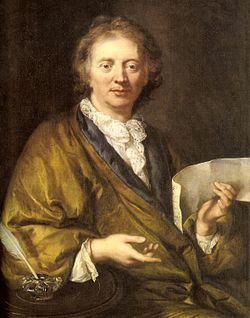 November 10th of 1668. The most important French composer between Lully and Rameau, he was featured on these pages many times, for example here. We know him mostly as a composer for the harpsichord and the organ, but Couperin wasn’t confined to keyboard instruments. In 1714 he wrote the three Leçons de ténèbres (literally, Lessons of Darkness), vocal settings for the Tenebrae service, held during the three days preceding Easter. During the traditional Catholic service candles are extinguished, and the service ends in total darkness. The text is from the biblical Lamentations of Jeremiah. Many composers set the Ténèbres to music, especially during the Renaissance era, for example, Palestrina, Thomas Tallis and, famously, Orlando di Lasso. Couperin’s setting is among the best. Here is the third Leçon for two sopranos; it’s performed by Montserrat Figueras and Maria Cristina Kiehr, Jordi Savall conducts Le Concert Des Nation.
Walter Gieseking, a French-German pianist, was also born this week, on November 5th of 1895. Gieseking was born in Lyon; his father was a well-known German doctor. He began playing the piano at the age of four and didn’t receive any formal training till he entered the Hamburg Conservatory at the age of 16. When he was 20, still in Hamburg, he performed a cycle of almost all Beethoven sonatas; it was extremely well received. He then performed several very successful concerts in Berlin; his playing of the music of Debussy and Ravel was especially noted. While some of his compatriots emigrated, Gieseking stayed in Germany during the Nazi period; Vladimir Horowitz and Arthur Rubinstein both accused him of being a Nazi collaborator. After the war, he was practically banned from performing in the US but continued playing in the more forgiving Europe. He eventually was cleared of cultural collaboration and returned to the US. He was known is an outstanding performer of the music of Debussy and Ravel. Here’s the 1953 recording Gieseking made in London of Debussy’s Image, Book I. Gieseking died in London on October 26th of 1956. At the time he was in London, recording the full cycle of Beethoven’s sonatas. He was in the process of recording Sonata no. 15, Op. 28 (“Pastoral”) when he suddenly fell ill. By then, the first three movements had been already recorded; it was never finished. This incomplete recording was issued by HMV.
Ivan Moravec, a wonderful Czech pianist, is not as well known as he probably should be. He was born on November 9th of 1930 and died three years ago, on July 27th of 2015. Moravec studied in Prague and later with Arturo Benedetti Michelangeli in Arezzo. Moravec’s playing wasn’t flashy but probing, highly musical and faithful to the composer’s ideas. He was rightly considered an exquisite performer of Chopin’s music. He was also wonderful in Ravel and Debussy – someday we’ll play his performances parallel to Gieseking’s. Here’s Chopin’s Nocturne, No. 1 In B-flat minor recorded in 1966.
Read more...Frédéric Chopin - Nocturne op. 9 no. 1 in B flat minor
Ivan Moravec (Piano)
Jan Pieterszoon Sweelinck - Fantasia SwWV 259
Striped Gazelle (Organ)