
Christmas music of the Renaissance_2018
December 24, 2018. Christmas music of the Renaissance. Christmas is around the corner, and at this time of the year we usually try to kill two birds with one stone: celebrate this feast and commemorate some of the musicians whom we failed to mention during the previous 12 months. 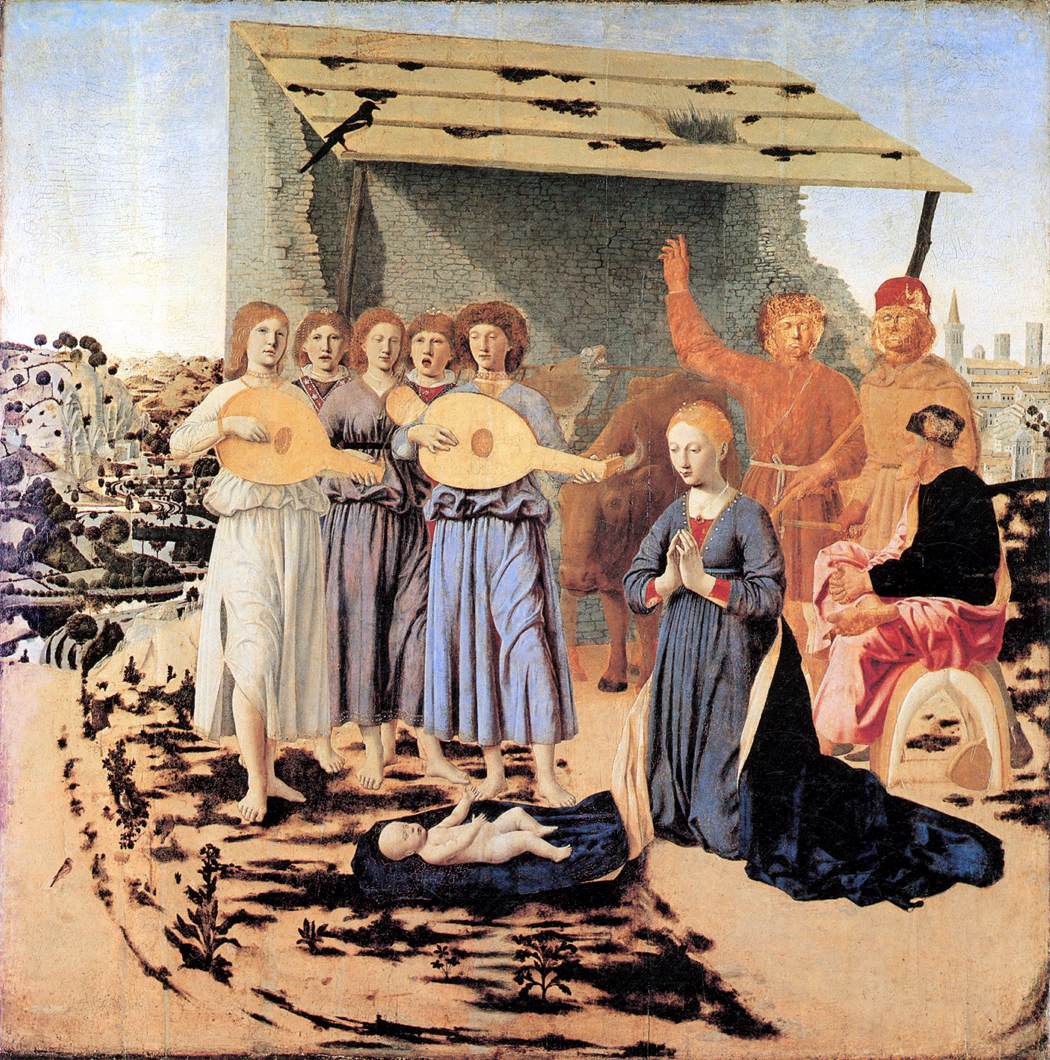 Very often those are the composers of the Renaissance, whose birthdays we don’t know. So here is to Christmas and to three great composers, Orlando di Lasso, Giovanni Pierluigi da Palestrina and Tomás Luis de Victoria.
Giovanni Pierluigi da Palestrina, whose name derives from the name of a small town near Rome, was born in Palestrina sometime between February 3rd of 1525 and Feb 2nd of 1526. Palestrina moved to Rome in 1551 when Pope Julius III appointed him maestro di cappella at the Cappella Giulia, the second (after Cappella Sistina) most important choir of the Vatican. We should remember that prior to Palestrina, the music world of Rome was dominated by the Flemish-French and Spanish composers: Guillaume Dufay, Josquin des Prez, Cristóbal de Morales and their followers. Palestrina was the first important composer to be born in Italy and the first one to gain European fame. After working for several years for the Pope, he became the maestro di cappella of San Giovanni in Laterano, the cathedral church of Rome (the Lateran Basilica is the seat of the Pope, not St. Peter’s Basilica, as is often assumed). From 1561 to 1566 he served mostly at Santa Maria Maggiore, another major Roman church; in 1571 he returned to the Vatican, again in charge of the Cappella Giulia, and stayed there for the rest of his life (he died in Rome on Feb 2nd of 1594). It was during that period, around 1575, that he wrote a motet Hodie Christus natus est (Today Christ is born); he also wrote a mass by the same name, with the Kyrie section based on the motet. Here it is, performed by Harry Christophers’ ensemble The Sixteen.
Orlando di Lasso (or Orlande de Lassus) was born in 1530 or 1532 in the town of Mons in the County of Hainaut in what is now Belgium. He moved to Italy with Ferrante Gonzaga, a condottiero who was then serving the Holy Roman Emperor Charles V. After serving at several courts, Orlando moved to Rome, where, in 1553, he became maestro di cappella at San Giovanni in Laterano, a position eventually assumed by Palestrina.
He didn’t stay in Rome for long; after traveling to several European countries he settled in Munich at the court of Albrecht V, Duke of Bavaria, and stayed there for the rest of his life. He died in Munich on June 14th of 1594, the same years a Palestrina. Orlando was enormously productive, writing 60 masses, 530 motets and much of secular music. One of his Christmas motets is Omnes de Saba (All of Sheba, bringing gold and frankincense). It was written in 1590. Here is it performed by the Choeur de chambre de Namur and Ricercar Consort under the direction of Peter Phillips.
The third composer, Tomás Luis de Victoria, was the youngest of the three: he was born around 1548 in the town of Sanchidrián near Ávila in Castile. He went to Rome in 1565; he most likely knew and might have studied with Palestrina. In 1573, Victoria was appointed Maestro di Capella at the Collegio Germanico and two years later – at Sant'Apollinare alle Terme, the church of the Collegio. Victoria returned to Spain in 1587 but went to Rome in 1594 to attend Palestrina’s funeral. Here, from 1572, is Victoria’s motet "O magnum mysterium,” (twenty years later he would use it to compose a mass “O magnum mysterium”). The motet was written for the Matins service of Christmas. It’s performed by Oxford Camerata, Jeremy Summerly conducting. Merry Christmas!
Read more...Giovanni Pierluigi da Palestrina - Hodie Christus natus est
The Sixteen (Ensemble)
Harry Christophers (Conductor)
Orlando di Lasso - Omnes de Saba
Choeur de chambre de Namur (Chorale)
Ricercar Consort (Ensemble)
Peter Phillips (Conductor)
Francisco Corrêa de Arauxo - Tres Glosas sobre el canto de la Immaculada Concepcion FO69
Striped Gazelle (Organ)
Berlioz, Franck, Messiaen 2018
December 17, 2018. Les trois francophones. Last week we celebrated Beethoven’s birthday and promised to write later about three composers, who were also born that week. The three 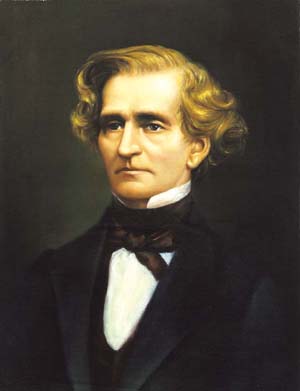 we’re referring to are Hector Berlioz, César Franck, and Olivier Messiaen. Two of them, Berlioz and Messaien, were French by birth; Franck was born in Liege, which is now in Belgium, but spent most of his adult life in Paris and eventually took French citizenship. Hector Berlioz was born on December 11th of 1803 in La Côte-Saint-André, a small town half way between Lyon and Grenoble. Berlioz is a unique figure in the history of European music. A Romantic composer, he didn’t have any musical predecessors, either in France or anywhere else, and didn’t leave any followers. During his lifetime, he wasn’t acknowledged as a musical talent in France and ended up mostly conducting (he was much better received in Germany and England). He wrote three operas: the first one, Benvenuto Cellini, had a terrible reception; his second, Les Troyens, was so long that it was never performed in France during his life; the third, Béatrice et Bénédict, was premiered in Germany and continued playing there for years, the first staging in Paris dates from 1890 – by then Berlioz had been dead for 21 years. These days Berlioz is recognized as one of the greatest composers of the 19th century. His symphonic masterpieces were acknowledged a long time ago, but even his operas, especially the astounding Les Troyens, are staged more often, despite all technical difficulties. Here’s the Overture to Berlioz’s Benvenuto Cellini, composed in 1858. Colin Davis conducts the BBC Symphony Orchestra.
César Franck was born December 10th of 1822. He studied at the Royal Conservatory of Liège and later went to the Paris Conservatory, where he studied the organ and composition. He became a fine organist and was hired as the organist at the newly-built St. Clotilde church in the 7th arrondissement, with a great organ by Cavaillé-Coll. Franck played there from 1858 till his death in 1890. While he composed most of his adult life, it was only after he became established as the professor at the Paris Conservatory in 1872 that he could pursue composition seriously. Probably his best-known work is the Violin Sonata, composed in 1886, when Franck was 68. It’s one of the most popular pieces in the violin repertoire with literally hundreds of available recordings. Here’s one of them, made in 1968 by David Oistrakh and Sviatoslav Richter.
Olivier Messiaen, born on December 10th of 1908, 110 years ago, was one of the most important composers of the 20th century. We’ve written about him many times, for example here and here, but he clearly deserves another full entry, which we’ll try to do next year. Vingt Regards sur l'enfant-Jésus is one of Messiaen best (and best known) pieces for the piano. It is a long suite consisting of 20 pieces (the performance usually takes about two hours). We already have a number of excerpts in the library; here are two more, no. 3, L'échange, and no. 4, Regard de la Vierge. Both are played by Pierre-Laurent Aimard.
Read more...Olivier Messiaen - Regard de la Vierge, from Vingt Regards sur l'enfant-Jésus
Pierre-Laurent Aimard (Piano)
Olivier Messiaen - L'échange, from Vingt Regards sur l'enfant-Jésus
Pierre-Laurent Aimard (Piano)
César Franck - Sonata for Violin and Piano in A Major, M. 8
Leonid Kogan (Viola)
Naum Walter (Piano)
Hector Berlioz - Benvenuto Cellini, Ouverture
BBC Symphony Orchestra (Orchestra)
Colin Davis (Conductor)
Ludwig van Beethoven (1770-1827) - Piano Sonata No.31, Op.110
JingCi Liu (Piano)