Aaron Alter - Dark Minuet (Lost, but not Forgotten) for Brass Quintet
Wayne J. du Maine (Trumpet)
Franz Hackl (Trumpet)
R. J. Kelley (Horn)
Mike Seltzer (Trombone)
Jonathan Greenberg (Trombone)
Handel 2019
February 18, 2019. Handel. February 23rd is the birthday of George Frideric Handel, one of the greatest composers of the first half of the 18th century. A couple years ago we posted an entry 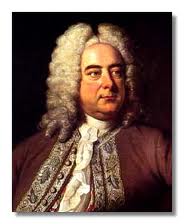 describing Handel’s move to London and his first years there, covering the period roughly between 1709 and 1719. In 1719 Handel was living in Cannons, a home of James Brydges, the Duke of Chandos, about 13 miles northwest of London’s center. The Duke, Handel’s patron, was a musician himself and maintained an orchestra of 24 players. Handel’s stay at Cannons was comfortable and productive: he composed, among other things, Chandos Anthems (eleven in total), and the first English oratorio, Esther. (Here is Chandos Anthem no. 11, "Let God Arise." It’s performed by The Sixteen, directed by Harry Christophers). In 1719 an opera company, called “Royal Academy of Music” was organized. The Academy was set up as a joint stock company; the original issue was oversubscribed, so many people wanted to get involved. The funding partners were members of the nobility, well-traveled and familiar with opera, often amateur musicians themselves. Their goal was to create a permanent home for Italian opera in London. Handel was tasked with finding the singers, for which he traveled to Germany rather than Italy, but the singers he engaged for the Academy were all Italians, the famous castrato Senesino among them. Upon returning to London Handel was appointed “Master of the Orchester with a Sallary.” The first opera season was short, though Handel produced a new opera, Radamisto; it premiered in April of 1720, the performance attended by King George I and the Prince of Wales, the future George II. Originally the role of Radamisto was sung by a soprano, but during the next season, in a revised version, it was Senestino in his first year in London. That season saw the premier of Handel’s Floridante, very successful and revived in the following seasons. Again, Senesino sung the title role. It’s interesting that the singers were considered much more important than composers and commanded much higher salaries (Senesino’s salary the first year at the Academy was above £2000, an enormous sum). Handel was known to quarrel with the singers often, even with his favorite Senesino: eventually they broke up and Senesino joined the rival Opera of the Nobility.
The first couple of seasons Handel’s standing was not as secure as it would seem, considering his position of music director: Giovanni Bononcini, an Italian composer, was a rival, maybe even more famous these first years. The following years saw the ascendancy of Handel at Bononcini’s expense. For the fourth season Handel wrote Ottone, which again featured Senesino in the title role, and also the famous Italian soprano Francesca Cuzzoni as Teofane, Ottone’s future wife. She would sing at the Academy for five more seasons, creating, among others, the role of Cleopatra in Giulio Cesare. (Here’s the aria Vieni, o figlio from Ottone, sung by Lorraine Hunt. Philharmonia Baroque Orchestra is conducted by Nicholas McGegan). The Royal Academy of Music lasted for nine years, through the 1728-29 season, collapsing under the weight of huge salaries paid to the lead singers. It reconstituted itself as New Academy a year later. During those years Handel created 13 operas; Giulio Cesare, being the most famous, but also such masterpieces as Rodelinda and Tamerlano. He also wrote several anthems for the coronation of George II (George I died unexpectedly on June 22nd of 1727), one of which, Zadok the Priest, has been sung at every coronation ceremony since that time. Handel became a British citizen in February of 1727; even before that he was made Composer of Music for His Majesty’s Chapel Royal and taught music to royal princesses. Even though the Academy was no more, things were looking good. Handel was famous, well to do, and only 44.
Read more...George Frideric Handel - Vieni, o figlio, from Ottone
Lorraine Hunt (Mezzo-soprano)
Philharmonia Baroque Orchestra (Orchestra)
Nicholas McGegan (Conductor)
George Frideric Handel - Chandos Anthem No.11 in B flat major, "Let God Arise"
The Sixteen (Ensemble)
Harry Christophers (Conductor)
Johann Sebastian Bach - Cello Suite No. 1 in G major BWV 1007
Brian Dempsey (Cello)
Praetorius and Cavalli, 2019
February 11, 2019. Praetorius and Cavalli. A prolific and talented German composer of the late Renaissance, Michael Praetorius was born on February 15th of 1571. We dedicated an entry 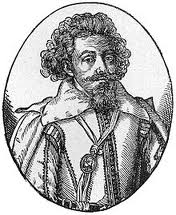 to him quite recently, so this time we’ll just play one of his pieces. Praetorius wrote more than 1000 sacred compositions and only one secular collection of French dances, which he called Terpsichore. Here’s one of them, La Bourrée. The unusual and very refreshingly sounding wind instrument you hear in this piece is called Rackett. Racketts come in four sizes, from soprano to great bass. Praetorius, who was not only a composer but also a musicologist, wrote about racketts in his book Syntagma Musicum: “In resonance racketts are quite soft, almost as if one were blowing through a comb. They have no particular grace when a whole consort of them is used together; but when viols da gamba are used with them, or when a single rackett is used together with other wind or stringed instruments and a harpsichord or the like, and is played by a good musician, it is indeed a lovely instrument. It is particularly pleasing and fine to hear in bass parts.”
 .jpg "Rackett") Hard to disagree, it is a lovely instrument indeed.
Hard to disagree, it is a lovely instrument indeed.
Francesco Cavalli was born Francesco Caletti on February 14th of 1602 in Crema, Lombardy. His first patron, the Venetian Governor’s name was Federico Cavalli. Cavalli heard Francesco sing in the local cathedral and convinced the boy’s family to let him take Francesco to Venice. Some years later, already a well-known composer, Francesco assumed the name of his first patron. In 1639 Cavalli won a competition to become the second organist at St. Mark’s; that same year he composed his first opera, Le nozze di Teti e di Peleo. Even though at the time operas had been played in private houses for about 40 years, it had just been two years since this art form became available to a broad paying public. Le nozze was staged at Teatro San Cassiano, Venice’s first public opera house, opened in 1637. During the following 10 years Cavalli wrote eight more operas, Giasone becoming one of the most popular in all of Italy. In the following years, Cavalli, together with his favorite librettist, Giovanni Faustini, worked in the newly established Sant' Apollinare theater, famous for its advanced stage machinery. Faustini died in 1661, and Cavalli moved to the Teatro Santi Giovanni e Paolo, which was managed by Marco Faustini, Giovanni’s brother. Santi Giovanni e Paolo was considered the most comfortable of all opera theaters in the city (by the end of the 17th century Venice had 10 of them). These years saw the creation of Egisto, Xerse and Erismena, which, together with Giasone, became the staples of the opera repertoire and were performed all over Italy, in cities large and small. In 1660 Cardinal Mazarin, the French Prime Minister (he was an Italian born Giulio Raimondo Mazzarino) invited Cavalli to Paris to compose an opera for the planned marriage of Louis XIV to Maria Theresa, daughter of the King of Spain. The visit, which lasted almost two years (the new Tuileries theater, where the opera was supposed to be staged, had not been completed, as promised) was not a happy affair.
Jean-Baptiste Lully schemed against his rival, and with the death of Mazarin in March of 1661 the influence of all things Italian had waned. Cavalli composed the opera Ercole amante (it was successfully staged in Chicago a couple years ago) but the temporary theater in which it was premiered had terrible acoustics. Plus, Lully came up with additional ballet numbers, making the performance way too long, but the dances was the only thing that got the King interested. Cavalli left France in May of 1662. Back in Venice, he was made the maestro di cappella of St. Mark’s in 1668 but continued composing operas: altogether, he wrote more than 40. Cavalli died in Venice on January 14th of 1676. Here’s the aria Delizie, contenti from his opera Giasone. The counter-tenor Christophe Dumaux is Giasone, Federico Maria Sardelli conducts the Symphony orchestra of Flemish opera Antwerp/Ghent.
Read more...Francesco Cavalli - Delizie, contenti, from Giasone
Christophe Dumaux (Countertenor)
Symphony orchestra of Flemish opera Antwerp/Ghent (Orchestra)
Federico Maria Sardelli (Conductor)
Michael Praetorius - La Bouree, from Terpsichore
Early Music Consort of London (Ensemble)
David Munrow (Conductor)
Johannes Brahms - Piano Quintet in f minor, Op 34
Shih-Kai Lin (Violin)
Bella Hristova (Violin)
Martha Strongin Katz (Viola)
Nicholas Canellakis (Cello)
Roman Rabinovich (Piano)
Frédéric Chopin - Grande Valse Brillante in E-flat Major, Op. 18
Myra Hess (Piano)