
Ariodante, Telemann 2019
March 11, 2019. Ariodante and Telemann. Just two weeks ago we celebrated Handel’s birthday, and a couple days ago we had a chance to listen to (and, unfortunately, watch) his masterpiece, the opera Ariodante, presented by the Lyric Opera of Chicago. At about 3 hours of 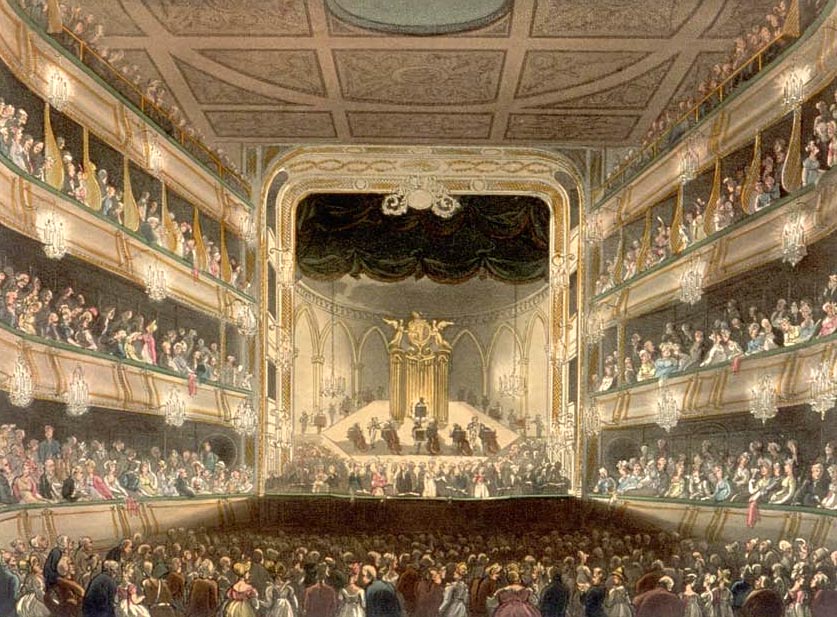 pure music (four hours with intermissions) it’s a bit long, but it was written when the public didn’t consider an opera performance a semi-religious event to be experienced in motionless silence – this attitude was acquired a century later – and mingled, talked, played cards and enjoyed themselves as much as they could. Were Handel to write it today, he’d probably cut about a quarter of it out, but even as is, with too many repeats, the music is absolutely gorgeous. The libretto is absurd, but most of the operas then (and since then) had silly storylines.. The characters, all with Italian names and singing in Italian, are placed somewhere in Scotland where two lovers, a prince and king’s daughter, are almost driven to death and madness by a villainous duke, but of course everything ends well: the duke is punished, and the lover happily marry. The premier took place at the Covent Garden; it was the first opera ever staged in the newly-built theater. The role of protagonist, prince Ariodante, was sung by the famous castrato Carestini, who replaced Senesino, for many years Handel’s favorite, after they parted ways and Senesino joined the competing Opera of the Nobility. The bad Duke Polinesso was sung by a contralto, Maria Caterina Negri. At the Lyric, the genders were reversed: Ariodante was sung by a mezzo, while Polinesso – by a countertenor. Both were wonderful. Alice Coote, a prominent interpreter of Handel’s music, needed some time to warm up, but her famous Act II aria, Scherza infida, was superb (here it is in the performance by the countertenor David Daniels, which probably sounds closer to what Handel had in mind). Iestyn Davies was wonderful as Polinesso: his voice is not very big, but it is very focused, projects well and has a remarkable agility. The rest of the cast was excellent.
Unfortunately, the production, shared by the Lyric with the Festival d'Aix-en-Provence, the Canadian Opera Company, and Dutch National Opera in Amsterdam, was unattractive, silly and in parts, offensive. Placed into a religion-obsessed 1960s Scottish village, it turns the story into a morality play with Polinesso as a rapist-priest and Ginerva, the princess, a victim who rebels, quite awkwardly, at the very end of the opera. Visually boring, its only interesting feature was skillful puppetry which replaced Handel’s ballet numbers. In the absurd finale, while Handel’s glorious music celebrates the marriage of Ariodante and Ginerva, the princess slips away unnoticed and hitches a ride, presumably into a better future. But in the end, this production was just an unfortunate distraction from an otherwise hugely rewarding musical experience.
Georg Philipp Telemann was born on March 14th of 1681. Four years older than Handel (and Bach), he was friends with both. Telemann first met Handel in Halle in 1701 (Handel was only 16 but had already composed several Church cantatas, now lost). In his later years Telemann took up gardening, then in vogue, and received exotic plants from Handel. While in Hamburg, Telemann conducted several of Handel’s operas and even wrote additional music for some of them. And, like Handel, he wrote a piece called Water Music. Not as famous as Handel’s, it still is a marvelous piece. Here it’s performed by the Zefiro Baroque Orchestra.
Read more...George Frideric Handel - Scherza infida, from Ariodante
David Daniels (Countertenor)
Orchestra of the Age of Enlightenment (Orchestra)
Roger Norrington (Conductor)
Loreen Martilia - Overcoming SAD 2.0
Loreen Martilia (Piano)
Nine+1, 2019
March 4, 2019. Plethora. Nine composers and a conductor were born this week. The farthest removed from us, but still sounding unorthodox and fresh is Carlo Gesualdo, a great composer, a 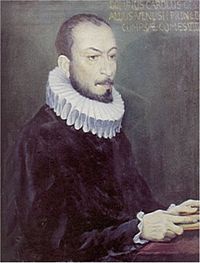 nobleman and a murderer. Prince of Venosa, he was born in that southern Italian city on March 8th of 1566 (you can read more about this fascinating person here). His music is quite remarkable in its use of chromaticism, as you can hear in this recording of Itene, o miei sospiri, a madrigal from Book V, published in 1611. It’s performed by the Italian ensemble Delitiae Musicae under the direction of Marco Longhini.
Antonio Vivaldi was born more than 100 years later, on March 4th of 1678. While Gesualdo’s music bridges the late Renaissance with the early Baroque, Vivaldi was writing when the Italian Baroque was at its peak. We know him best for his concertos (the Four Seasons being by far the most popular), but he also wrote church music, as, for example, this Canta in prato, from Introduzione al Dixit. The Scottish soprano Margaret Marshall and the English Chamber Orchestra are conducted by Vittorio Negri.
In addition to the two above, five more composers were born in Europe: Carl Philipp Emanuel Bach on March 8th of 1714, Josef Mysliveček – on March 9th of 1737, Pablo de Sarasate – on March 10th of 1844, Maurice Ravel – on March 7th of 1875, and Arthur Honegger – on March 10th of 1892. CPE Bach and Mysliveček were fine representatives of the early Classical period; Sarasate was a Romantic, Ravel – an Impressionist, and Honegger – a member of Les Six, who were both influenced by and rejected Impressionism. By the end of the 19th century European classical music tradition spread over the American continents, and two of our composers were born there: Heitor Villa-Lobos, in Brazil, on March 5th of 1887, and Samuel Barber, in the US, on March 9th of 1910.
From Gesualdo to Barber – that’s a wonderful arc, and we could play hours of great music by these composers, but we’d like to celebrate a different milestone: Bernard Haitink will turn 90 today, March 4th. We had the pleasure of hearing him conduct the Chicago Symphony on many occasions; his interpretations of Mahler are superb, only Pierre Boulez (whose approach was very differen) could reach the same level of musicianship with his award-winning version of the Ninth Symphony. Haitink was born in Amsterdam. As a child he studied the violin; he joined the Netherlands Radio Philharmonic Orchestra as a violinist. Soon after he started conducting with that orchestra and at the age of 27 became its principal conductor. In 1956 he got a chance to conduct the great Concertgebouw Orchestra, when Carlo Maria Giulini became indisposed and Haitink was asked to step in (Cherubini's Requiem was in the program). The concert went very well and soon Haitink was made a guest conductor. In 1961 he became Concertgebouw’s youngest ever principal conductor, a position he shared for two years with the famous German, Eugen Jochum; in 1963 Jochum left and Haitink remained as the only principal conductor. While at the Concertgebouw, in 1967, he became involved with the London Philharmonic Orchestra (there, he was also the principal conductor); he worked and toured with both. Haitink was a prolific opera conductor: in 1977 he became the musical director of the Glyndebourne Festival; he also worked at the Metropolitan Opera and the Covent Garden. With the Bavarian Radio Symphony Orchestra, he video-recorded the full Ring cycle. In 2006 Haitink was made the principal conductor of the Chicago Symphony and later was offered the position of the music director but declined citing his age. Here’s the Finale, of Mahler’s Symphony no. 6 (Allegro moderato - Allegro energico). The Chicago Symphony Orchestra is conducted by Bernard Haitink.
Read more...Gustav Mahler - Symphony no. 6, 4th movement
Chicago Symphony Orchestra (Orchestra)
Bernard Haitink (Conductor)
Antonio Vivaldi - Canta in Prato, from Introduzione al Dixit
Margaret Marshall (Soprano)
English Chamber Orchestra (Orchestra)
Vittorio Negri (Conductor)
Carlo Gesualdo - Itene, o miei sospiri
Delitiae Musicae (Ensemble)
Marco Longhini (Conductor)
Chopin 2019
February 25, 2019. Chopin. Frédéric Chopin was born on March 1st of 1810. Here’s a brief sketch of Chopin’s first 20 years. He was born in Żelazowa Wola, not far from Warsaw, in what then was the short-lived Duchy of Warsaw, created by Napoleon three years earlier (the Duchy 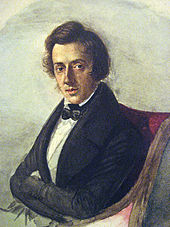 would disappear five years later, following Napoleon’s defeat at Waterloo, with that part of Poland reverting back to Russia). His father, Nicolas Chopin, was French, his mother, Tekla Justyna Krzyżanowska, – Polish. The first 20 years Frédéric lived in Poland, mostly in Warsaw, where his family moved when Nicolas received an appointment at the newly-established Warsaw Lyceum. Frédéric was a child prodigy (“Second Mozart,” the local press called him), both as a pianist and as a composer: a lithograph of a polonaise he wrote at the age of eight, survives to this day. He studied composition and the piano with the composer Józef Elsner, then entered the Warsaw Conservatory, where he also studied the organ. The organ played its role, even though Chopin never composed for this instrument: at the time, several attempts were made to combine the organ and the piano; one of these hybrids was called the “aeolopantaleon.” Young Chopin played this unusual instrument at a concert attended by Tsar Alexander I of Russia; the Tsar was very impressed and presented the 15-year-old Frédéric with a diamond ring. Even though the Chopins were well established, Frédéric felt stifled: compared to the European capitals or St.Petersburg, Warsaw was musically quite provincial. In November of 1830 he went on a European tour; the first stop was in Vienna. One week after his arrival he had learned of the Warsaw uprising against the Russians. Frédéric stayed in Vienna for half a year; in July of 1831 he left for Paris which would become his home for the rest of his life: he was never to see Poland again. By then, Chopin’s reputation as a brilliant pianist had been firmly established, but his creative genius was to flourish in France.
Two prominent 20th century pianists were born this week; both (obviously) played Chopin. Dame Myra Hess was born (likely) in London on this day in 1890. Already prominent as a keen interpreter of the music of Bach, Beethoven and Mozart, she became famous for establishing lunchtime concerts at the National Gallery during the War. Concerts took place Monday through Friday, no matter what. When London was being bombed by the Germans, the concerts were moved to a different, more secure, room. Almost 2000 concerts were presented, and Myra Hess played 150 of them. The Chicago-based free Dame Myra Hess concerts, which take place every Wednesday at 12:15 every week of the year, where established by the International Music Foundation in honor of that great British pianist. Here’s Myra Hess playing The Grande valse brillante in E-flat major, Op. 18.
Lazar Berman was born on February 26th of 1930 into a Jewish family in Leningrad. A child prodigy, he started playing piano at the age of two, and at four took part in a Leningrad “young talents” competition. Later, he studied with Alexander Goldenweiser at the Moscow Conservatory. In 1956 Berman won the Queen Elizabeth competition in Brussels and the Franz Liszt competition in Budapest. Berman was persecuted by the Soviet musical authorities more than almost any artist: from 1959 till 1971 he was prohibited from playing outside of the country because he married a French girl (the marriage was very brief), and then, in 1980, he was banned again, when a “wrong” book was found in his luggage. Berman was a phenomenal virtuoso (his Liszt recordings are stupendous), but partly for that reason the purely musical qualities of his playing were overlooked. Here is Chopin’s Etude in A minor, Op 25, No. 11 in a live recording made in 1950.
Read more...Frédéric Chopin - Etude Op. 25, No. 11 in a minor
Lazar Berman (Piano)
Georg Philipp Telemann - Water Music
Zefiro Baroque Orchestra (Orchestra)
Alfredo Bernardini (Conductor)