
Franz Joseph Haydn - Piano sonata no.47 in B minor, Hob.XVI:32
Grigory Sokolov (Piano)
Ludwig van Beethoven - Piano Sonata No. 25 in G major, Op. 79
Artur Schnabel (Piano)
Ludwig van Beethoven - Piano Sonata Op 10 N° 3
Davide Polovineo (Piano)
Ludwig van Beethoven - Piano Sonata Op. 10 N°3 (1° Presto)
Davide Polovineo (Piano)
Tartini, Corelli 2019
April 8, 2019. Giuseppe Tartini was born on this day in 1692 in Pirano, Republic of Venice (now Piran, Slovenia). He studied at the university of Padua, where it seems he spent most of his time  on fencing. In 1710, he married one Elisabetta Premazore, a woman two years his elder who, unfortunately for Tartini, was a favorite of the local bishop, Cardinal Giorgio Cornaro. The Cardinal accused Tartini of abducting Elisabetta, and, to avoid prosecution, Tartini fled to the monastery of San Francesco in Assisi. There he started playing the violin, amazingly late for a future virtuoso. He left the monastery around 1714, played for a while with the Ancona opera orchestra, and heard the famous Francesco Veracini perform in Venice. That episode affected him greatly, as he felt that his playing was inferior. He spent the next two years practicing, greatly improving his skills. In 1721 he was made Maestro di Cappella at the famous Basilica di Sant'Antonio in Padua. In 1723, in a midst of another scandal (Tartini was accused of fathering an illegitimate child) he left for Prague, where he stayed for three years under the auspices of the Kinskys, a noble Czech family. He returned to Padua in 1726 and organized a violin school, probably the most famous one of its time. Students came to the “school of the nations” from all of Europe. Around the same time Tartini published his first volume of compositions containing violin sonatas and concertos. He continued to compose through the years, although later in his life he concentrated more on theoretical works. He continued to live in Padua and died there on February 26th of 1770.
Tartini owned several Stradivari violins, one of which he passed on to his student Salvini, who in turn gave it to the Polish virtuoso violinist Karol Lipiński. As the story goes, sometime around 1817, in Milan, the young Lipiński played for Salvini. After the performance was over, Salvini asked for Lipiński’s violin and, to Lipiński’s horror, smashed it to pieces. He then handed the dumbstruck Lipiński a different violin and said that it is “a gift from me, and, simultaneously, as a commemoration of Tartini.” That was one of Tartini’s Stradivari, one of the best violins the master ever made; it is now known as the “Lipinski Stradivari.” The story of the violin almost ended in tragedy: some time ago, an anonymous donor lent it to Frank Almond, the concertmaster of the Milwaukee Symphony orchestra; on January 27th of 2014, after a concert, Almond was attacked by a stun gun and the violin was stolen. An international recovery effort was immediately organized, and one week later, the suspects, a man and a woman, were arrested. The violin was recovered three days later.
Here’s Tartini’s best known piece, the famous Devil’s Trills sonata. Itzhak Perlman is at his best (in 1977); Samuel Sanders is on the piano.
One of the greatest tenors of the 20th century, Franco Corelli, was also born on this day in 1921 in Ancona, where Tartini played in an orchestra after leaving the Assisi monastery. Corelli had the voice of incomparable beauty, remarkable power and clarity. Even though Corelli had several voice teachers, he mostly taught himself, imitating great singers of the past. He made his operatic debut in 1951 in Spoleto, singing José in Carmen. From 1954 to 1965 he sang at La Scala. In 1957 he made a sensational debut in the Covent Garden as Cavaradossi. In 1961 he appeared at the Met for the first time, singing Manrico in Il Trovatore (Leonora was Leontine Price). For the following decade, he sung in New York every year, appearing 282 times in 18 different roles. Here is the thrilling aria A te, o cara from the first act of Bellini’s I puritani. Franco Ferraris conducts the Philharmonia Orchestra.
Read more...Vincenzo Bellini - A te, o cara, from I puritani
Franco Corelli (Tenor)
Philharmonia Orchestra (Orchestra)
Franco Ferraris (Conductor)
Giuseppe Tartini - Violin Sonata in G minor "Devil’s Trill"
Itzhak Perlman (Violin)
Samuel Sanders (Piano)
Three Pianists, 2019
April 1, 2019. Three pianists were born on this day. We usually talk about Sergei Rachmaninov as a composer, but he was also one of the greatest pianists of the 20th century. 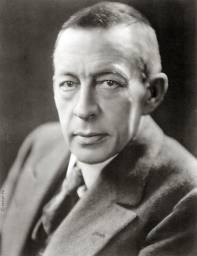 Josef Hofmann, himself a superlative pianist to whom Rachmaninov dedicated his Third Piano Concerto, joked that he would gladly swap his fingers for Rachmaninov’s and would add his toes to boot (there’s some truth to the joke: Hofmann’s hands were of average size, while Rachmaninov had huge hands that allowed him to easily play the most difficult chords). Contemporaries compared Rachmaninov to Liszt and Anton Rubinstein. He was a supreme virtuoso who never showed off, being concerned with the structure and the overall line of a composition. Rachmaninov was an expressive pianist with a beautiful sound (Arthur Rubinstein raved about his tone), and his rhythm was freer than what we’re used to these days, but when we listen to his recordings, the playing sounds felicitous to the composer’s intent. Rachmaninov often played his own compositions, both his numerous piano miniatures and concertos. Rachmaninov made many recordings, the earliest – in 1919, for Edison Records. He also made a number of recording rolls, many of them for the American Piano Company (Ampico). Rachmaninov, initially skeptical of the quality of the recordings, said, after listening to a reproduced piano roll: "Gentlemen – I, Sergei Rachmaninov, have just heard myself play!" Here is an example, Rachmaninov “performing” his own Prelude in G minor, op. 23, no. 5. The piano roll was digitized and then played on a Bösendorfer 290 SE Reproducing Piano.
A very different pianist, Dinu Lipatti, was born on this day in 1917 in Bucharest. He studied at the local conservatory where he was awarded prizes as a pianist and composer. In 1934 he participated in the Vienna piano competition and was awarded the second prize. Alfred Cortot, who felt that Lipatti deserved to win, resigned from the jury and invited the young pianist to study with him in Paris. Lipatti joined Cortot’s piano class and also studied the composition with Paul Dukas and Nadia Boulanger. Lipatti’s performance career didn’t start till 1939 but soon after was interrupted with the beginning of WWII.
In 1943, with the help of the Swiss pianist Edwin Fischer, Lipatti emigrated to Switzerland and joined the conservatory in Geneva. It was around that time that his illness showed itself for the first time. It took doctors four years to diagnose it as Hodgkin's disease. (By an incredibly tragic coincidence, around the same time another talented pianist, Rosa Tamarkina, was also diagnosed with the same disease. Both continued to perform, even as their health declined. Both gave their last concerts and died in 1950, Lipatti at the age of 33, Tamarkina – even younger, just 30.) In 1946 Lipatti signed a contract with Columbia Records and made several recordings at his home in Geneva. During his last concert, given in September 1950 in Besançon he played Bach’s First Partita, Mozart’s A minor Sonata, two Schubert impromptus and the complete Chopin waltzes, except no.2, in A Flat, op. 34, no. 1, which he was too exhausted to play. Instead he played Myra Hess’s transcription of Bach’s Jesu, joy of man’s desiring as a last-minute substitution. Here’s Jesu in a recording made in 1947 in London. And here is Chopin’s Waltz in A Flat, op. 34, no. 2, the one he was too tired to perform during his last concert.
We’d like to note that today is the 75th anniversary of a wonderful Soviet-Russian-Ukrainian-Jewish-German pianist, Vladimir Krainev. He studied with Heinrich Neuhaus, won the Tchaikovsky competition in 1970, performed all over the world, and created an international foundation in support of young pianists. Krainev died in Hannover, Germany, on April 29th of 2011.
Read more...Frédéric Chopin - Waltz op. 34, no. 2
Dinu Lipatti (Piano)
Johann Sebastian Bach - English Suite No. 1 in A Major, BWV 806
Murray Perahia (Piano)