
Marcello and Abbado, 2019
June 24, 2019. Two Italians, Marcello and Abbado. Benedetto Marcello was born in Venice, on June 24th (but maybe onJuly 24th, or, according to other sources, on July 31st or August 1st of 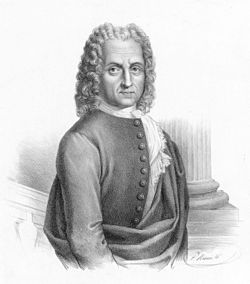 1686) in Venice. Born into a noble family, he was the younger brother of Alessandro Marcello, also a composer (read more here about the brothers). Benedetto occupied major administrative positions within the Venetian bureaucracy and wasn’t considered a professional composer; he was casual in numbering and dating his compositions, so often the dates may be derived only circumstantially. Marcello wrote a considerable number of sacred works, including nine masses (one of them a Funeral mass, or Requiem). He also wrote what he called “parafrasi” (paraphrases) on 25 psalms, published around 1724-1726 under the heading of L’Estro poetico-armonico, or Poetic and harmonic inspirations. Here is Psalm X, in the performance by the ensemble Cantus Cölln, Konrad Junghänel conducting. It’s a delightful example of late Italian baroque.
Claudio Abbado would’ve been 86 this Wednesday: he was born in Milan on June 26th of 1933. 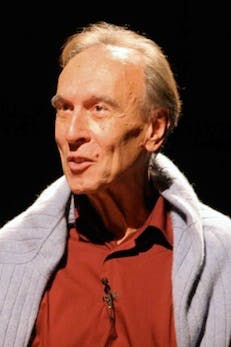 We celebrated him last year with the first movement of Mahler’s Symphony no. 4. Abbado was indeed a superb Mahlerian (he recorded his symphonies several times), but his repertory was vast (in 2013 Deutsche Grammophon released their Claudio Abbado: The Symphony Edition, which consisted of 41 CDs) and there were very few things that he hadn’t done at the highest level. Here, for example, Mozart’s Symphony no. 35 (“Haffner”), recorded in 2008. Abbado said about Mozart that he had only approached him “cautiously, once in a while,” but his interpretation of the symphony is brilliant. In this recording Abbado conducts Orchestra Mozart, Bologna, which he helped to found in 2004; that was after he was diagnosed with stomach cancer and had to leave the Berlin Philharmonic. Abbado served as the artistic director of the orchestra for many years. This is a live recording made in 2008.
Wolfgang Amadeus Mozart - Symphony no. 35, "Haffner"
Orchestra Mozart (Orchestra)
Claudio Abbado (Conductor)
Benedetto Marcello - Salmo X
Cantus Cölln (Ensemble)
Konrad Junghänel (Conductor)
Johann Stamitz, 2019
June 17, 2019. Gounod, Stavinsky and more. Charles Gounod was born on this day in 1818. Last year we celebrated his 200th birthday, so this time we’ll skip his anniversary. We’ll also skip Stravinsky who is linked with Gounod the same unfortunate way Tchaikovsky is with Brahms: both were born on June 17th, in 1882. Stravinsky is one of the most significant composers of the 20th century, and we write about him practically every year (see for example, here). Of Johann 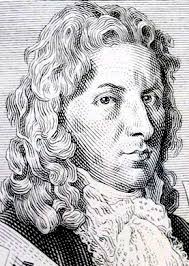 Stamitz we do not. Stamitz, a German composer of Czech descent, and a leading figure of the Mannheim School, was born on June 19th of 1717. He lived during that musically uncompelling period when Baroque was more or less over but Classical had not yet developed. Historically, his birthday follows that of Bach’s two older sons: Wilhelm Friedemann was born on November 22nd of 1710 and Carl Philipp Emanuel – on March 8, 1714. Not that they weren’t talented, all three clearly were; it just seems that there are times that are more fecund or just luckier, and others that aren’t. Gluck was also born in 1714, but Gluck doesn’t seem to belong to any period. Here’s one of Stamitz’s last symphonies, op.11 no. 3 in E flat Major, composed in 1754 or 1755 (Stamitz died on March 27th of 1757). It’s nice, dynamics are vivid, it requires a virtuosic orchestra to play (the Mannheim court orchestra was one of the finest in Europe). But listen to Haydn’s early symphony, Le Matin, no. 6, composed in 1761 – we’re in a different world! It’s so much more sophisticated, melodically, tonally, the way it develops, and just as a whole compelling piece of music, it’s hard to compare them. Of course, it’s a matter of talent, but also of that something undefinable, something in the air, the esthetics that have congealed in a short period and allowed the geniuses of Haydn and Mozart to flourish. The Stamitz is performed by the New Zealand Chamber Orchestra under the direction of Donald Armstrong; the Haydn – by the Academy of Ancient Music, Christopher Hogwood conducting.
A very interesting conductor, now mostly forgotten, Hermann Scherchen was born on June 21st of 1891 in Berlin. He’s known as a pioneer of 20th century music; his recordings of Schoenberg, Berg, Webern and composers of the younger generation, such as Xenakis and Nono are highly valued. In 1911 Scherchen helped Schoenberg with the staging of Pierrot lunaire and went on to perform it in several German cities in his conducting debut. During WWI he happened to be in Riga, conducting the local symphony orchestra and was detained by the Russian forces. Returning to Berlin after the end of the war, he founded several ensembles and a journal, Melos. In 1922 he followed Wilhelm Furtwängler as the director ofthe Frankfurt Museumskonzerte (Frankfurt Museum Society, whose orchestra was one of the best in Germany). The German Wiki writes: “the museum entrusted its concerts to the young conductor Hermann Scherchen , a brilliant musician who, however, disturbed the audience with his commitment to the still unfamiliar New Music of Arnold Schönberg , Igor Stravinsky and Paul Hindemith.” We love the “disturbed” part. Scherchen continued disturbing audiences throughout much of his career: he premiered parts of Wozzeck in 1924, after WWII conducted master classes in Darmstadt and in 1951 was the first to presents excerpts from Scoenberg’s opera Moses und Aron. He also had a broad classical repertoire; his orchestral transcription of Bach's Art of Fugue became well-known. Scherchen opposed the Nazis and left Germany soon after the Nazis came to power, in 1933. He had an energetic private life and, as the English Wiki states “He died in Florence [on June 12th of 1966], survived by a number of children, from five wives and other women.” Here’s the Finale, Adagio. Sehr langsam und noch zurückhaltend of Mahler’s Symphony no. 9. Hermann Scherchen conducts the Vienna Symphony Orchestra (1950).
Read more...Gustav Mahler - Adagio, from Symphony no. 9
Wiener Symphoniker (Orchestra)
Hermann Scherchen (Conductor)
Franz Joseph Haydn - Symphony no. 6, Le Matin
The Academy of Ancient Music (Ensemble)
Christopher Hogwood (Conductor)
Johann Stamitz - Symphony in E Flat Major Op. 11 No. 3
New Zealand Chamber Orchestra (Orchestra)
Donald Armstrong (Conductor)
Aaron Alter - Piano Sonata (inspired by Beethoven)
Susan Merdinger (Piano)
Velázquez-Dempsey - Besame Mucho
Brian Dempsey (Cello)
Frédéric Chopin - Nocturne in C Minor, Op. 48, No. 1
Brian Lam (Piano)