
Crans-Montana Classics
02/24/2019 19:30, Crans Montana
Soloists of Menuhin Academy with Maxim Vengerov
02/17/2019 19:30, Opera Garnier
Russian festival, 2019
January 14, 2019. Russian festival. Three Russian composers were born this week, all in the 19th century. None of them rose to the level of “greatness,” but all were individually interesting and significant in the history of the Russian music. The oldest, César Cui, was born on January 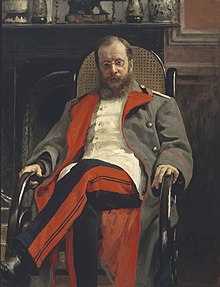 18th of 1835. His father was an officer in Napoleon’s army, stayed in Russia after the defeat and married a Lithuanian. César was born in Vilnius. He studied engineering in St.Petersburg and eventually became a noted expert in military fortifications. He had studied music since childhood but never professionally and became serious about it only after meeting Balakirev in St.-Petersburg in 1856. Through Balakirev, Cui became friends with the rest of the “Mighty Five,” Borodin, Mussorgsky and Rimsky-Korsakov. It’s interesting to note this moment in the development of Russian classical music. It had a rather precise beginning, in 1836, when Glinka’s opera A Life for the Tzar was premiered. Of course, the Russian elite was familiar with the European music through travel and local performances by Western musicians, but Russian music composed prior to that time was Italianate and not very original. Thus we can say that in 1856, when the Mighty Five came together, Russian music was just 20 years old. Cui was probably the least interesting of the group, but he wrote several operas, a number of orchestral pieces (though no symphonies), some chamber music and many art songs. Here’s one of Cui’s orchestral pieces, Tarantella. Ondrej Lenárd leads the Slovak State Symphony Orchestra.
Vasily Kalinnikov, another Russian whose music is not well known in the West, was born on January 13th of 1966. Born in the Oryol province, he studied in a seminary where he also took music lessons. He attended the preparatory classes at the Moscow conservatory but couldn’t afford to study there full time. A music critic mentioned Kalinnikov to Tchaikovsky, who recommended that Maly Theater hires him as conductor; that position provided Kalinnikov with a steady income. Kalinnikov worked in the style broadly following The Five and Tchaikovsky’s. His First Symphony is regularly performed both in Russia and the West. In 1893 Kalinnikov contracted tuberculosis and moved to Crimea, where the climate was better; and continued to compose but died two days shy of his 35th birthday. Kalinnikov wrote some interesting church music. Here’s his Cherubic Hymn performed by the choir of Moscow Patriarchy under the direction of Hieromonk Amvrosiy.
Alexander Tcherepnin was born on January 20th of 1899 in St.Petersburg. His father, also a composer, was a pupil of Rimsky-Korsakov; Lyadov, Cui, Stravinsky and Prokofiev were friends of the family. Tcherepnin composed from an early age; by the time of the Revolution of 1917, when his family fled St.Petersburg to Tbilisi, Georgia, he had written about 200 small-scale pieces. In 1921 the family moved to Paris where Tcherepnin lived till 1949, when he moved to Chicago to teach at DePaul University. He became a US citizen in 1958. Techerepnin retired in 1964 and moved to New York. He died in Paris on September 29th of 1977 of a heart attack. His early compositions were influenced by Prokofiev, he later wrote many pieces in pentatonic scale. Here’s his Cello sonata no. 1 from 1929. The cellist is Alexander Ivashkin with Geoffrey Tozer on the piano.
And speaking of Russia, Mischa Elman, one of the most prominent violinists of the 20th century, was born on January 20th of 1891 in Talnoe, a mostly Jewish town in central Ukraine (then part of the Russian empire).
Read more...Alexander Tcherepnin - Cello Sonata No. 1, Op. 29
Alexander Ivashkin (Cello)
Geoffrey Tozer (Piano)
Vasily Kalinnikov - Cherubic Hymn
Choir of Moscow Patriarchy (Chorale)
Hieromonk Amvrosiy (Conductor)
César Cui - Tarantella for Orchestra
Slovak State Symphony Orchestra (Orchestra)
Ondrej Lenárd (Conductor)
David Joseph Stith - Missa pro defunctis
Striped Gazelle (Organ)
Chelsee Sandaker (Soprano)
Adam Kinsey (Tenor)
Aaron Alter - Lo Lanu HaShem (Psalm 115) by Aaron Alter for women's chorus, flute, harp, two horns, double-bass and tambourine
New Mexico Bach Society Chorale (Chorale)
Santa Fe Women's Ensemble (Chorale)
Linda Marianiello (Flute)
Naomi Alter (Harp)
Franz Vote (Conductor)
Poulenc and two string masters, 2019
January 7, 2019. Poulenc and two string masters. One of the most interesting French composers of the 20th century, Francis Poulenc was born on this day in 1899. Poulenc’s also one 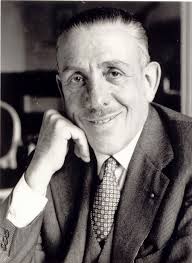 of the more popular composers on our site (there are about 90 of his recording in our library) and we’ve written about him a number of times (here is an entry from a couple of years ago). To celebrate Poulenc’s 120th birthday, here is his longest (about 23 minutes) piano piece, a suite called Les soirées de Nazelles. Nazelles is a small town on the Loire river not far from Tours where Poulenc vacationed in the 1930s. The suite consists of a Préambule, eight variations, Cadence and Final. It’s performed by the French pianist Pascal Rogé.
Two masters of string instruments, both Jewish and both born in what used to be the Russian Empire and the Soviet Union, were born this week: Nathan Milstein and Daniil Shafran. Milstein, one of the greatest violinists of the 20th century, was born in Odessa on January 13th of 1904. He studied with the best teachers: first, with Pyotr Stolyarsky in Odessa, then with Leopold Auer at the St.-Petersburg conservatory and later – with Eugène Ysaÿe in Belgium. In 1921 he met Vladimir Horovitz, three months his elder and already famous, and they became good friends. In 1925 they went on a concert tour of Western Europe and decided to stay abroad. Milstein performed in the US for the first time in 1929 and settled in the country thereafter.
As the musicologist Boris Schwartz writes, Milstein was probably the least Russian of the talented Russian violinists who emigrated to the West at that time (Jascha Heifetz, Efrem Zimbalist, and Mischa Elman among them) because “his violinistic instincts were so controlled by intellect” (one may think that Heifetz was at least as intellectual). Milstein’s technique was phenomenal, but he never showed it off. He played well into his 80s: his last recording was of a Stockholm concert in 1986, when Milstein was 83. He died in London on December 21st of 1992. Here’s the 1959 recording of Vivaldi Violin Sonata No. 2 in A major, Op. 2, RV 31. Nathan Milstein is accompanied by the pianist Leon Pommers.
The remarkable Soviet cellist Daniil Shafran was also born on January 13th but 19 years after Milstein, in 1923. By then the Russian Empire was no more, it was the Soviet Union in the making and St.Petersburg held the name Petrograd, soon to be renamed yet again into Leningrad – which was Shafran’s city of birth. His father was the principal cellist of the Leningrad Symphony Orchestra and Daniil’s first teacher. Later Shafran studied at the Leningrad conservatory. As different as the fates of our two musicians are, there is a musical link between Shafran and Milstein: at the conservatory, Shafran studied with Alexander Shtrimer, who studied quartet playing in the class of Leopold Auer, Milstein’s teacher. At the age of 14, Daniil won the All-Union Competition of Violinists and Cellists. In 1949 he shared with Mstislav Rostropovich the first prize in Budapest, at the World Youth Festival competition. One year later, it happened again: Shafran and Rostropovich shared the first prize, this time in Prague at the Hanuš Wihan international competition (Hanuš Wihan, b. 1855 d. 1920, was a Czech cellist, considered one of the greatest of his time). For many years after, Shafran and Rostropovich were considered the top Soviet cellists, even though Rastropovich had a much bigger and more famous international career (Shafran also played in the West: he made his US debut in 1960 and played in the UK in 1964). Shafran had a very broad repertory, from Bach, Beethoven and Brahms to Debussy and composers of the 20th century, especially Prokofiev and Shostakovich. Here is Bach’s Cello Suite no. 1 in G major, BWV 1007. It was recorded in 1970.
Read more... « first ‹ previous … 161 162 163 164 165 166 167 168 169 … next › last »
Wolfgang Amadeus Mozart - Symphony No. 35
The Academy Of St. Martin-in-the-Fields (Orchestra)
Iona Brown (Conductor)