Chicago Center for Contemporary Composition, 2018
October 1, 2018. CCCC. It’s easy to remember and, if you’re interested in contemporary music, very much worth checking out. CCCC stands for Chicago Center for Contemporary Composition. The recently established organization will present its inaugural season starting with  a concert on October 13th by Yarn/Wire performing music by the Japanese composer Misato Mochizuki, Enno Poppe, a German composer and conductor, and two young Chicagoans. Like most of the season’s concerts it will take place at the University of Chicago’s Logan Center for the Arts, 915 E 60th Street.
The UChicago has a long tradition of presenting new music, beginning with the Contemporary Chamber Players under Ralph Shapey in 1964 and continuing as Contempo in 2002 under Shulamit Ran and in 2015 under Marta Ptaszyńska. CCCC is led by one of the most interesting contemporary American composers Augusta Read Thomas (here, for example, is her Angel Musings, performed by the Orion Ensemble, and here – Aureole, performed by the DePaul 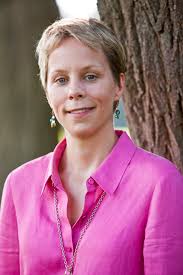 University Symphony, Cliff Colnot conducting). A key component of the Center’s performance series is the newly formed Grossman Ensemble which comprises 13 leading contemporary music specialists. Even the selection of the instruments comprising the ensemble is unusual: a flute,oboe, clarinet, saxophone, horn, two sets of percussion, harp, piano plus the Grammy-nominated Spektral Quartet. The ensemble is co-directed by Ms. Thomas and two other young composers, Anthony Cheung, and Sam Pluta, both from the University’s Music department.
Over the course of the season, the Grossman Ensemble will participate in three performances at the Logan Center for the Arts, all with a focus on the process of creating new work. Eight rehearsals will lead up to each performance, enabling composers to write, workshop, and review new works in close collaboration with the ensemble. The public will be invited to attend an open rehearsal before each concert, allowing them unprecedented access to the creative process. In this inaugural season, the Grossman ensemble will workshop and perform 12 world premieres by University of Chicago faculty, students, and guest composers in the concert season.
In addition to the Grossman Ensemble and Yarn/Wire, Tyshawn Sorey, a composer and performer working at the intersection of classical and jazz music, will play with his trio. And on February 5th of 2019 nine UChicago composers will have a unique occasion to be heard in a performance by the Civic Orchestra of Chicago, a training orchestra for the Chicago Symphony: all of them were asked to create new works to be premiered by this outstanding professional ensemble.
Seven more established composers (“established” being a relative term for a contemporary classical composer) have been commissioned to write new works. They include Steve Lehman, who writes jazz and experimental music (his most recent album was called the #1 Jazz Album of the year by NPR Music and the Los Angeles Times); David Rakowski, a two-time Pulitzer Prize finalist and recipient of many international prizes; Carlos Sanchez-Gutierrez, also a multiple prize-winner; composer and soprano Kate Soper, a Pulitzer Prize finalist whose works have been commissioned by many America orchestras; Chen Yi, known for blending Chinese and Western traditions in her music; and Shulamit Ran (here is her For an Actor: Monologue for Clarinet in a virtuosic performance by Alexander Fiterstein (Clarinet).
We strongly encourage our listeners to give this wonderful undertaking a try.
Read more...Augusta Read Thomas - Aureole
DePaul University Symphony (Orchestra)
Cliff Colnot (Conductor)
Gelnn Gould and more. 2-18
September 24, 2018. On composers and performers. Four composers were born this week, three of them active in the 20th century and one in the 18th. The 20th century composers are: Andrzej Panufnik, a Pole born on this day in 1914; the great Dmitry Shostakovich, born the 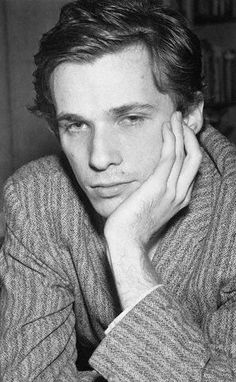 following day, September 25th, in 1906; and George Gershwin, on September 26th of 1898. The composer from the 18th century is Jean-Philippe Rameau, whose birthday is September 25th of 1683. We still believe in the supremacy of the creative genius over interpretive talent, but several great musicians of the latter category have their anniversaries this week, and we’ve never written about them. First and foremost, is one of the greatest pianists of the 20th century, Glenn Gould. Even though his repertoire was broad, it’s his Bach that we all remember. His phenomenal technique, which allowed him to voice separate lines in the most complex polyphonic compositions, his infallible rhythm, which, in combination with the evenness of his crescendos created such a palpable tension, his phrasing, idiosyncratic but in Bach always perfect, and the incomparable clarity of his sound – all of it created performances that were sensational in the 1950s when he burst on the classical scene and remain equally impressive today. Gould was born in Toronto on September 25th of 1932. He started studying the piano very early. When he was 10, he injured his neck in a fall, and from then on had to use a specially designed chair while playing. He felt comfortable sitting very low, and his teacher, Alberto Guerrero came up with a technique (pulling the notes down, not striking from above) that was be suitable for Gould’s unusual posture. Gould had a phenomenal memory (he remembered not just the piano solos but the orchestral parts as well, and often learned new pieces by reading the music without practicing the piano, taking to the instrument only at the end).
Gould made his American debut in 1955 (he played an unusual program of Gibbons, Sweelinck, Bach, Beethoven, Berg, and Webern); Columbian Records signed him the very next day. His first recording was Bach's Goldberg Variations, which became famous overnight. Gould always felt uncomfortable playing in public and in 1964 retired from the stage; after that he played only in the studio. He made a large number of recordings, from the Baroque masters to Haydn and the idiosyncratic late Beethoven, to Brahms, Hindemith, Berg and Schoenberg. And of course, he made numerous recording of his beloved Bach. Out of this vast output, we’ll play just one piece, Bach’s Chromatic Fantasy (here). It was recorded on November 10th of 1979. Gould died in Toronto on October 4th of 1982 at the age of 50.
A pianist from a different era and with very different sensibility, Alfred Cortot was born on September 26th of 1877. His friend the violinist Jacques Thibaud was born three years and one day later, on September 27th of 1880. Both wonderful musicians, we’ll dedicate an entry to them at a later date. And we also cannot forget our favorite, the great German tenor Fritz Wunderlich, who was born on September 26th of 1930 and died after slipping and falling on stairs, 10 days before his 36th birthday. He was one of the greatest Lied singers of all time. Here he’s singing Schubert’s Leise flehen meine Lieder. Hubert Giesen is at the piano. The song was recorded in Minch in July of 1966, less than two months before Wunderlich’s death.
Read more...Franz Schubert - Leise flehen meine Lieder
Fritz Wunderlich (Tenor)
Hubert Giesen (Piano)
Johann Sebastian Bach - Chromatic Fantasy, D Minor BWV 903
Glenn Gould (Piano)
Frescobaldi, 2018
September 17, 2018. Looking back. After the wondrous constellation we had last week, this one looks lacking (hopefully our British readers will forgive us 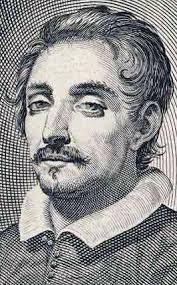 for our lack of enthusiasm regarding Gustav Holst), so we’ll turn to some of the names we had previously only mentioned in passing. One of the most interesting is, without a doubt, Girolamo Frescobaldi (you can read about him here, for example). Frescobaldi was born on September 9th of 1583 in Ferrara, where the active patronage of the Duke Alfonso II created a veritable mecca for musicians. Luzzasco Luzzaschi, a fine composer, was the court organist (and, for a while, Frescobaldi’s teacher), Monteverdi spent several years there, and so did Orlando di Lasso, Carlo Gesualdo and many others. In 1597 Duke Alfonso died, and soon after Ferrara reverted to the papacy; most of the local musicians left for Rome, Frescobaldi among them. For a while he worked as the church organist at Santa Maria in Trastevere, but in 1607 the papal nuncio took him to Flanders. The trip made him known to the public outside of Italy; he also published several new compositions (a volume of madrigals) in Brussels. In July of 1608 Fescobaldi returned to Rome and was made the organist at the important Capella Julia, which performed at the St. Peter’s basilica. He stayed in Rome for the next seven years. As the organist, he wasn’t paid much, so Frescobaldi supplemented his income by teaching and performing in noble houses. Sometime around 1611 he entered the service of Pietro Aldobrandini, a cardinal and a patron of the arts, who was a nephew of Pope Clement VIII and the owner of the magnificent Palazzo Doria Pamphilj. Frescobaldi remained in Aldobrandini’s service till the cardinal’s death in 1621.
In 1615 Frescobaldi, being offered a large salary by the duke of Mantua, left the Capella Julia and moved to Mantua. The Duke Ferdinando Gonzaga seems to have liked Frescobaldi’s music, but the rest of the court ignored him, and two months later Frescobaldi decided to return to Rome. There he continued his service at the Aldobrandini household, playing the organ in different Roman churches, and composing. Many of his most important works were written during this period, among them the Capricci and the Second Book of Toccatas, which, in addition to toccatas, included other pieces, such as Canzonas, Gagliardas and other dances, and Magnificats. One of these pieces was a beautiful Passagiato 'Ancidetimi Pur', based on Ancidetemi pur grievi martiri by the Franco-Flemish composer Jacob Arcadelt. Here it is, performed on a harpsichord by Richard Lester. And here is a Toccata from the same Book II, Toccata Nona. This one is played by the harpsichordist Keith Hill.
Read more...Girolamo Frescobaldi - Toccata Nona, from Book II
Robert Hill (Harpsichord)
Girolamo Frescobaldi - 'Ancidetimi Pur' d'Arcadelt passagiato, F 3.12
Richard Lester (Harpsichord)
Miguel Zaparolli - Free Improvisation
Miguel Zaparolli (Cello)
Aaron Alter - For Fred for Violin and Piano at the USF New Music Festival
Sini Virtanen (Violin)
Eunmi Ko (Piano)