
Counod-200, 2018
June 11, 2018. Gounod at 200. Charles Gounod was born on June 18th of 1818 in Paris. Though we know him as an opera composer who influenced George Bizet, Jules Massenet and Camille Saint-Saëns, the young Gounod started with writing church music. After graduating from 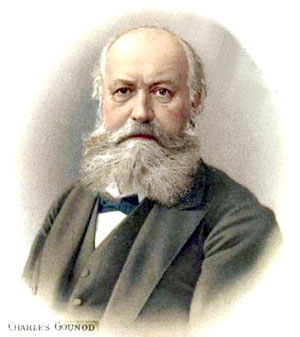 the Paris Conservatory, where he took classes from Fromental Halévy and winning the Prix de Rome, he spent time in Italy studying the music of Palestrina. There he composed a Mass and a Requiem; upon returning to Paris he enrolled in a seminary. In 1848, though, he pivoted and got involved with opera. He was friends with the famous mezzo Pauline Viardot, one of the most respected singers of her time; through her he got a commission from the Paris Opéra. It was quite a coup for an unknown composer. (Viardot lived a long life: she died in 1910 at the age of 88. Very popular, she knew practically “everybody” worth knowing – composers, writers, painters. She had famous lovers, including the Russian novelist Ivan Turgenev, who eventually settled in the Viardo household. Pauline had a sister, Maria Malibran, also a singer and one of the greatest mezzos of the 19th century at that. Malbran’s voice range stretched from contralto to high soprano. She excelled in the operas of Rossini, Bellini and Donizetti. Malibran’s life was much shorter: she fell from a horse and died at the age of 28).
Gounod’ first opera, titled Sapho was premiered in April of 1851. It failed with the public but gained some critical success, enough for the Opéra management to give Gounod another commission, the opera La nonne sanglante (The Bloody Nun). That one was also a failure, even though the libretto was written by the very popular Eugène Scribe. Four years later, in 1858, Gounod wrote a comic opera Le médecin malgré lui (The Doctor in spite of himself) based on a farce by Molière. It was yet another flop. Surprisingly, despite these financial disasters, opera directors were still ready to stage Gounod’s operas. In 1856 Jules Barbier and Michel Carré presented Gounod with a libretto called “Faust.” It was based on Carré's play Faust et Marguerite which in turn was loosely based on Goethe’s Faust, Part I. Léon Carvalho, the director of the Théâtre Lyrique, agreed to produce it. After a significant postponement, Faust was premiered in March of 1859. The opera wasn’t very successful, but neither was it a failure; the Théâtre Lyrique didn’t drop it and eventually the public reaction turned quite positive. After Gounod added a ballet intermission, it was staged at the Opéra to great success, and it eventually became the Paris Opéra’s most popular production. One of the greatest Méphistophélès of all time was the Russian bass Feodor Chapiapin. Here’s a recording of the famous “couplets” (Song of the Golden Calf) from Act I. It was made in 1928-1930. And here’s the finale of a wonderful 1958 recording, with Nicolai Gedda singing Faust, Victoria de los Ángeles as Marguerite and Boris Christoff as Méphistophèles. André Cluytens conducts the Orchester and the Chorus of the Théâtre National de l’Opéra.
In 1866 Gounod wrote one more opera that could be considered successful, Roméo et Juliette. It was very well received at the premiere, but eventually faded. His other operas – after Faust he wrote seven more, not counting Roméo et Juliette – fared much worse. In 1884 he stopped actively composing. Gounod died in 1893; he was given a state funeral which took place at the Church of the Madeleine (“The immense crowd filled the Place de la Madeleine” wrote the New York Times the next day). Adelina Patti, “the finest singer who ever lived” according to Giuseppe Verdi, presented an enormous bouquet at the service. Camille Saint-Saëns played the organ and Gabriel Fauré conducted the orchestra.
Read more...Charles Gounod - Song of the Golden Calf, from Act I of Faust
Feodor Chaliapin (Bass)
Schumann, Albinoni, Argerich, Mravinsky 2018
June 4, 2018. Schumann, Albinoni, Argerich, Mravinsky. Robert Schumann, one of the greatest Romantic composers, was born on June 8th of 1810. We celebrate him often, and we’ve published several longer articles about Schumann’s wonderful song cycles, such as Dichterliebe (here and here), and Frauenliebe und -leben (here). So today we’ll just play some of his music. Here’s Schumann’s Kinderszenen, recorded by Martha Argerich in 1983. More about Ms. Argerich below.
Tomaso Albinoni is best remembered today for “Albinoni’s Adagio.” The problem is that at best 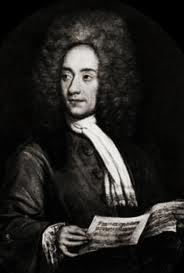 this music is based on some fragment composed by Albinoni, but it likely has nothing to do with him at all: that is, at least, what Remo Giazotto, an Italian musicologist who “discovered” the piece, was claiming at the end of his life. But this controversy aside, Albinoni, who was born on June 8th of 1671, was a fine, if not necessarily a major, Baroque composer. A Venetian, Albinoni was, unlike so many of his colleagues, quite well-to-do: his father was a wealthy merchant. During his lifetime, Albinoni was known for his operas. He wrote at least 50 of them; Albinoni himself claimed that he composed more than 80. His first opera, Zenobia, was produced in Venice in 1694; his last, Artamene, almost half a century later, in 1741. Most of the scores were lost during the firebombing of Dresden at the end of WWI. Practically none of his operas are staged these days. His oboe concertos, on the other hand, are still very popular. Here, for example, is Albinoni’s Concerto for oboe and strings in D minor Op. 9, no. 2. Ensemble Il Fondamento is directed by the oboe soloist, Paul Dombrecht.
It’s hard to imagine that Martha Argerich will turn 77 tomorrow, she brings so much energy and youth to piano-playing: even though she doesn’t perform often, when she does she generates a 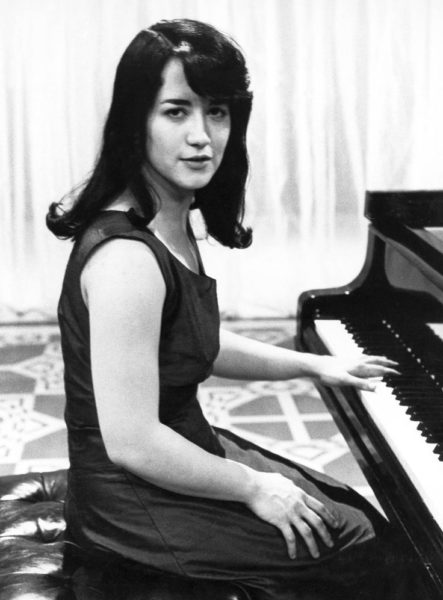 thrill like nobody else – read, for example, a review of her October 2017 concert at Carnegie Hall. Argerich (her last name is pronounced Ar-khe-rich in Spanish, although American announcers usually pronounce it with a “g,” not “kh,” and make a mess of the last consonant) was born in Buenos Aires. She’s Catalan Spanish on her father’s side and Russian Jewish on the maternal side. Argerich started playing piano at the age of three and studied music in Buenos Aires till the age of 14, when her family moved to Europe. There among her teachers were Friedrich Gulda, Maria Curcio, Abbey Simon, and Nikita Magaloff. She also took several lessons with Arturo Benedetti Michelangeli. At the age of 16 she won two competitions in a row, the 1957 Geneva Competition and the Feruccio Busoni. In 1965, Argerich won the Chopin competition in Warsaw; her playing there caused a sensation. That year she made her US debut. Very soon she was acknowledged as one of the most exciting pianists of the generation. Her recital career was rather short: since the early 1980s she practically stopped appearing on stage solo, citing “loneliness,” but continued to play chamber music and piano concertos. Argerch often plays with the pianists Nelson Freire, her old friend, and Stephen Kovacevich,her former husband, the violinist Gidon Kremer and the cellist Mischa Maisky. Here’s another example of Martha Argerich’s art: Bach’s English Suite No. 2 BWV 807 in A minor.
Born on June 4th of 1903 in St.-Petersburg, Evgeny Mravinsky was probably the greatest Russian conductor of the 20th century. Last week we played Glinka’s Overture to Ruslan and Lyudmila with Mravinsky conducting the Leningrad Philharmonic. Mravinsky deserves a separate entry, and we’ll write one soon.
Read more...Johann Sebastian Bach - English Suite No. 2 in a minor, BWV 807
Martha Argerich (Piano)
Tomaso Albinoni - Oboe Concerto in D Minor Op. 9, no. 2
Il Fondamento (Ensemble)
Paul Dombrecht (Conductor)
Paul Dombrecht (Oboe)
Robert Schumann - Kreisleriana Op. 16
Martha Argerich (Piano)
Robert Schumann - Kinderszenen, Op. 15
Martha Argerich (Piano)
Nicolas Horvath - Electroacoustic Improvisation in Prague 2011 ( short )
Nicolas Horvath (Piano)
Six composer and two pianists
May 28, 2018. Six composer and two pianists. Six composers were born this week: Isaac Albéniz and Erich Wolfgang Korngold on May 29th, the former in 1860, the latter in 1897. Marin Marais, the Frenchman – on May 31st of 1656, Georg Muffat – on June 1st of 1653. We didn’t mention Muffat’s nationality, as it’s hard to determine: he was born to a Scottish father and 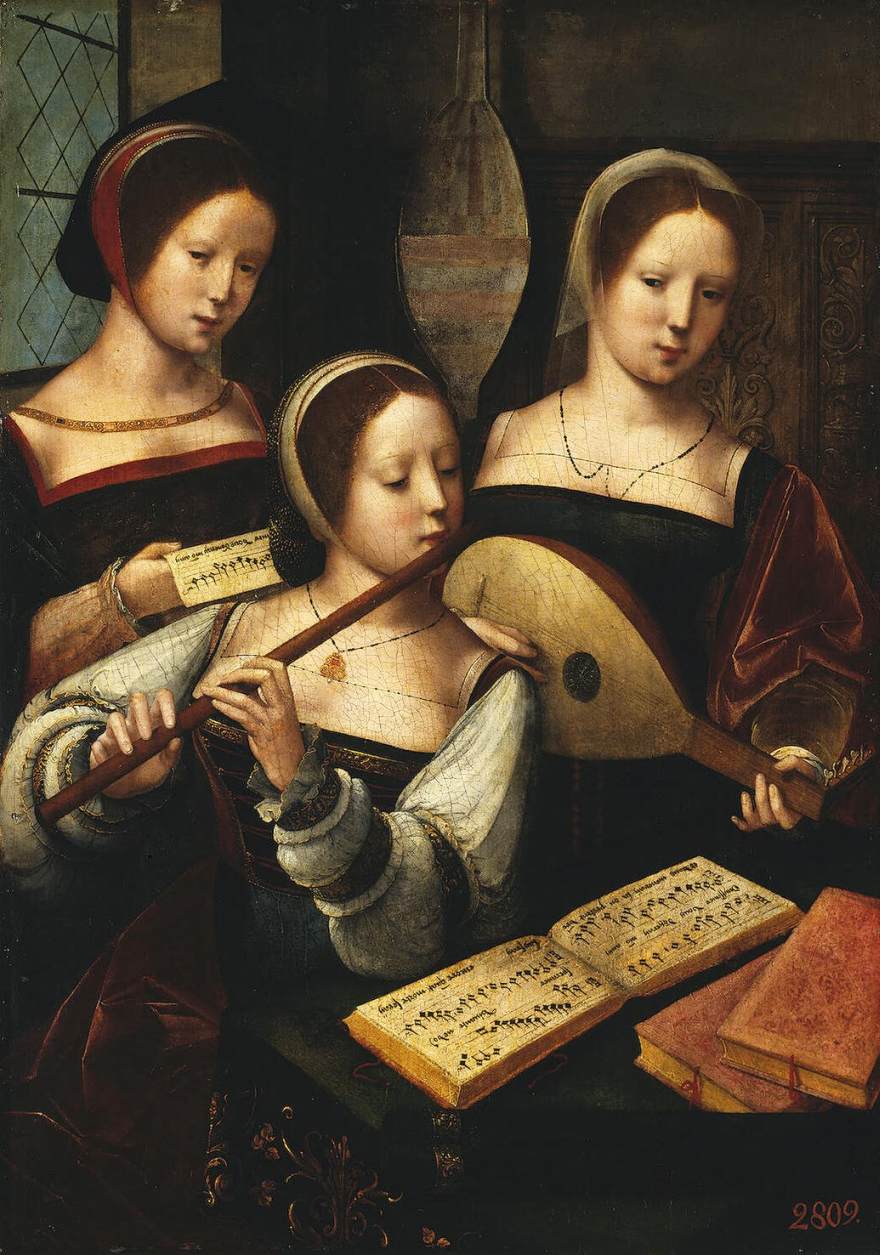 French mother in the Dutchy of Savoy, which back then was an independent state with Turin as its capital but now is part of France. He studied in Paris for six years and then moved to Alsace, which, formerly part of the Holy Roman Empire, was conquered by the French King Louis XIII in 1639. Even though under the formal control of France, most of Alsace was independent, German-speaking and Lutheran. Later in his life, Muffat lived in Vienna, Prague, Salzburg and Italy. He spent the last 20 years of his life in Passau, Bavaria. We could call Muffat a Savoyard, a Frenchman or even a German, as some encyclopedias do. Here’s his Concerto Grosso in G minor “Dulce Somnium” (Sweet Sleep), written by Muffat in 1701. While in Rome, Muffat studied with Arcangelo Corelli, one of the early developers of the Concerto Grosso form. It was practically unknown in the German lands till Muffat’s time. The performers in this recording are the ensemble Musica Aeterna Bratislava under the direction of Peter Zajíček.
Also on June 1st we celebrate the birthday of Mikhail Glinka, the first truly original Russian composer. Glinka was born in 1804; at that time the Russian music scene, quite lively in St-Petersburg, was dominated by the Italians and Italian-influenced composers. Two operas by Glinka, A Life for the Tsar (called Ivan Susanin during the Soviet period) and Ruslan and Lyudmila, changed it all. Here’s the famous Overture to Ruslan and Lyudmila. The Leningrad Philharmonic Orchestra is led by its principal conductor of 50 years, Evgeny Mravinsky. And finally, Sir Edward Elgar was born on June 2nd of 1857. As we confessed some years ago, we’re not as much in love with Sir Edward’s music as the British public seems to be. Still, without a doubt Jacqueline du Pré’s performance of Elgar’s Cello concerto is a masterpiece, both in terms of music itself and the interpretation. We’ll write more about it on Elgar’s next birthday.
And now to two pianists. Grigory Ginzburg, a Russian-Soviet-Jewish pianist, was born in Nizhny Novgorod on May 29th of 1904. He studied at the Moscow Conservatory with Alexander Goldenweiser. In 1927 he participated in the First Chopin Piano Competition and received the 4th prize (Lev Oborin was the winner). Ginzburg taught at the Conservatory from the age of 25. His repertory was very 19-century, with many transcriptions and salon pieces, but his musicianship was impeccable. Many consider Ginsburg the last pianist in Liszt’s tradition. Here’s Grigory Ginzburg playing Chopin's Berceuse in a live 1959 recording.
Considered one of the finest pianists of his generation, Zoltán Kocsis, who died of cancer at the age of 64 less than two years ago, was a very different musician. Born on May 30th of 1952 in Budapest, he loved playing music of the 20th century: he recorded all piano works of Béla Bartók. Kocsis was also a conductor, having founded, with Iván Fischer, the Budapest Festival Orchestra. Here’s Bartók’s Piano Sonata (1926), recorded by Kocsis in 1996.
Read more... « first ‹ previous … 184 185 186 187 188 189 190 191 192 … next › last »
Charles Gounod - Finale-Trio, from Act V of Faust
Nicolai Gedda (Tenor)
Victoria de los Ángeles (Soprano)
Boris Christoff (Bass)
Orchester of the Théâtre National de l’Opéra (Orchestra)
André Cluytens (Conductor)