
Samuel Barber - O boundless, boundless evening, from Three Songs, Op.45
Mario Diaz-Moresco (Baritone)
Spencer Myer (Piano)
Samuel Barber - A green lowland of pianos, from Three Songs, Op.45
Mario Diaz-Moresco (Baritone)
Spencer Myer (Piano)
Samuel Barber - Now have I fed and eaten up the rose, from Three Songs, Op.45
Mario Diaz-Moresco (Baritone)
Spencer Myer (Piano)
Henri Duparc - L'invitation au voyage
Mario Diaz-Moresco (Baritone)
Spencer Myer (Piano)
Johannes Brahms - Op.118 n 2
Ingrid cusido Muntada (Piano)
Enrique Granados - Quejas oh la Maja y el ruiseñor
Ingrid cusido Muntada (Piano)
Victoria, 2018
April 16, 2018. . Nikolai Myaskovsky, a Russian composer, was born this week, on April 20th of 1881. Prolific (he wrote 27 symphonies), he was widely performed during his lifetime in the Soviet Union and, to a lesser extent, in Europe and the US. He was often criticized by the Soviet music establishment and almost as often awarded state prizes; these days he’s mostly forgotten. Myaskovsky deserves to be written about, but today we’ll focus on Tomás Luis de Victoria, one of the great composers of the Renaissance, for whom we never have a fixed date as we don’t know when hewas born.
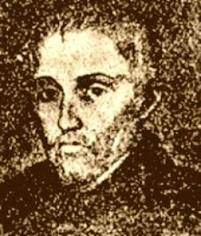 A younger contemporary of Palestrina and Orlando di Lasso, Victoria was born in 1548 in a small town of Sanchidrián near Ávila. His mother was from a converso, that is from a family of Spanish Jews who were forced to convert to Catholicism. Victoria went to school in Ávila, sang as a choirboy in the local cathedral and probably learned there to play the organ. The cathedral of Ávila was one of Spain’s musical centers, and Victoria’s teachers were prominent composers and musicians. Some speculate that while in Ávila, he met Antonio de Cabezón, the famous blind composer, second in fame only to Cristóbal de Morales. Somewhere around 1563, once his voice had broken, Victoria was sent to Rome, to the Collegio Germanico, a preeminent Catholic school known for its excellent music education. While at the Collegio, Victoria probably met Palestrina, who at the time was maestro di cappella at the basilica of San Giovanni in Laterano, and likely became his pupil. In 1569 Victoria became a singer and the organist at Santa Maria in Monserrato degli Spagnoli, the Spanish national church in Rome. Such was his reputation that a couple years later he was invited to teach music at the Collegio Germanico and eventually was appointed maestro di cappella. In 1574, he was ordained a priest. A year later he was appointed maestro di capella at Sant'Apollinare alle Terme, the church of the Collegium. By then Victoria was already a widely known and well-published composer.
In 1583 Victoria dedicated the second volume of masses (Missarum libri duo) to King Philip II and expressed the desire to return to Spain and lead the life of a priest. His wish was granted: Victoria was named the chaplain to the Dowager Empress María. Empress Maria lived in the Monasterio de las Descalzas Reales. Masses at the convent were served daily, with Victoria acting as the choir master and organist. After dowager’s death in 1603 he remained at the convent in a position endowed by Maria. Victoria was held in very high esteem, was paid very well, and was free to travel. In 1594, he happened to be in Rome when Palestrina died; the funeral mass was celebrated at Saint Peter’s Basilica, with Victoria in attendance. By the end of his own life, Victoria’s music was played all over Europe and even in the New World: his masses were very popular in Mexico and Bogotá. He died on August 20th of 1611 and was buried at the Monasterio de las Descalzas.
Victoria’s masterpiece is Officium Defunctorum, a prayer cycle for the deceased, which includes settings of seven movements of the Funeral Mass and another three pieces. Officium Defunctorum was written on the death of Dowager Empress María in 1603. You can hear all 10 movement of Officium Defunctorum by searching our library. It is performed, with extraordinary clarity and style, by the Spanish ensemble Musica Ficta. Another great interpreter of the music of Victoria is the ensemble The Sixteen, directed by Harry Christophers. Here, in their performance, in Victoria’s Magnificat Sexti Toni, one of the several settings of Magnificat composed by the great Spaniard.
Read more...Tomás Luis de Victoria - Magnificat Sexti Toni
The Sixteen (Ensemble)
Harry Christophers (Conductor)
Two singers, 2018
April 9, 2018. Two singers. Franco Corelli’s birthday was yesterday: he was born on April 8th of 1921. One of the greatest tenors of the mid-20th century, he, together with Giuseppe Di Stefano and Mario Del Monaco, brought the level of tenor singing to heights which seem 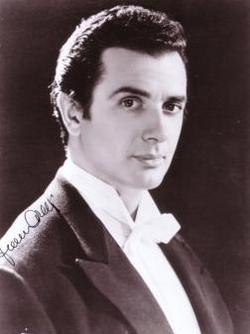 unreachable today. Add to it two supreme sopranos, Maria Callas and Renata Tebaldi, the great baritone Tito Gobbi, the mezzo Giulietta Simionato, the base Cesare Siepi – all of them at the top of their form in the mid-1950s. What a glorious era! Corelli may not have had the most beautiful voice, but the power, clarity, phenomenal breath control and sheer excitement he generated were incomparable. Listen, for example, to this 1955 recording of Cavaradossi’s aria E lucevan le stele from Puccini’s Tosca. One may quibble with the interpretations, with the notes he holds a bit too long – just because he can! – but it’s singing at the very highest level. Or a small sample from the legendary performance of the same opera in the Teatro Regio di Parma on January 21, 1967. Tosca is Virginia Gordoni, Scarpia – Attilio d'Orazi, but it’s Corelli’s 12 seconds of A-sharp in Vittoria, Vittoria at the very end of this two-minute excerpt that brought the theater down. We cut out the ensuing pandemonium (the word “ovation” isn’t strong enough) because it just wouldn’t stop; one couldn’t hear anything anyway, even though the orchestra continued to play (here). Corelli was born in a provincial city of Ancona, his family wasn’t musical, and Franco entered the Pesaro conservatory almost by chance. Even there, he mostly taught himself, following the technique of Mario del Monaco and listening to the old recordings of Caruso, Gigli and Lauri-Volpi. Corelli started singing professionally in 1951; in 1953, in the Rome Opera, he sung Pollione in Bellini's Norma with Maria Callas in the title role. Callas was taken by Corelli’s voice, and in the following years the two sung together on many occasions, especially at La Scala.
Corelli also sung with Renata Tebaldi in the famous production of La forza del destino at the Teatro di San Carlo in Naples (YouTube has a large excerpt from it: Mario del Monaco, mentioned in the title, didn’t sing in this particular production). Corelli sung his debut performance at the Metropolitan Opera in 1961 as Manrico in Il Trovatore with Leontine Price. He performed at the Met till 1975, even though in the early 1970s his voice lost some of its luster. In 1976, at the age of 55, Corelli quit. Even though he personally disliked voice teachers, he became one himself, and a very successful one. Franco Corelli died in Milan on October 29th of 2003.
Montserrat Caballé, one of the greatest sopranos of the second half of the 20th century, will turn 85 in three days. Caballé was born on April 12th of 1933 in Barcelona. A real bel canto soprano (unlike most of the sopranos on stage today), she was one of the best Normas ever. She also excelled in Donizetti, especially as Mary Queen of Scots in Maria Stuarda and Elizabeth I in Roberto Devereaux. She also sung in many Verdi operas. Caballé had her debut at the Metropolitan Opera in 1965 in a not very typical role of Marguerite in Gounod’s Faust. Since then she has performed at the Met dozens of times, singing in several Verdi operas, Puccini's Turandot and operas by Donizetti. Her official debut in La Scala happened only in 1970, when she was already world-famous. She often partnered with the much younger José Carreras (while at the same time Joan Sutherland took under her wing a younger Luciano Pavarotti). There are hundreds of great recording of Caballé’s art; here is an excerpt from Roberto Devereu. The live recording was made in Venice in 1972. Bruno Bartoletti conducts the orchestra of the Teatro la Fenice.
Read more... « first ‹ previous … 189 190 191 192 193 194 195 196 197 … next › last »
Ludwig van Beethoven - Adelaide, Op. 46
Mario Diaz-Moresco (Baritone)
Spencer Myer (Piano)